
Relvay makes a pregnancy pillow. We also tell you below when you should not buy one.
The short answer
Write your setup down once, on one card, and let every helper follow the card instead of their memory. Label each part, describe where it goes against a fixed point on the bed or your body, list what not to change, and finish every setup by asking you.
- Card first: photo, part labels, agreed positions.
- Your word last: you confirm every setup.
- Care team notes go on word for word, dated.
What goes on a pregnancy pillow setup card?
Six things: a photo or sketch, a label for each part, where each part goes measured from something that does not move, what helpers must not change, any notes from your care team, and a check-back question. Build it in this order.
- Take one photo of the setup you are happy with. Shoot from the foot of the bed, lights on, with you lying in it.
- Give every part a letter. A, B, C, plus your head pillow and any knee pillow. A strip of tape on each cover works.
- Describe each position against a fixed point. "B sits against my lower back, its top edge level with my belly button" works. "Put it behind me" does not.
- Write a short do-not-change list. The things you tried and dropped, so nobody helpfully adds them back.
- Copy any care team instructions word for word. Add who said it, their role and the date. Do not reword them.
- End with the check-back. One question the helper asks you before they leave the room.
Keep the card next to the bed. If the setup changes, change the card the same day and write the new date on it.
Why does the same pillow end up set up two different ways?
Because each helper remembers the shape of the setup, not the reference points, and most people try to improve what they see. Without a written card, the setup drifts a little with every person.
10:15 p.m.
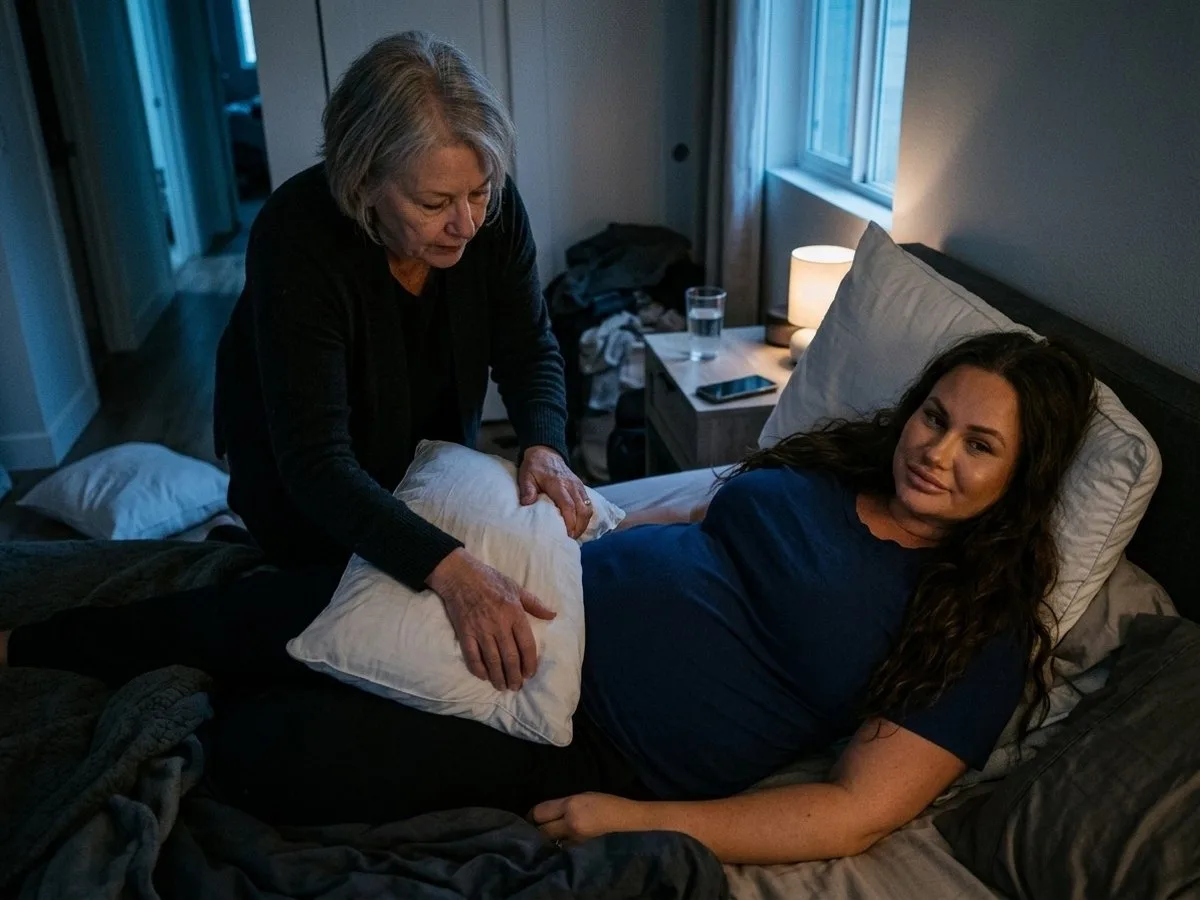
I was 33 weeks and finally had a setup that worked. Theo knew it. Then he started night shifts, and "just do what Alina likes" stopped being enough. My mom came to stay for a week to help.
She is wonderful. She also folded the bump pillow in half because it "looked flat", moved the back pillow up to my shoulders and took away the pillow between my knees because it "kept falling". I said thank you, waited for her to go, and spent twenty minutes putting it all back in the dark.
The next night Theo was home and set it up his way, which was close but not the same. I realised I was explaining my own bed to two people who both loved me, and neither of them could see what I could feel.
- If you thank your helper and then quietly redo the whole setup...
- If each person who helps puts the pillows somewhere slightly different...
- If you are too tired at bedtime to explain it all again...
Nobody is doing it wrong on purpose. They just do not have the same picture in their head that you have.
"Got into the right position, with all the pillows in place.... and now I gotta pee."YouTube comment on a pregnancy sleep video
"Then you have to try to escape the legion of pillows and quilts you've assembled around yourself every time you have to wake up to pee."YouTube comment on a pregnancy sleep video
A good setup is not a shape. It is a list of positions measured from points that do not move.
What does a filled-in setup card look like?
It fits on one side of a page. Here is an example for a three-part setup plus a knee pillow. Copy the columns and fill in your own parts.
| Part | Where it goes | Fixed point | Do not change |
|---|---|---|---|
| Head pillow | Under my head only, not my shoulder | Top of the mattress | No second head pillow |
| A: bump support | Under the bump, thin edge toward me | Bottom of the bump | Do not fold it |
| B: back support | Against my lower back | Top edge level with my belly button | Not up at the shoulders |
| C: knee pillow | Between knees and ankles | Knees and ankles both on it | Leave it in even if it slips |
| Side | I start on my left tonight | Facing the window | I choose the side |
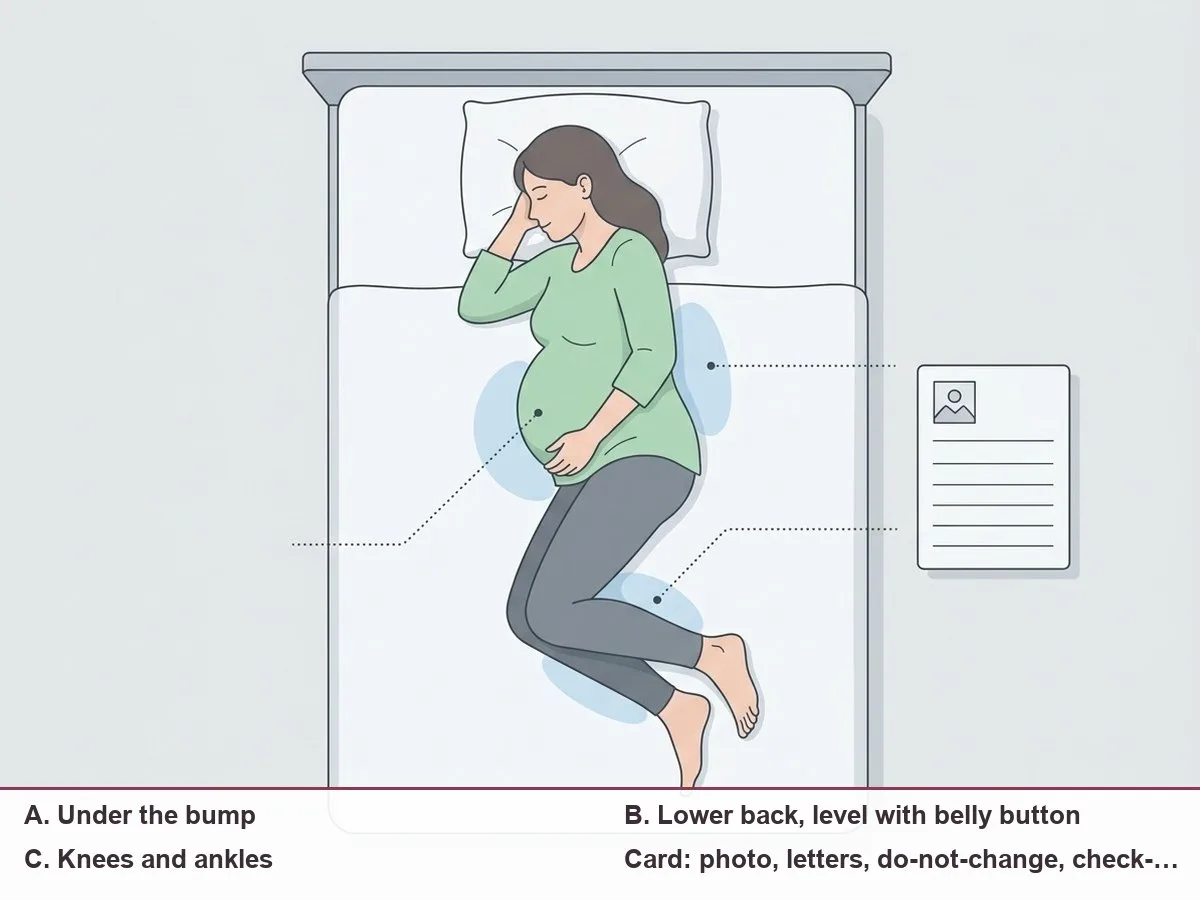
Under the table, add a line for care team notes. For example: "Physio, 14 Sept: pillow between knees at night." If there is nothing, write "none". That way a helper never has to guess whether something was medical advice or just a habit.
How should the helper check the setup with you?
Every setup ends with you, not the card. The helper asks one fixed question, you answer, and anything you say overrides the card for that night.
- The question: "Is anything pressing, gapping or in the wrong place?"
- Your answer uses the letters: "B is too high" is faster than describing it.
- One change at a time. The helper moves one part, then asks again.
- A yes ends it. No extra tweaks after you say it feels right.
- Morning note. If something was off two nights running, update the card instead of fixing it every night.
What should a setup card not cover?
The card records pillow positions you have already agreed. It is not a guide to lifting, moving or positioning your body, and it does not change anything your care team told you.
Help getting into bed, turning or getting up belongs with your midwife, doctor or a physiotherapist, who can show your helper directly. The NHS suggests talking to your midwife or GP if it hurts to turn over in bed. New, sharp or worsening pain goes to them first. A better card will not fix that.
Frequently asked questions
How do I explain my pregnancy pillow setup to someone else?
Use a one-page card: a photo of the setup, a letter on each part, where each part goes measured from a fixed point, a short do-not-change list and one check-back question at the end.
Should my partner set up my pregnancy pillow for me?
Only if you want help. If they do, they follow the card and you confirm the result. You can feel what they cannot see, so your answer decides.
What if my physio or midwife gave me pillow advice?
Copy it onto the card word for word, with who said it and the date. Helpers should not change it. Ask your care team again when your needs change.
How often should I update the setup card?
Whenever the setup changes, or when the same thing feels off two nights in a row. Write the new date on it so everyone knows which version is current.
Can the card include how to help me get into bed?
Keep the card to pillow positions. Getting in, turning and getting up are things a midwife, doctor or physiotherapist should show you and your helper directly.
If your setup has too many loose pillows to describe
A card is easier to write when there are fewer loose pieces. The Relvay 3-Piece is two small wedges for bump and back joined by a flat strap, with a small oval cushion on the strap, so it fits in two or three lines of a card. You still keep a regular pillow between your knees, and you still confirm every setup yourself. It is not a fit if your care team has given you a specific pillow to use.

Two wedges for bump and back, joined by a flat strap, about as wide as your torso. Keep a regular pillow between your knees. $79.99, 90-day returns.
Still choosing a pillow? Our pregnancy pillow buying checklist covers size, care and return terms before you order.
Alina's story is a composite based on real reviews and public posts from pregnant side sleepers. Names and details are changed.