Relvay makes a pregnancy pillow. We also tell you below when you should not buy one.
The short answer
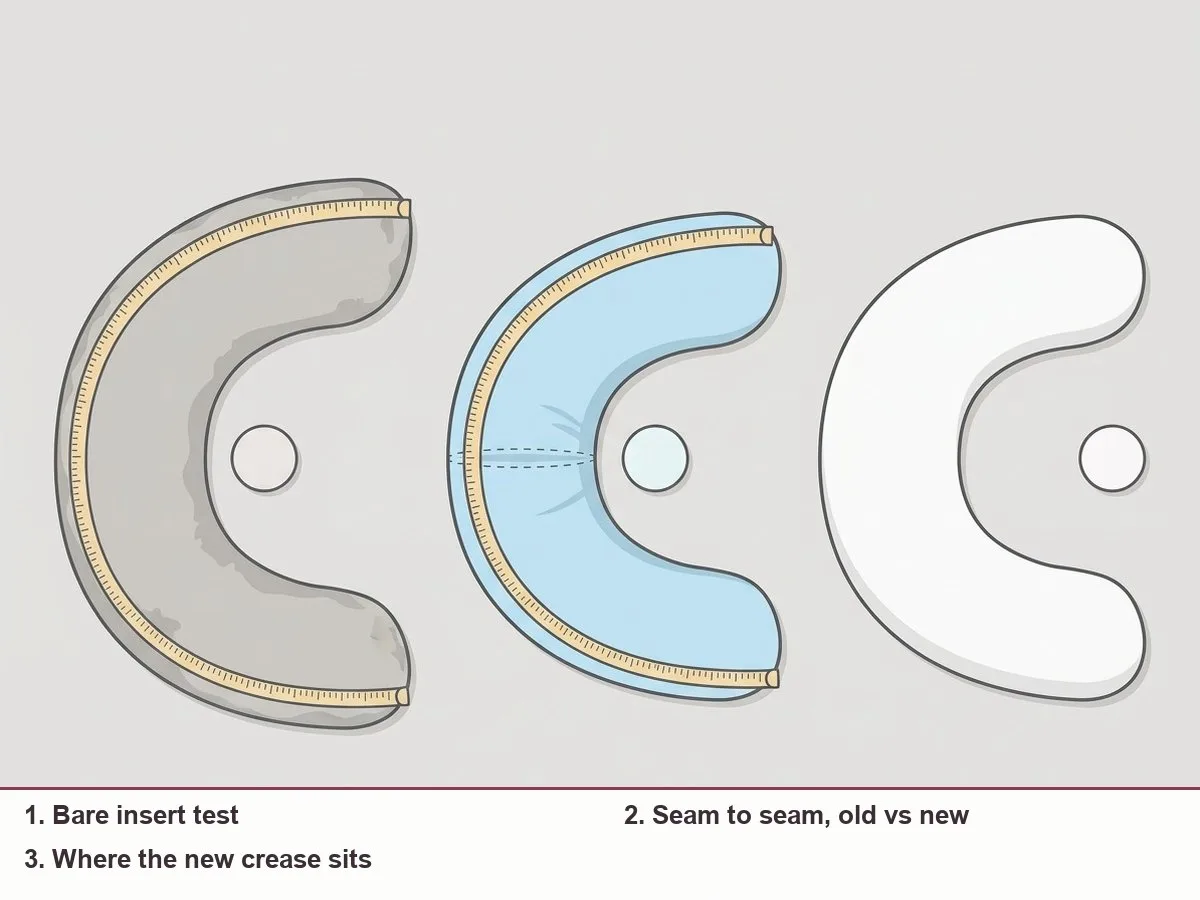
A zipper that closes does not prove the cover fits. Take the insert out and lie on it bare. If it feels like it used to, the new cover is the cause. If it feels different bare too, the insert has changed. Then compare old and new covers side by side.
- Firmer: new cover often smaller or less stretchy.
- Baggier or lumpy: often a larger cover.
- New creases: often cut for another shape.
What should you check when a new cover changes how your pillow feels?
Separate the cover from the insert first, then compare the two covers. That tells you which part to deal with before you think about a new pillow.
- Take the new cover off. Lie on the bare insert, if its label allows, the way you sleep. Does it feel like the pillow you remember?
- Lay both covers flat, old and new, zippers closed, on a bed or floor.
- Measure the usable inside size: seam to seam along the length and across the widest part. Ignore the outside edges and piping.
- Check the stretch. Pinch and pull the fabric gently on each cover. Note which one gives more.
- Compare the fabric. Thickness, knit or woven, quilting or lining, and the fabric named on each care label.
- Put the new cover on and mark the creases. Where do new folds or tight lines appear? Photograph them.
- Check the model. Is the new cover listed for your exact pillow model, or for a shape like "U pillow"?
Why does a cover change how the whole pillow feels?
Because the cover decides how much room the filling has. A tight cover squeezes the filling so it feels firmer and flatter. A loose one lets it shift and bunch. A cover cut for a different curve pulls it into new folds.
Wednesday, 11:30 p.m.
I was 33 weeks, and the old cover had finally given up. The new one arrived, the color was right, and after a fight with the zipper it closed. I was so proud of myself.
Then I lay down, and the pillow felt like a different pillow. Harder along the back. The curve by my bump had a stiff fold that pressed in exactly where I did not want it. I lay there wondering if the pillow had just died the same week as its cover.
The next morning I unzipped it and lay on the bare insert. It felt like my pillow again.
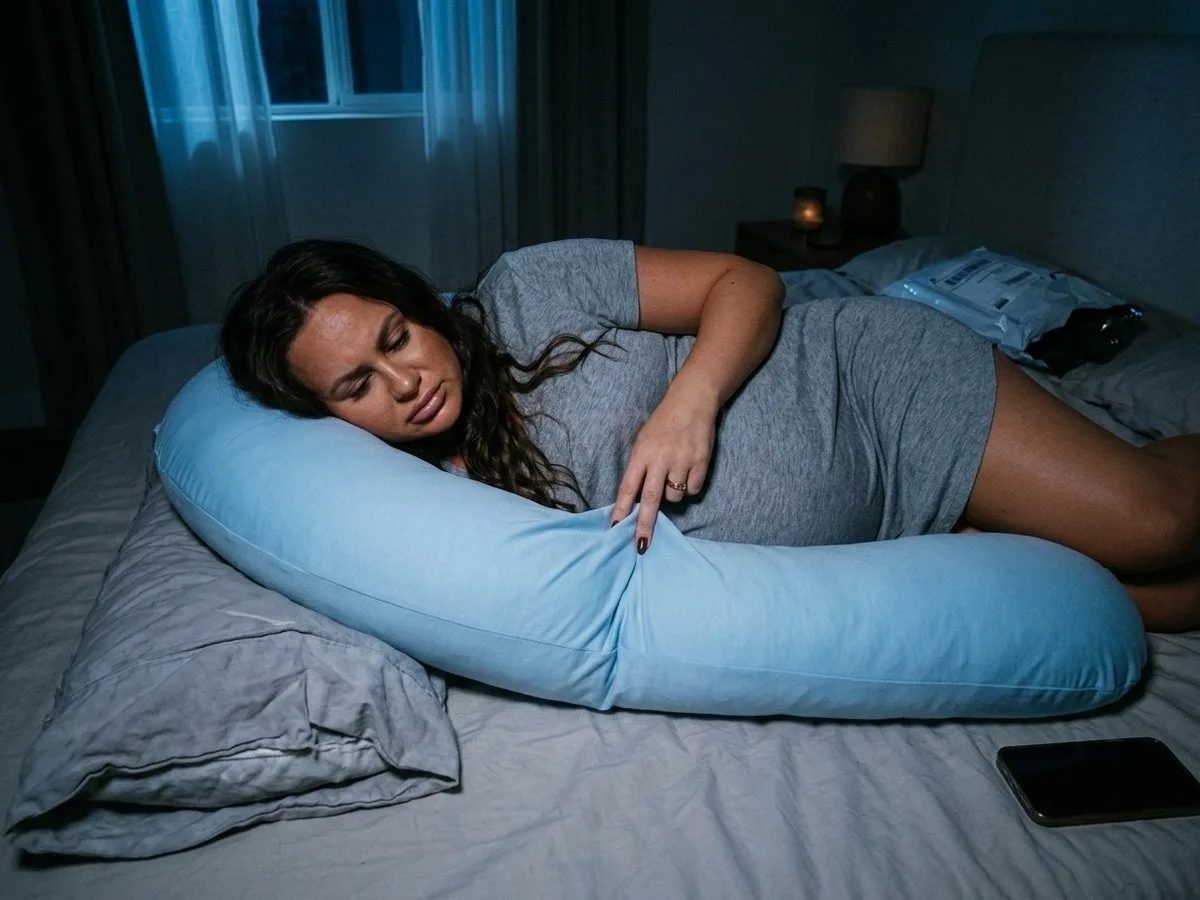
"there were so many pillows with too silky a fabric making it slip around and loose support"Amazon review of another brand's pregnancy pillow
The pillow was fine. The cover was the change.
Is it the cover or the insert?
Match what you feel with what you found. If the bare insert also feels different, start with the insert row.
| What you feel | What you usually find | Likely cause |
|---|---|---|
| Firmer, flatter, harder to bend | New cover smaller inside, or less stretch | Cover too tight |
| Baggy, lumpy, filling shifts to one end | New cover larger inside | Cover too loose |
| Stiff fold or tight line in one place | Seams or curve sit in a different spot | Cover cut for another model or shape |
| Slides around more on the sheet | Smoother fabric than before | Fabric change, not the insert |
| Feels warmer or cooler | Different fabric or thickness | Fabric difference, a feeling, not a rating |
| Bare insert also feels flat or lumpy | Covers match closely | Insert has changed |
Do not read a fabric's feel as a cooling feature. A cover that feels cooler on the first night is not proof it stays that way.
What can you do about a cover that fits but feels wrong?
Do not stretch, cut or resew the cover to force it. Use your comparison to decide between keeping it, swapping it and checking the insert.
- Small difference, feels fine after a few nights: keep it. Some fabrics relax a little with use.
- Clear size or shape mismatch: contact the seller with your measurements and crease photos, and ask for the cover listed for your exact model. Some makers, such as doomoo, say a cover fits only one of their pillows because the models differ in size.
- Insert also feels different bare: the cover only revealed it. See whether the filling can be fluffed or redistributed as its label allows, or whether the pillow has reached the end of its life.
- Until it is sorted: put the old cover back on if it is still usable, or use a clean case the insert's label allows.
Before you buy the next one, our replacement cover fit sheet lists what to measure. If the old cover changed after washing, see a cover that no longer fits after washing, and wash the new one following cover and insert care separately.
Frequently asked questions
Why does my pregnancy pillow feel firmer with a new cover?
A cover that is a little smaller inside, or less stretchy, squeezes the filling so the pillow feels firmer and flatter. Compare both covers seam to seam and lie on the bare insert to confirm.
Does a cover that zips closed mean it fits?
No. A zipper can close on a cover that is too tight or cut for a different shape. Check inside size, stretch and where the seams and creases fall.
Can I stretch a replacement cover to fit better?
We would not. Stretching or cutting it can strain the seams and zipper. Ask the seller for the cover listed for your exact model instead.
How do I know if it is the insert and not the cover?
Lie on the insert without any cover. If it still feels flat, lumpy or different, the insert has changed and a new cover will not fix that.
Will a different cover fabric make my pillow cooler?
A fabric can feel different to the touch, but a first-night feeling is not a cooling rating. Go by what the maker states and how you sleep over several nights.
If the insert has had its day
Relvay does not sell replacement covers for other brands' pillows, so we cannot send the matching cover this guide is about. If the bare-insert test shows the pillow itself has gone flat, our 3-Piece set is what we make. Its cover is listed as removable and washable.
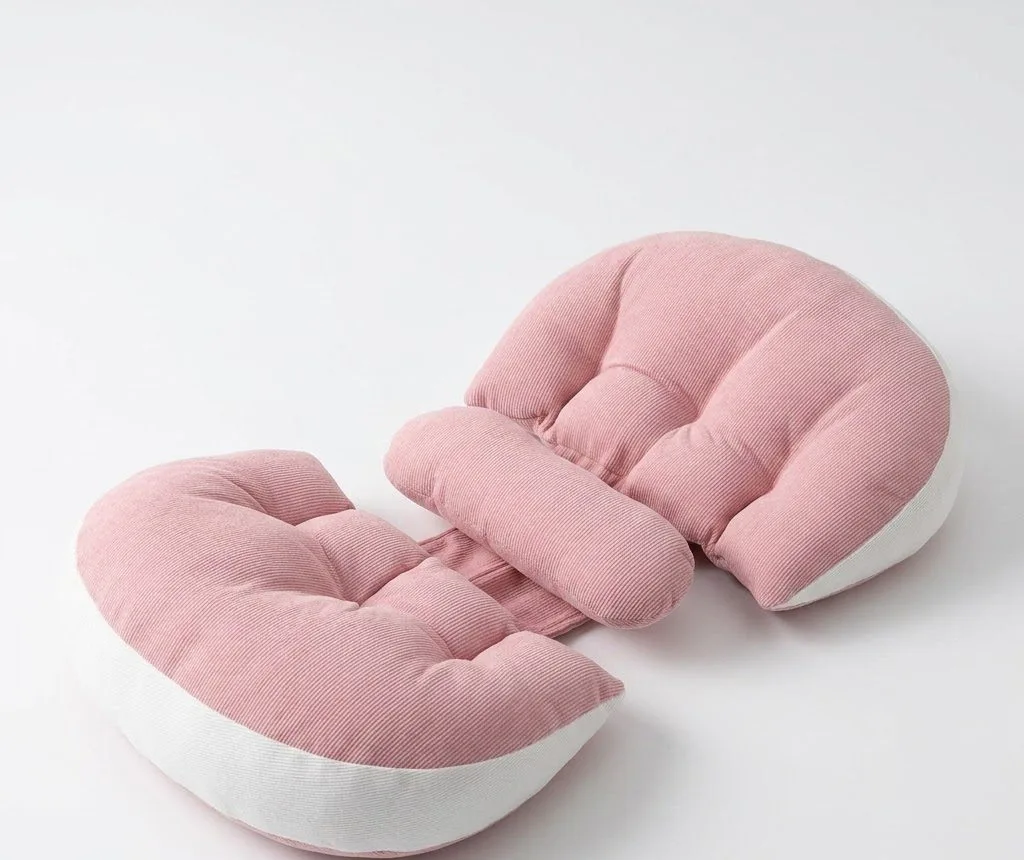
Two wedges for bump and back, joined by a flat strap, about as wide as your torso. Keep a regular pillow between your knees. $79.99, 90-day returns.
Sydney's story is a composite based on real reviews and public posts from pregnant side sleepers. Names and details are changed.