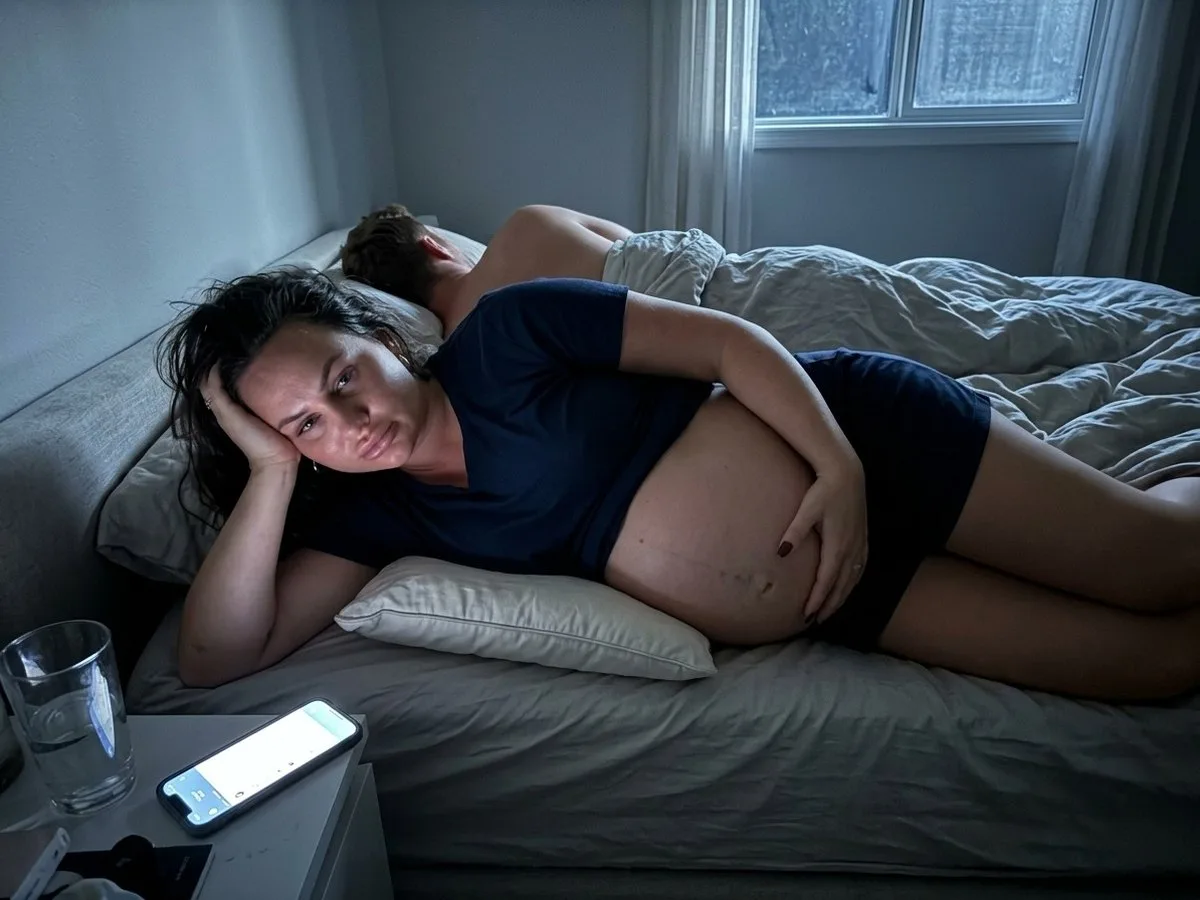
Relvay makes a pregnancy pillow. We also tell you below when you should not buy one.
The short answer
Doctors and midwives often suggest pillows for comfort when you sleep on your side, but that is general advice, not an endorsement of a brand. The NHS suggests pillows under the bump and between the knees, with no specific product named.
- A label means little unless it names who, what they said, and whether they were paid.
- Research is thin: few small trials, on specific pillows.
- Best evidence for you: your own midwife or doctor.
Do doctors actually recommend pregnancy pillows?
Yes, in general terms. Clinicians commonly suggest using pillows to get comfortable on your side, and the NHS says you can support your bump with pillows and put one between your knees. That advice is about pillows, not about any one pregnancy pillow.
This is the gap marketing slips into. "Use pillows for support" is a real recommendation. "Our pillow is recommended by doctors" is a different claim, and it needs its own proof.
24 weeks, Tuesday clinic
I had saved three listings on my phone, all with a little badge that said recommended by doctors or OB approved. At my appointment I finally asked my OB which one she recommended.
She laughed, kindly. "Whatever lets you sleep on your side. Regular pillows are fine. Bring it up again if your back or hips start hurting." No brand. No badge. I realised none of those listings had ever said which doctor, or what they had actually looked at.
General advice from a clinician is real. A badge on a listing is a claim you are allowed to check.
What can a doctor-recommended label on a pillow mean?
There is no single standard behind the phrase. It can mean anything from a named clinician who examined the product to a general sentence about side sleeping placed next to a product photo.
Common versions you will see:
- A clinician quoted in an article about pillows in general, reused on a product page.
- A paid medical advisor or brand ambassador.
- A survey of doctors, often with no published method.
- A sentence that the position is recommended, for example side sleeping, not the pillow itself.
- A customer review that says "my doctor told me to get one".
In the US, the FTC expects endorsers, including experts, to disclose material connections such as payment or free products when they promote something. If a listing quotes a doctor and does not say whether they were paid, that is a fair question to ask.
Which kinds of evidence count for more?
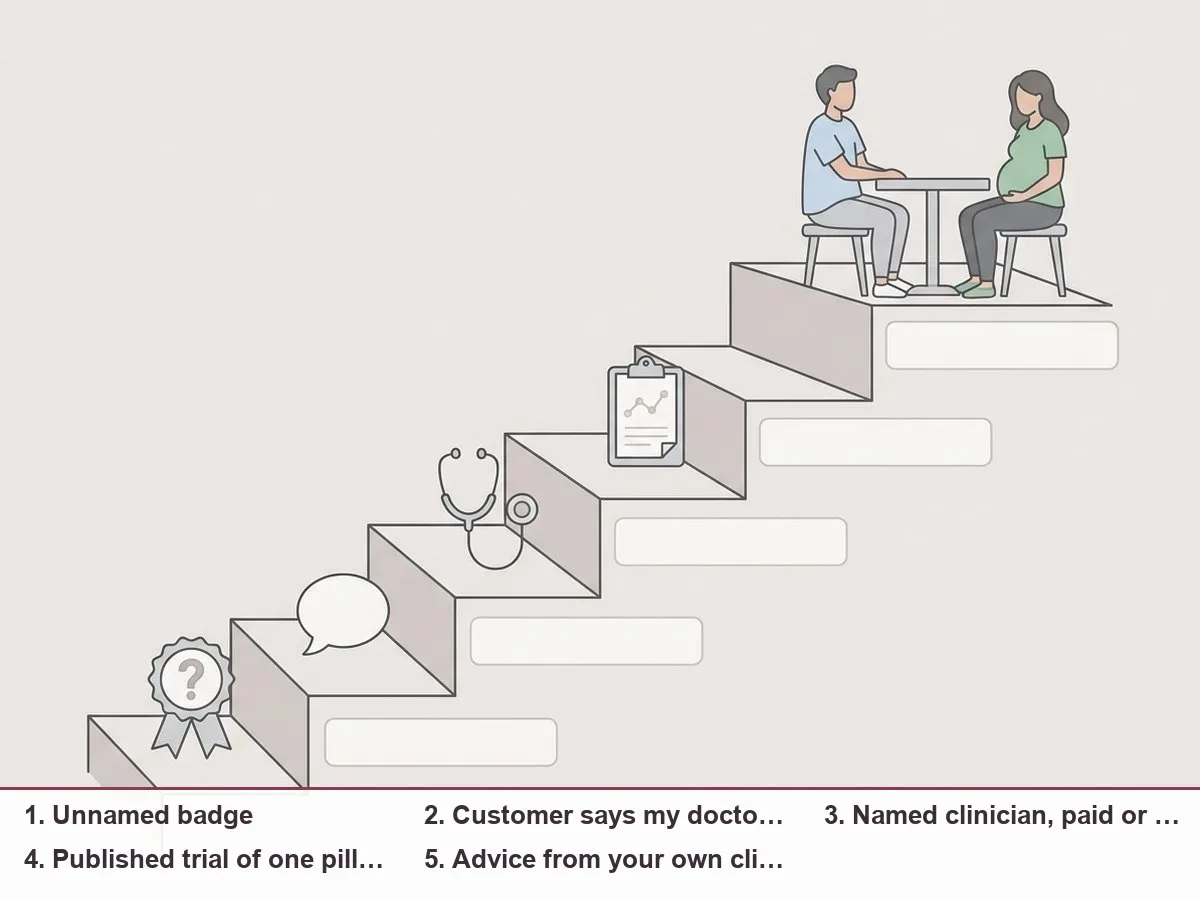
Evidence counts for more when it names the person, matches the exact product, says what was measured, and discloses who paid. Here is how common claims compare.
| Type of claim | Who is behind it | Scope | What it can tell you |
|---|---|---|---|
| Public health guidance | NHS or similar body | Pillows in general | Pillows for bump and knees are a reasonable comfort step. Nothing about a brand. |
| Advice from your own clinician | Your midwife, OB or physio | You, your body, your symptoms | The most relevant advice you can get. Still about support, rarely about a brand. |
| Trial of a specific pillow | Researchers, published with methods | That pillow, that group of people, that outcome | Whether that design changed a measured outcome. Does not transfer to other pillows. |
| Named clinician quoted by the brand | One person, possibly paid | Their opinion | An opinion. Ask whether they were paid and what they examined. |
| "Recommended by doctors" with no name | Unknown | Unknown | Very little. |
| Review saying "my doctor told me" | One customer | Their own visit | That a clinician suggested support for them. Not proof for the product. |
What does research say about pregnancy pillows?
Not much, and what exists is small and tied to specific pillows. No trial we found shows that one pregnancy pillow brand is better than ordinary pillows for sleep.
One example: a randomised crossover trial published in BJOG tested a U-shaped pillow designed to change sleep position in late pregnancy. Of 41 women randomised, 35 were analysed. The authors found no evidence the pillow changed time spent in the position it targeted, and women rated their sleep quality about the same with it as with their own pillows.
That is one pillow, one outcome, a small group. It does not prove pregnancy pillows are useless for comfort. It does show why a "proven in clinical trials" badge needs a named study, a named product, and a named result before it means anything.
Good evidence is specific. If you cannot find who, which pillow and what was measured, you have a slogan, not a finding.
How do you check a doctor-recommended claim before you buy?
Ask four things: who, what exactly, based on what, and were they paid. If the seller cannot answer, treat the badge as decoration.
- Who? A full name and role, for example a midwife, OB-GYN or physiotherapist, not just "experts".
- What did they say? The exact words, and whether they were about this pillow or about side sleeping in general.
- Based on what? Did they use or examine the product, or review a study? Is there a link?
- Paid or gifted? Look for a disclosure. If there is none, ask.
- Does it match your version? A quote about one size, fill or shape does not cover the others.
A seller who answers "we do not have a named clinician" has told you something honest. A seller who avoids the question has told you something too.
What should you ask your own midwife or doctor?
Ask about your symptoms and your sleep, not about brands. Personal advice is the evidence that actually fits you.
- Which side should I be sleeping on, and does it matter for me?
- Is my hip, pelvic or back pain something to check, or comfort only?
- Would support under my bump or between my knees help in my case?
- Is there anything about my pregnancy that changes how I should position myself?
- Should I see a physiotherapist?
This article is general information, not medical advice. If pain limits how you move, or you are worried about anything in your pregnancy, contact your midwife or doctor.
What can no recommendation tell you?
No endorsement tells you whether a pillow fits your bed, your body, your routine or your budget. Those you check yourself.
Miranda ended up skipping every badge. She used regular pillows until 28 weeks, then picked a pillow by bed width, how often she got up at night, and the return window. Her OB never asked which one she bought.
Frequently asked questions
Do doctors recommend pregnancy pillows?
Many clinicians suggest pillows to make side sleeping more comfortable, and the NHS suggests pillows under the bump and between the knees. That is advice about support in general, not a recommendation of a particular brand.
Is a doctor-recommended pregnancy pillow better?
Not automatically. The phrase has no single standard. Check who recommended it, what they said, whether it was about this exact pillow, and whether they were paid.
Are there studies on pregnancy pillows?
A few small ones, each testing a specific pillow and outcome. A BJOG randomised crossover trial of a pillow designed to change sleep position found no evidence it did, and sleep quality ratings were similar. Results from one pillow do not transfer to others.
Do I need a pregnancy pillow if my doctor did not mention one?
No. It is not a medical requirement. Regular pillows can support your bump and knees. A pregnancy pillow becomes worth it when your setup keeps falling apart at night.
What does a clinical-proof claim on a pillow mean?
It should point to a named study of that exact product with a stated result. If you cannot find the study, treat the phrase as marketing.
Once you know a badge cannot choose for you, the useful questions are fit, support, care and return terms. Our pregnancy pillow buying checklist walks through them in five minutes.
Miranda's story is a composite based on public posts from pregnant people asking about pillow labels. Names and details are changed.