Relvay makes a pregnancy pillow. We also tell you below when you should not buy one.
The short answer
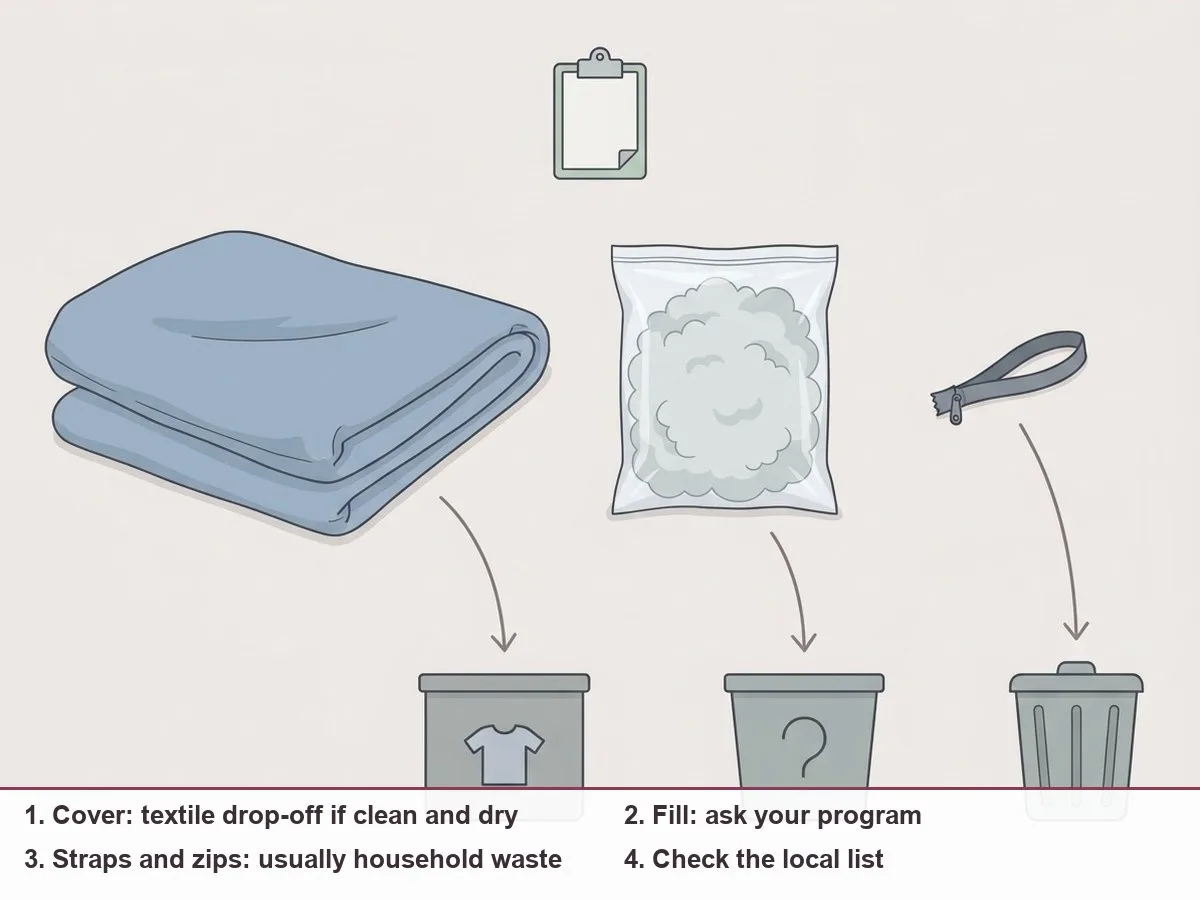
Read the label, take the pillow apart, and check what your local program accepts for each part. Many textile drop-offs refuse pillows, and words like recyclable on a label do not mean your area takes it.
- Still usable? Pass it on with honest notes instead.
- Cover: often fine for textile drop-off if clean and dry.
- Fill: ask first, many programs say no.
How do you get rid of a pregnancy pillow you can't use anymore?
Confirm it is really done, read the label, separate the parts, then check your local rules for each part. Trash is the last step, not the first.
- Confirm it is done. Split seams, clumped or leaking fill, a smell or stain that survives washing, or any mould mean it should not be passed on.
- Read the care label and the listing. Write down what the cover and the fill are made of, in the maker's words. If nothing is stated, write unknown.
- Take it apart. Cover off. Cut off straps, hook-and-loop tabs and zips if they are attached.
- Wash and fully dry the cover if it is washable. Wet or soiled textiles are refused almost everywhere.
- Check your local rules. Search your city or county waste site for textiles and for pillows. Call the drop-off if pillows are not listed.
- Route each part. Use the table below. Bag the fill so it does not spill, and keep everything dry until drop-off.
Which part of the pillow can go where?
Sort by part, not by the whole pillow. A cover can often go where the fill cannot. Your local list has the final word.
| Part | What to look for on the label | Usual first route to check | Ask before you go |
|---|---|---|---|
| Cover | Fabric type, removable, washable | Textile drop-off or donation bin, clean and dry | Do they take worn or torn fabric? |
| Fiber fill | Polyester or other fiber, stated or not | Some textile programs take whole pillows, many do not | Do you accept pillows or loose fill? |
| Foam pieces | Memory foam or other foam | Rarely a textile item; check foam or bulky waste rules | Is there a foam drop-off near me? |
| Beads or microbeads | Bead fill | Seal in a bag; usually household waste | Any special rule for loose beads? |
| Straps, zips, tabs | Plastic or metal parts | Usually household waste | Does metal recycling take zips? |
| Label says nothing | Unknown | Count it as unknown, not as recyclable | Describe it and ask |
Why isn't a recyclable label enough?
Because what a program accepts is set locally, and pillows are often on the not-accepted list. A word on a tag tells you about the material, not about your nearest bin.
Saturday, 4 months postpartum
My pregnancy pillow had done its job. The seam had split, the fill was in lumps, and the dog had chewed one end. The listing had said eco-friendly fill, so I felt good loading it into the car for the textile bin.
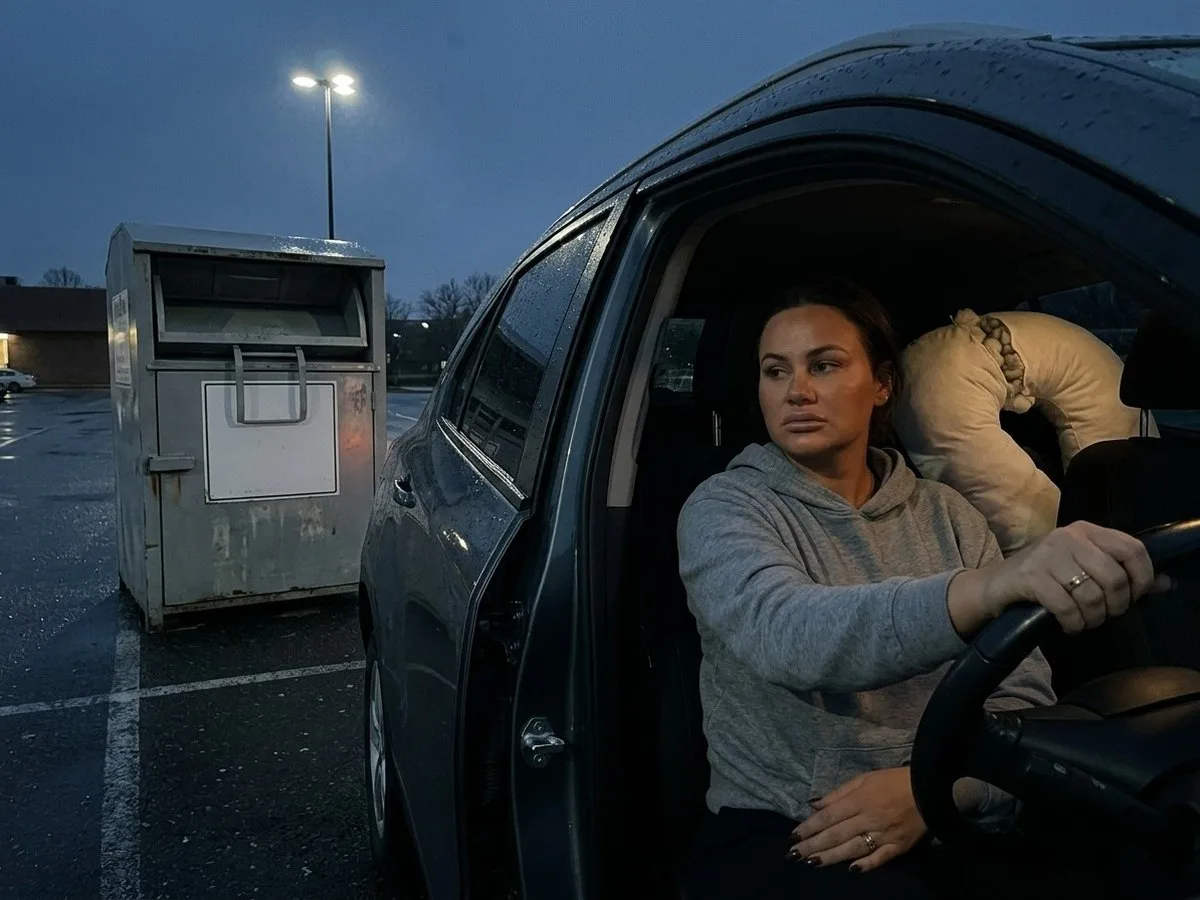
The sign on the bin listed blankets, shoes and bags. Under not accepted: pillows. I sat in the parking lot with a giant pillow in the back seat feeling oddly guilty, and drove it home again.
Rules really do differ. Madison County, New York, lists pillows as not accepted at its textile bins, while Newmarket, Ontario, takes them if they are dry and free of medical or hazardous liquids. The US EPA estimated that in 2018 only about 14.7 percent of textiles in municipal waste were recycled, and about 15.8 percent of sheets, pillowcases and similar bedding.
Check the local list, part by part. It takes one phone call and saves a wasted trip.
What if the pillow can still be used, or reused at home?
If it is clean, intact and still holds its shape, passing it on with honest notes is usually better than recycling. If it is worn out, do not pass it on.
- Still usable: see our used pregnancy pillow condition checklist before you list or give it.
- Worn out: split seams, lumps, smells or stains mean retire it, not resell it.
- Reusing at home: keep old fill out of anything made for a baby, such as a nursing pillow, play mat or crib item.
Ellie kept her washed cover for a textile drop-off that listed fabric of any condition, cut off the strap, and called her county about the fill. They said household waste, bagged. It took one call and ten minutes.
Frequently asked questions
Can you recycle a pregnancy pillow?
Sometimes. A clean cover can often go to textile drop-off. Whole pillows and loose fill are refused by many programs and accepted by some. Check your local list or call.
Can you donate a used pregnancy pillow?
Only if it is clean, intact and holds its shape, and the organization accepts pillows. Many charities and bins do not. Call first.
Does polyester fill go in textile recycling?
It depends on the program. Some take whole pillows, many list pillows as not accepted. Do not put fill in curbside recycling unless your local rules say so.
What should I do with the zipper and straps?
Cut them off before dropping off fabric. Most go in household waste unless your area recycles small metal or plastic parts.
How long does a pregnancy pillow last?
It depends on the fill and how it is cared for. Retire it when it stays flat or lumpy after fluffing and washing, the seams split, or a smell will not wash out.
If you are replacing it with something smaller
If your next pillow is for a new pregnancy, a smaller set means less to store and less to retire later. Relvay makes a 3-Piece set: two wedges and a strap, with a cover listed as removable and washable. We have not yet published the full fabric and fill composition, so if end of life matters to you, ask us before you order.
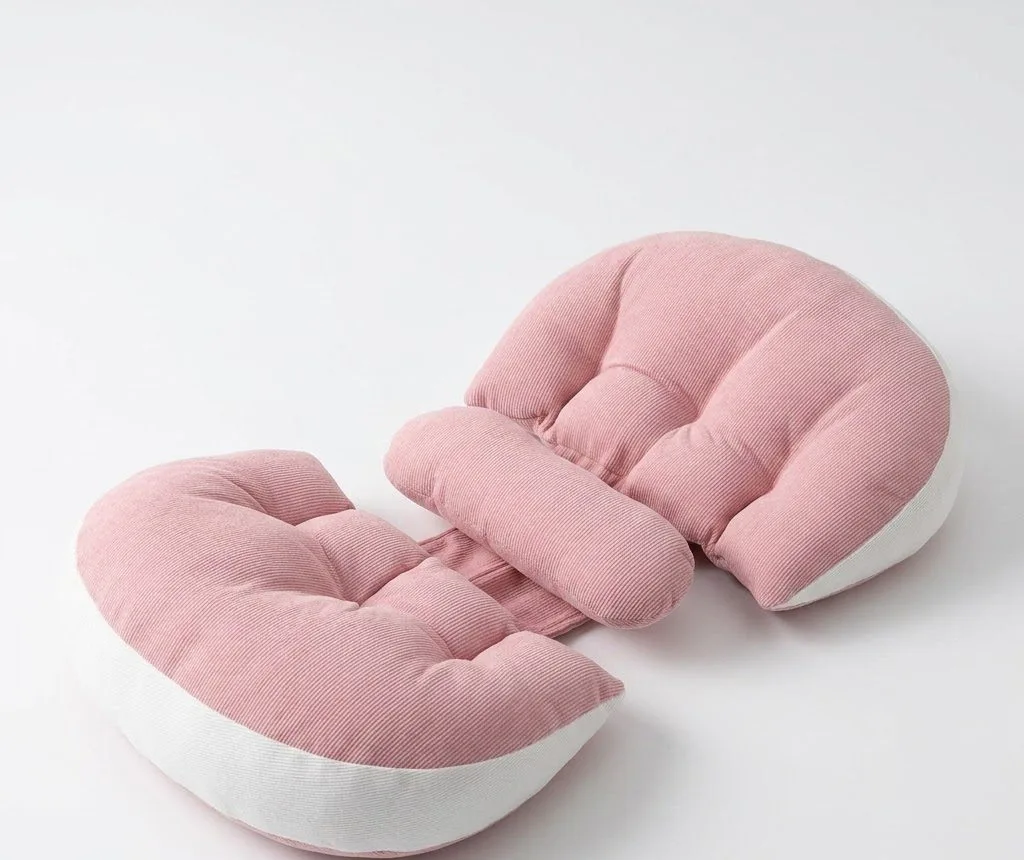
Two wedges for bump and back, joined by a flat strap, about as wide as your torso. Keep a regular pillow between your knees. $79.99, 90-day returns.
Choosing the next one? Our pregnancy pillow buying checklist covers labels, care and size before you order.
Ellie's story is a composite based on public posts from people disposing of pregnancy pillows. Names and details are changed.