Relvay makes a pregnancy pillow. We also tell you below when you should not buy one.
The short answer
Stop sleeping on it for now and do not cover the smell. Check the cover and the insert separately, write down when it was last washed, how it dried and where it was stored, photograph any spots, then ask the maker whether it can be cleaned or should be replaced.
- Separate layers: cover and insert, one by one.
- Record: wash date, drying, storage place.
- Smell fading is not a yes: get an answer.
The pillow came out of the closet smelling wrong
A musty smell after washing or storage usually means moisture stayed somewhere it could not escape. The cause is often simple. Deciding whether the pillow is still fine to use is the harder part.
Week 16, 7:30 p.m.
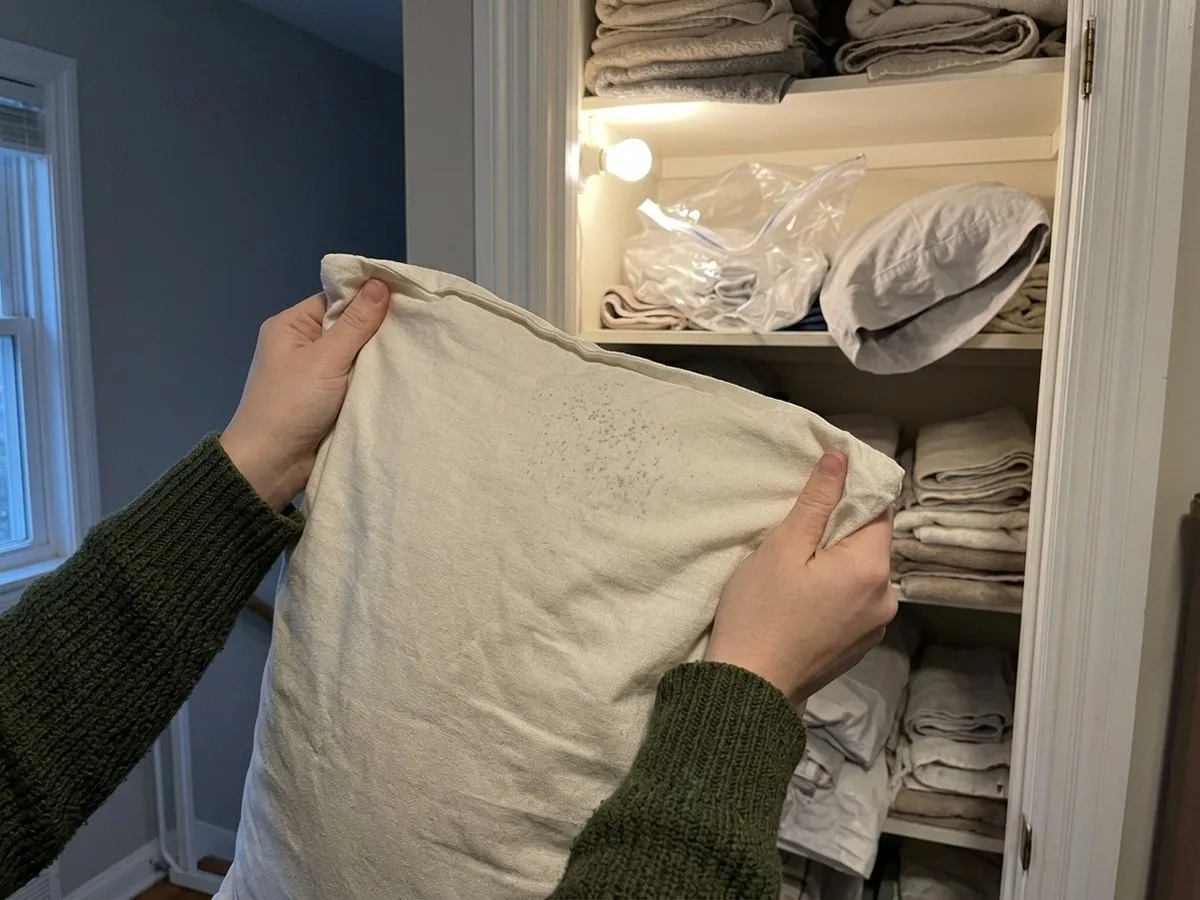
Luna had kept her pillow from her first pregnancy, washed and zipped into a storage bag on the top shelf of the hall closet. Two years later she pulled it down, unzipped the bag and stepped back. It smelled like a damp cellar.
Under the cover, on one end of the insert, there was a patch of small grey freckles. "I sat on the floor with it in my lap," she said. "I had been so pleased with myself for saving it."
- If the pillow feels dry but smells musty.
- If there are spots or rings you do not remember.
- If you are reaching for a fabric spray to make it go away.
Masking the smell feels like fixing it. It only hides the information you need.
What should you do first?
Set the pillow aside, out of your bedroom, and document it before you clean anything. Washing again first erases the clues a maker would ask about.
- Take the cover off and keep the two layers apart.
- Photograph both in daylight, front and back, plus a close-up of any spots with a coin or ruler next to them for scale.
- Smell each layer on its own. Note which one smells, and whether the smell is on the surface or deep inside the insert.
- Do not spray, perfume or powder it. The US EPA's moisture guide says not to paint over or cover moldy surfaces. The same logic applies here: hiding it does not answer anything.
We cannot tell you what a spot is from a photo, and a photo cannot tell you either. Some marks are dye, detergent or water rings. Some are growth. That is a question for the maker, with your record in front of them.
Is it the cover, the insert, or both?
Where the smell and spots sit decides who can help and what is even possible. A cover can often be rewashed by its tag; an insert usually cannot be checked inside.
| What you find | What it suggests | Next step |
|---|---|---|
| Cover smells, insert does not | Moisture in the cover fabric | Rewash the cover by its tag, dry fully, recheck |
| Spots on the cover only | Unknown until the maker sees it | Photograph, ask before bleach or stain remover |
| Insert smells on the surface | Possibly damp from the cover or storage | Record and ask the maker before any cleaning |
| Insert smells deep inside, or spots on the insert | Moisture may have reached the filling | Pause use, ask the maker whether it can be cleaned or should be replaced |
| Smell returns days after airing | Cause still there | Same as above |
Sleepybelly, a pregnancy pillow maker, notes that dampness left inside a cushion or seam can lead to mould and a musty smell. That is why the inside of the insert matters more than how the outside feels.
What goes into your condition record?
A short timeline and the right photos. With those, a maker can usually tell you whether to clean, replace or send it back.
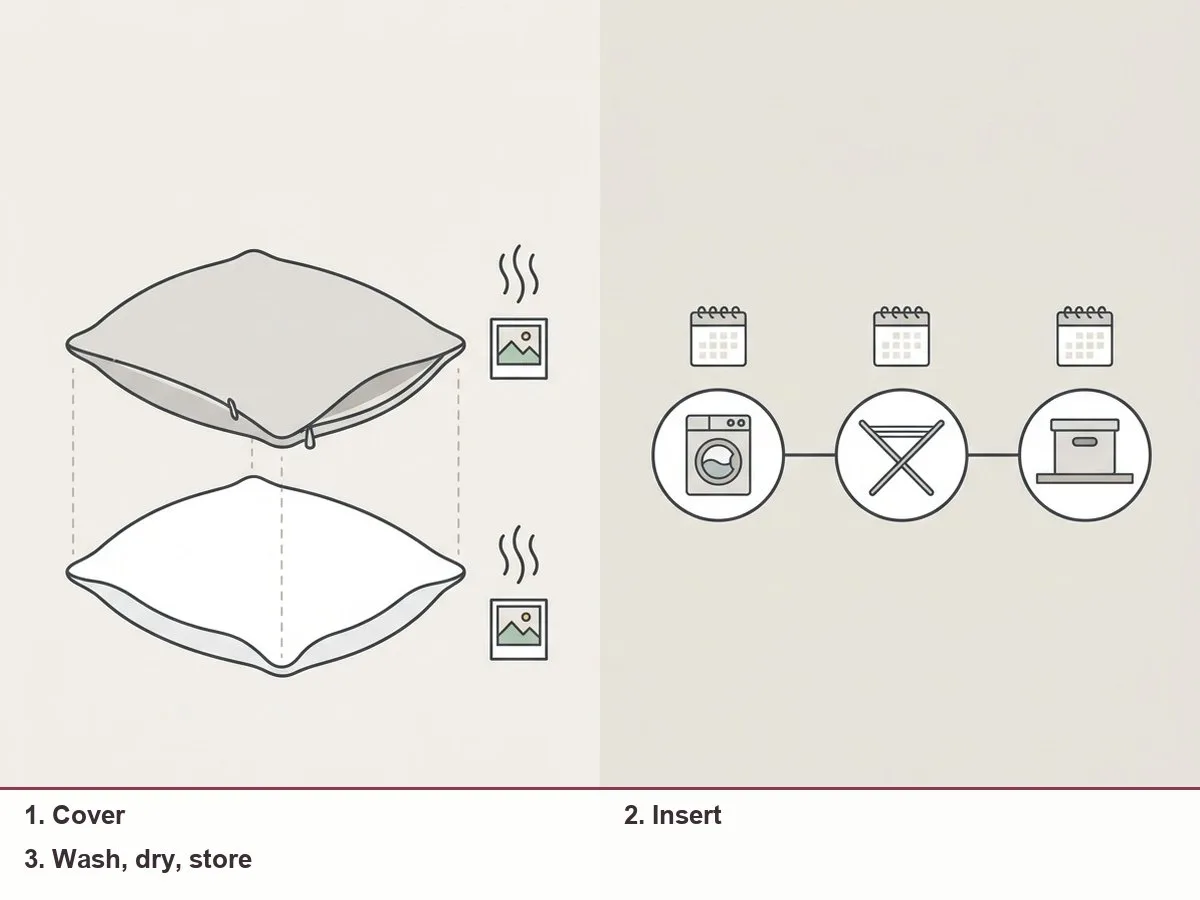
- Layers: cover and insert, which smells, which has spots, where.
- Last wash: date, which parts, machine or hand, and what the tag said.
- Drying: how long, where, and how you checked the inside was dry.
- Storage: how long, where (closet, garage, under the bed), in what kind of bag, and whether anything else stored nearby smells too.
- Change over time: photos on day one and again two or three days later, same angle, same light.
- Pillow details: brand, model, tag photo, order number if you still have it.
If the smell started straight out of a brand new box, that is a different problem. Our guide to a new pillow that smells strong covers it.
Does a fading smell mean it is fine to use again?
No. Airing can fade a smell while the cause stays inside the filling. "It smells better" and "the maker says it can be used" are two different answers.
Treat the smell as a question you send, not a problem you scrub away.
To the maker: My [model] pillow has a musty smell and new spots after [washing / storage]. Cover: [smells or not, spots or not]. Insert: [smells or not, spots or not]. Last washed [date], dried by [method], stored [where, how long, in what]. Photos from [dates] attached. Can the insert be cleaned, and how, or should it be replaced?
Two weeks later
Luna's answer came back in plain words: wash the cover, replace the insert. "I was a little sad," she said. "But I would rather be sad than lie awake wondering."
In the meantime, regular pillows under your bump and between your knees can carry you for a few nights. The NHS suggests side sleeping with that kind of support.
How do you store a pillow so this does not happen again?
Store it only when every layer is fully dry, somewhere cool and dry, in something that breathes.
- Dry all the way through after washing, not only on the surface. Puffy's mildew guide says to dry pillows completely after every wash.
- Wait a day after it feels dry before bagging it.
- Choose a dry spot, not a garage, basement or outside wall that gets damp.
- Use a breathable bag or a clean cotton sheet rather than sealing in any leftover moisture.
- Check it every few months and when you take it out, before it goes on your bed.
Frequently asked questions
Why does my pregnancy pillow smell musty after washing?
Usually because some moisture stayed inside the filling or a seam after it felt dry on the outside. Check the cover and insert separately and note how it was dried.
Can I keep using a pillow with new spots on it?
Pause using it until you know what the spots are. Photograph them, record when they appeared, and ask the maker whether the part can be cleaned or should be replaced.
Will a fabric spray or baking soda fix a musty pillow?
They can change how it smells without telling you why. Record it and ask the maker first; if the cause is inside the filling, masking it does not answer whether to keep it.
My pillow smelled fine before storage. What happened?
Common causes are storing it before it was dry all the way through, or a damp storage spot. Note the place, the bag and how long it was stored for the maker.
When should I just replace the insert?
When the maker says so, or when a smell keeps coming back from deep inside the insert. Covers can often be rewashed; filled inserts are harder to check.
If you end up replacing the pillow
Relvay sells the 3-Piece, two wedges and a strap. Its cover is listed as removable and washable, so the part that touches you can go in the wash. We do not claim any filled pillow cannot pick up a musty smell if it is stored damp, ours included, so the same drying and storage steps apply.
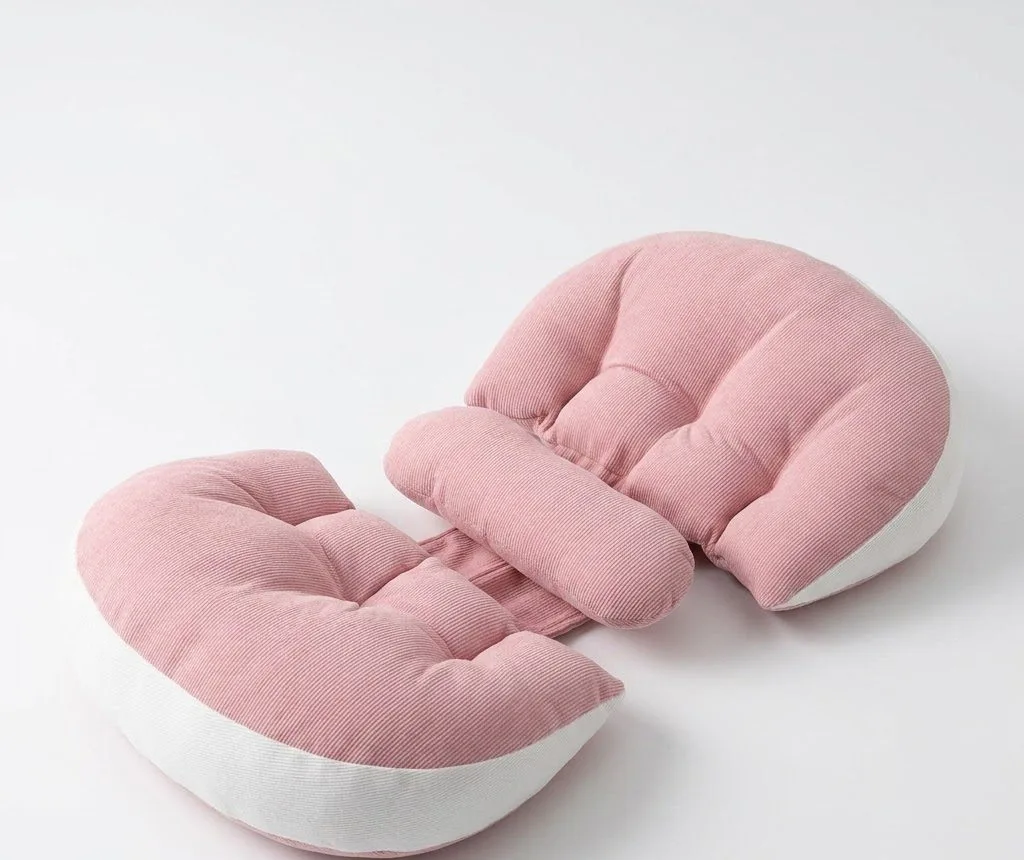
Two wedges for bump and back, joined by a flat strap, about as wide as your torso. Keep a regular pillow between your knees. $79.99, 90-day returns.
Luna's story is a composite based on public posts from pregnant sleepers who found a stored or washed pillow smelling musty. Names and details are changed.