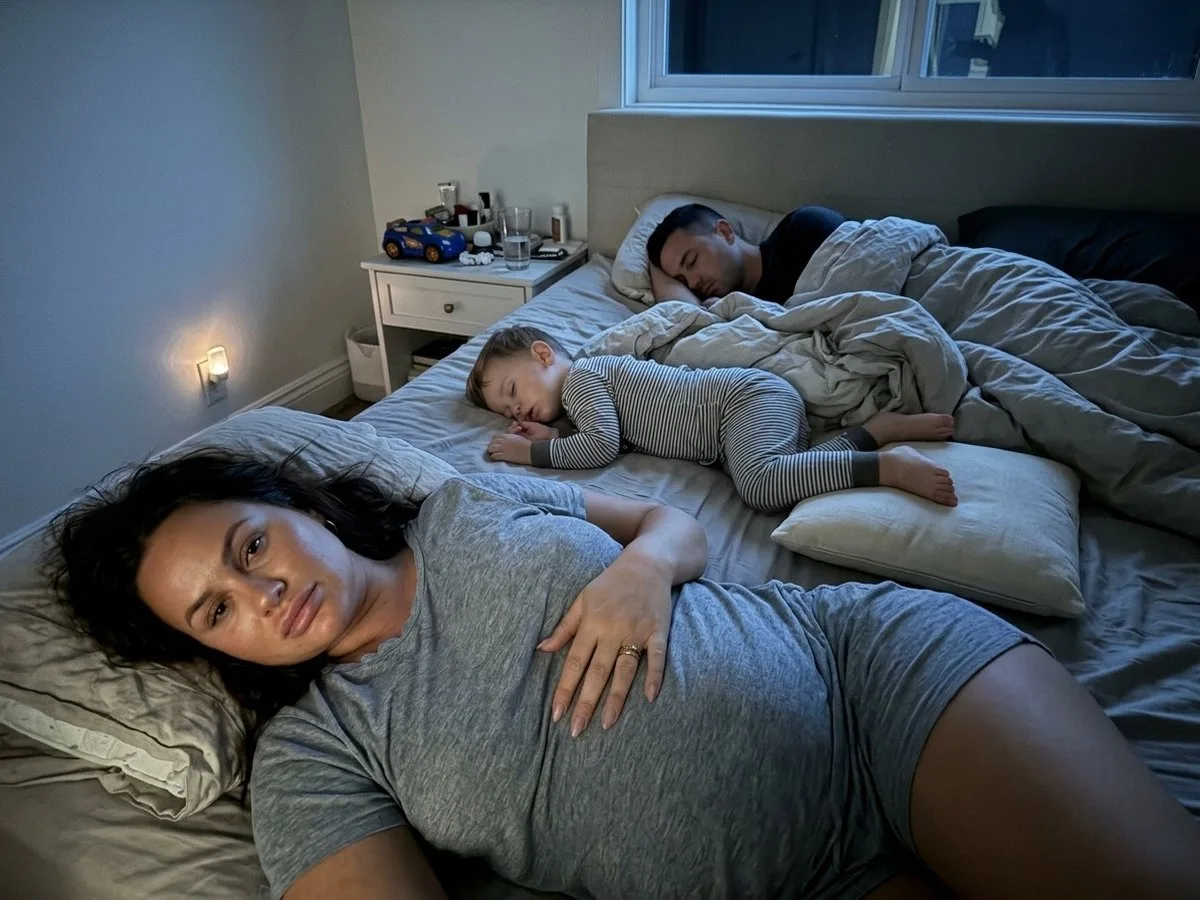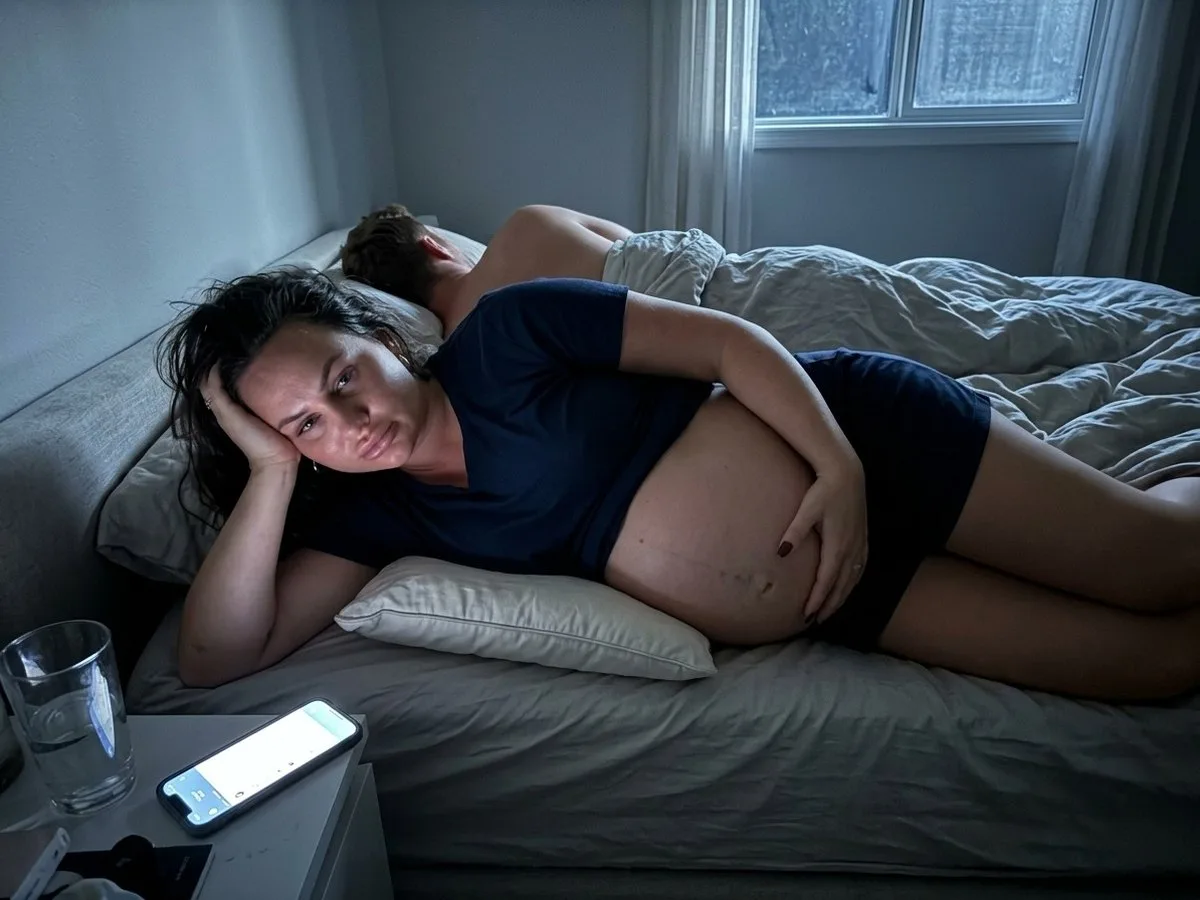
Relvay makes a pregnancy pillow. We also tell you below when you should not buy one.
The short answer
New snoring is common in pregnancy and often comes with a stuffy nose, but it is worth mentioning at your next prenatal visit. Call sooner if anyone sees your breathing stop and start.
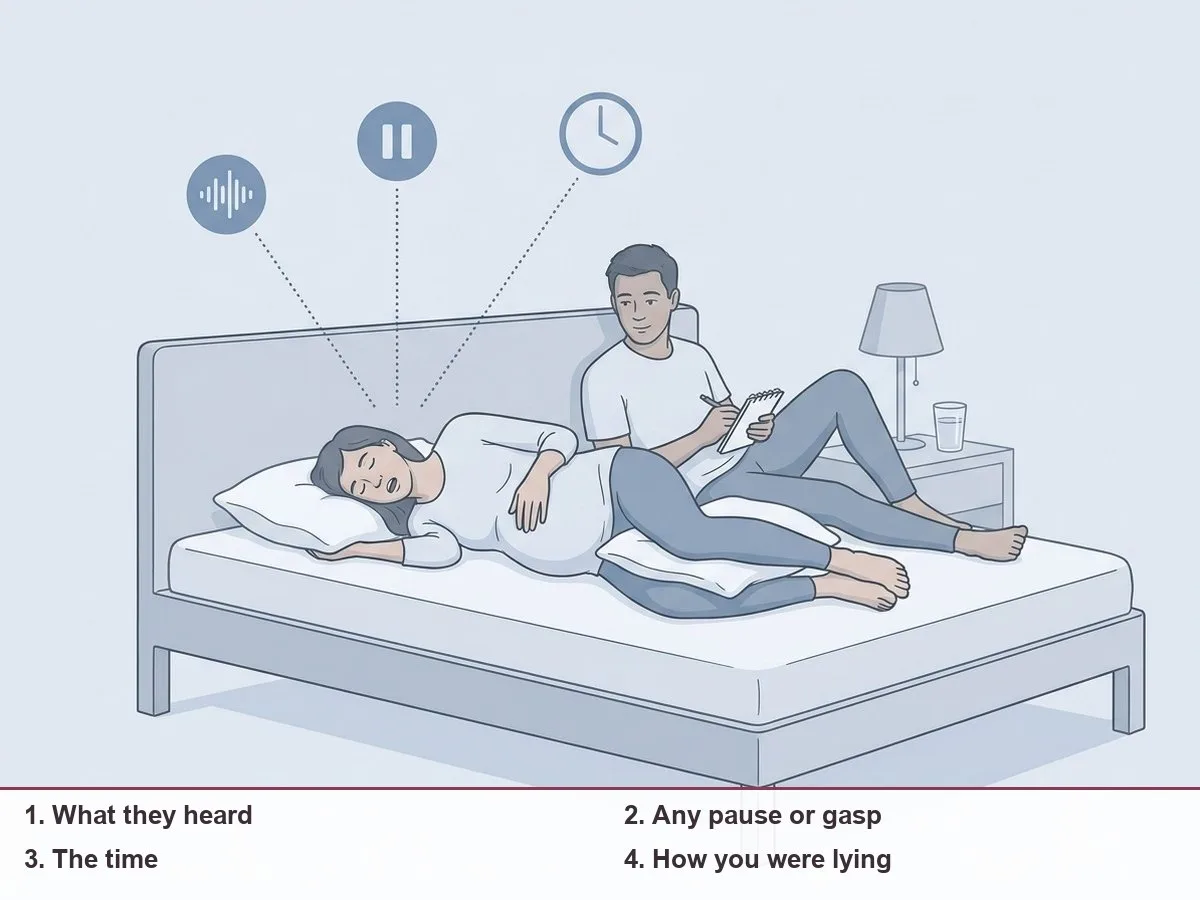
- Note a few nights: what your partner hears, when, and how you were lying.
- Call sooner: gasping, choking sounds or heavy daytime sleepiness.
- A pillow is not a test: it cannot show what happens while you sleep.
Is new snoring in pregnancy worth mentioning?
Yes. Snoring is often just noise, but it is new information about your sleep, and your care team can only weigh what they hear about. Bring it up at your next visit, even if it feels small.
The NHS describes snoring as soft parts of the nose, mouth or throat vibrating as you breathe, which happens more when those airways narrow. Pregnancy can add a blocked nose on top. Cleveland Clinic describes pregnancy rhinitis as a stuffy nose that is not a cold or an allergy, often worse at night and most common in the third trimester.
1:15 a.m.
I was 31 weeks when Marcus touched my shoulder. Not hard. He just said, "You stopped for a second. Then you kind of gasped." I had no idea. I had been asleep the whole time.
I lay there with my heart going, feeling oddly embarrassed, like I had been caught at something. The next morning I almost ordered a wedge pillow before breakfast. Then I thought: what would I even be fixing? I did not know what was happening. Neither did he, really. He had heard it once, half asleep himself.
You cannot watch your own sleep. The person next to you can, and that makes them useful.
Which signs mean you should call instead of waiting?
Call your midwife, OB-GYN or doctor before your next visit if someone sees your breathing stop and start, hears gasping or choking, or you feel very sleepy during the day. The NHS lists these as the main signs of sleep apnea.
- Breathing that stops and starts while you sleep.
- Gasping, snorting or choking noises.
- Waking a lot, or waking with a headache.
- Feeling so tired in the day that it worries you.
Some signs need a call the same day, whatever your snoring is doing. The NHS lists a very bad headache, vision changes such as blurring or flashing lights, severe pain just below the ribs, and sudden swelling of the face, hands or feet as reasons to contact your midwife, doctor or maternity unit right away.
And if you ever feel yourself drifting off behind the wheel, say so at the appointment. It is a fair thing to ask about.
Why isn't a new pillow the first step?
Because a pillow changes how you lie, not what you know. Breathing pauses are a question for a professional, and shopping first can push that conversation back by weeks.
General snoring tips, like the NHS suggestion to sleep on your side with a pillow or wedge behind you, are written for everyday snoring. They are not a check for sleep apnea, and they were not written for pregnancy. Later in pregnancy you are probably on your side most nights already.
We make a pregnancy pillow, so we will say it plainly: nothing on a pillow listing can tell you whether your breathing is fine at night. If a product says it stops snoring, ask what that is based on before you treat it as an answer.
What should your bed partner write down?
Ask them to jot a few lines on three to five nights: the time, what they heard, how you were lying, and how you felt the next day. Plain notes are enough. Nobody needs to stay up on purpose.
| What to note | Example | Why it helps |
|---|---|---|
| Time they noticed | 1:15 a.m., again near 4 | Shows whether it is all night or now and then. |
| What they heard | Steady snore, or a pause and then a gasp | Pauses and gasps are the part to report. |
| How you were lying | Left side, two pillows under the head | Context for the conversation, not a diagnosis. |
| Your nose | Blocked, clear, or rinsed before bed | A stuffy nose is common and worth naming. |
| Next morning | Headache, dry mouth, foggy | Morning signs count too. |
| During the day | Dozed at my desk at 2 p.m. | Daytime sleepiness is one of the main signs. |
If your partner is not sure what they heard, a minute of phone audio can help. A minute, not the whole night. Then bring the notes, or bring your partner. The NHS says it can help to have the person who noticed it at the appointment.
Marcus kept his notes in the same phone app he uses for grocery lists. Four nights. Two had nothing worth writing. One had the pause again, around 3 a.m., when I had slid flatter on my pillows. He wrote: "Sounded like a reset. Then normal." That one line did more for me than any product page.
What should you ask your care team?
Ask whether what your partner noticed needs a closer look, and what happens next if it does. Take the notes in with you, so the answers fit your nights.
- My partner noticed [pauses / gasping / loud snoring] on [number] nights. Does that need a closer look?
- Could my blocked nose be part of this? Which rinses or sprays are okay for me right now?
- Do I need a sleep test? Can it be done at home?
- Is my blood pressure where you want it?
- Is there anything about how I sleep, flatter or more propped up, that you want me to change?
- What should make me call before my next appointment?
The NHS notes that sleep apnea tests are usually done at home, with a small device worn overnight that tracks your breathing. If you are referred, ask how long the wait is and what to do in the meantime.
Sienna's midwife read the four lines, checked her blood pressure, and asked two questions about her nose. Then she made a referral, and told her exactly which signs meant calling before the test date. Sienna said the strangest part was the relief. Not because anything was settled, but because it was no longer only hers to figure out at 1 a.m.
What about the stuffy nose?
Mention it, and check with your pharmacist or provider before using any spray or medicine. Cleveland Clinic warns that decongestant sprays used for more than a few days can make the stuffiness bounce back.
Cleveland Clinic lists saline rinses and sleeping slightly upright among the comfort steps people use for pregnancy rhinitis. Those are about comfort. They do not answer the breathing question, so keep the night log going either way.
This article helps you collect information for your care team. It cannot tell you whether your breathing at night is normal. Only someone who can assess you can do that.
Frequently asked questions
Is it normal to start snoring when pregnant?
Many people notice new or louder snoring in pregnancy, often along with a blocked nose. It is still worth mentioning at your next visit, and sooner if someone sees pauses or hears gasping.
Should I worry about snoring during pregnancy?
Most snoring is just noise. The signs to act on are breathing that stops and starts, gasping or choking sounds, and strong daytime sleepiness. If you notice those, call your provider rather than waiting.
Can a pregnancy pillow stop snoring?
We do not know of good evidence that a pregnancy pillow does, and a pillow cannot show whether your breathing pauses at night. Be careful with any listing that promises it, and tell your care team what you have noticed.
How is sleep apnea checked?
Usually with a small device worn overnight that tracks your breathing, often at home. Your provider decides whether you need one.
What if I sleep alone?
Note how you feel in the morning and during the day. Waking with a headache or feeling very sleepy in the day is worth reporting on its own, and you can ask whether a recording or a home test makes sense.
If your care team is happy with your breathing and you are now shopping for side-sleeping support, our pregnancy pillow buying checklist shows what to check before you order.
Sienna's story is a composite based on public posts from pregnant people and their partners. Names and details are changed.