
Relvay makes a pregnancy pillow. We also tell you below when you should not buy one.
The short answer
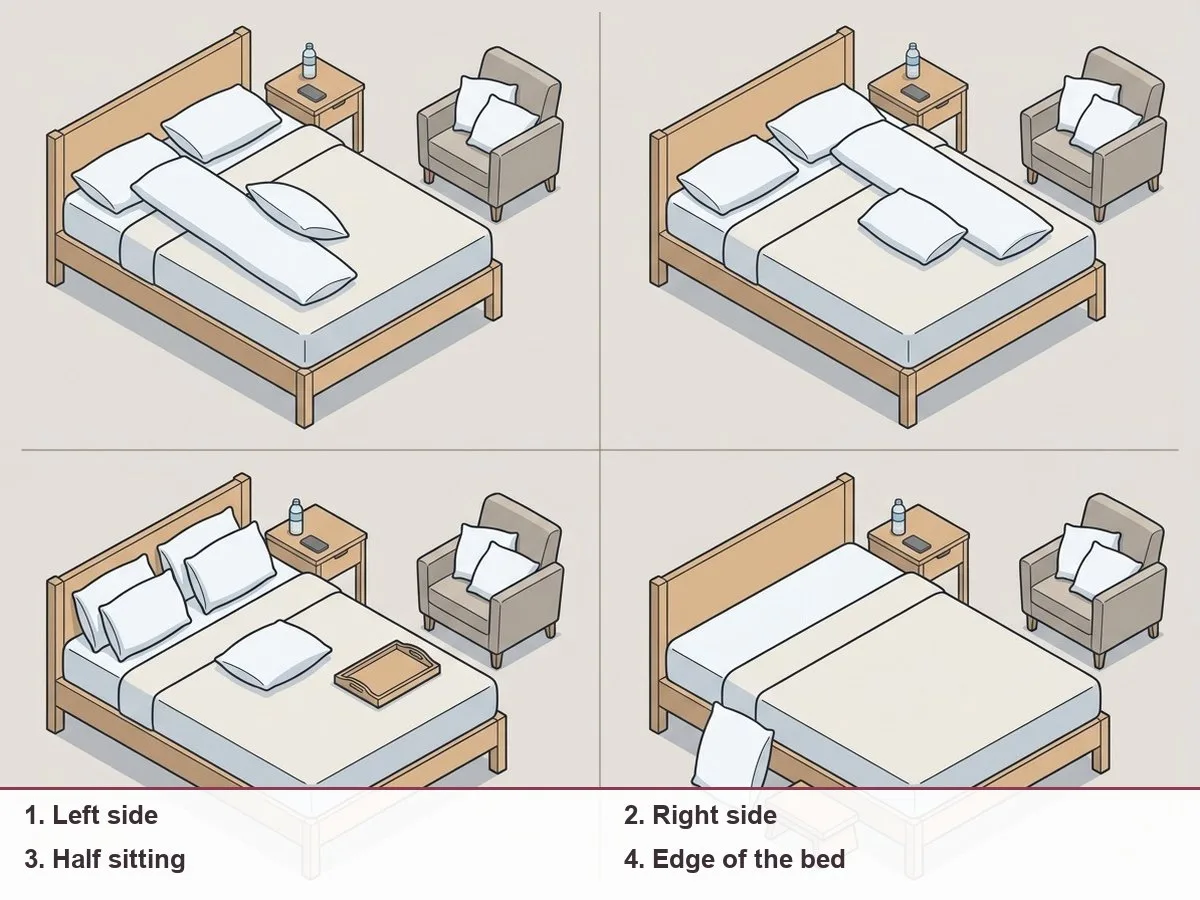
Set up four stations once: left side, right side, half sitting, and sitting on the edge of the bed. Keep spare pillows parked within reach. First, confirm exactly what your care team means by rest.
- Ask first: what you can do, and for how long.
- Sleep: on your side, either side.
- Park: spare pillows where you can grab them.
What does bed rest in pregnancy actually mean for you?
It depends on who told you, and why. The Society for Maternal-Fetal Medicine notes there is no standard definition: for some people it means mostly lying down with bathroom trips, for others a few rest periods a day. Your pillow plan should follow your exact instructions, so pin those down first.
Day 2, 10:15 a.m.
I was 29 weeks when my OB said, take it easy, mostly in bed for the next two weeks, and we will see you Friday. I nodded. In the car I realized I had no idea what mostly meant.
By the second morning I had six pillows on the bed and none in the right place. Every time I wanted to eat, read or turn over, I spent five minutes rebuilding the pile. I was more tired from moving pillows than from anything else.
Rest is easier when the bed is set up for the whole day, not just the night.
What should you confirm with your care team before you set up?
Confirm what you are allowed to do, what you should avoid, and what should make you call. Write the answers down; they shape every station below.
- Do you mean lying down most of the day, or several rest periods?
- Can I sit up to eat, read or work on a laptop? For how long?
- Can I walk to the bathroom, shower, or go downstairs?
- Is there any position you want me to use or avoid?
- Should I move my legs or get up regularly while resting? Is there anything I should do about blood clots?
- How long is this for, and when will we review it?
- Which symptoms mean I should call you right away?
The NHS lists being confined to bed for several days, and being pregnant, among the things that raise the chance of a blood clot in the leg. That is a good reason to ask the movement question out loud rather than guess.
How do you set up four pillow stations?
Give each position its own spot and its own pillows, so moving between them means shifting one or two pillows, not rebuilding the pile. Here is a typical layout using ordinary pillows.
| Station | Used for | Pillows | Where they sit |
|---|---|---|---|
| 1. Left side | Sleep, naps, resting | Head pillow, one between knees and ankles, a small one under the bump, one behind the lower back | Your usual half of the bed |
| 2. Right side | Sleep, naps, a change of side | Same four, mirrored. Only the bump and back pillows swap places. | Same spot, facing the other way |
| 3. Half sitting | Eating, reading, calls, visitors | Two or three firm pillows or a wedge behind your back, one under your knees | Against the headboard |
| 4. Edge of the bed | Meals at a tray, getting ready to stand | One pillow behind your lower back if you lean on something, feet flat on the floor or a stool | Your exit side |
Which stations you use, and for how long, should match what your care team said. If they said lie down, station 3 may be short visits only.
How do you change position without rebuilding everything?
Keep a parking spot for pillows you are not using, and move only the pillows that change between stations. Four habits make most of the difference.
- Park, do not pile. A chair, basket or the foot of the bed holds the pillows for station 3. When you lie down, they go there, not under you.
- Move the knee pillow with you. When you switch sides, it stays between your knees as you turn.
- Swap only bump and back. Going from left to right side, the bump pillow and the back pillow trade places. Everything else stays.
- Keep a reach list on the nightstand: water, phone and long charger, snacks, notebook for symptoms and questions, remote, a small bin.
The NHS advises going to sleep on your side, either left or right, and says not to worry if you wake on your back: just turn onto your side again. Stations 1 and 2 are your sleep spots; station 3 is for awake time.
What could a day of station changes look like?
Something like this, adjusted to your instructions. The point is a rhythm you can follow without thinking, not a schedule to hit.
| Time | Station | What happens |
|---|---|---|
| Waking | 1 or 2 | Stay on your side a few minutes before sitting up |
| Breakfast | 4, then 3 | Bathroom if allowed, then half sitting with a tray |
| Morning | 2 | Switch to the other side for a rest |
| Lunch and calls | 3 | Pillows from the parking spot behind your back |
| Afternoon | 1 | Back on your side; parked pillows go away |
| Evening | 3, then 1 or 2 | Dinner sitting up, then side lying for the night |
On day three Tamara stopped building and started parking. She kept two firm pillows on the armchair for meals, a knee pillow that went wherever she went, and a small one that moved from under her bump to behind her back when she changed sides. At her Friday visit she brought a list of what she had been doing, and her OB told her which parts she could do more of.
"Got into the right position, with all the pillows in place.... and now I gotta pee."YouTube comment on a pregnancy sleep video
When is it a call, not a pillow problem?
Call your care team for anything on the list they gave you, and for new pain, bleeding, fluid leaking, or changes in your baby's movements. Do not wait for your next visit because you are already resting.
- Any symptom your care team told you to watch for.
- Bleeding, fluid leaking, or regular tightenings or pains.
- One leg swollen, painful, warm or a different color.
- Shortness of breath or chest pain: call 911 or your local emergency number.
- Your baby's movements feel slower or different from usual.
A pillow setup is for comfort while you follow medical advice. It does not replace that advice.
Frequently asked questions
How should I position pillows on bed rest during pregnancy?
Set up stations: side lying with pillows between your knees, under your bump and behind your back; half sitting with firm pillows behind you for meals; and the edge of the bed. Follow any position advice your care team gave you.
What is the best position for bed rest in pregnancy?
Ask your care team, since it depends on why you are resting. For sleep, the NHS advises going to sleep on your side, either left or right.
How many pillows do I need for bed rest?
Many people manage with five or six ordinary pillows: a head pillow, one between the knees, one under the bump, one behind the back, and two firm ones for sitting up.
Can I sit up while on bed rest?
That depends on your instructions. Bed rest means different things to different clinicians, so ask whether sitting up to eat or work is fine, and for how long.
Should I move my legs while on bed rest?
Ask your care team. The NHS lists being confined to bed for several days, and pregnancy, among the things that raise the chance of a blood clot, so it is worth asking what movement they want from you.
When you are back to a normal routine, our pregnancy pillow buying checklist helps you decide whether regular pillows are enough for your nights.
Tamara's story is a composite based on public posts and reviews from pregnant people. Names and details are changed.