Relvay makes a pregnancy pillow. We also tell you below when you should not buy one.
The short answer
Comfort products can make normal recovery easier, but they cannot tell you whether a pain is normal. Before you buy, write down what hurts, check it against your discharge instructions, and call your care team first for any warning sign.
- Call, don't shop: fever, heavy bleeding, chest pain, leg pain or swelling.
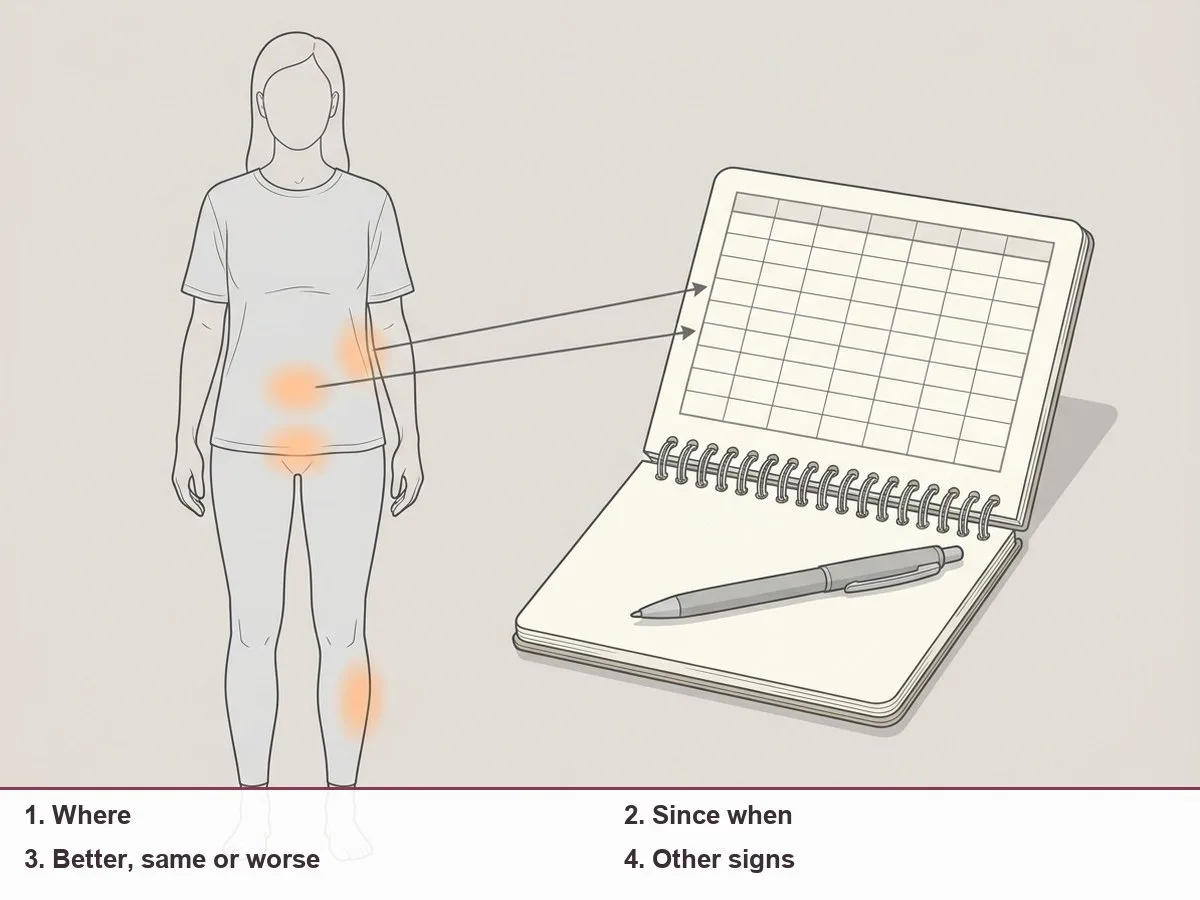
- Log it: where, since when, better or worse.
- Check claims: "relief" is a promise, not a fact.
Is it a comfort problem or a symptom to check?
Soreness that eases a little each day is a common part of recovery, and comfort products are made for that. Pain that is severe, getting worse, or arrives with fever, bleeding, or chest or leg symptoms is a reason to call, not to shop.
The NHS describes cramps while you feed, sore stitches and piles as common after birth, and says to tell your midwife if stitches are sore. It also lists symptoms that need a call straight away. The difference is not how much something hurts tonight. It is which way it is going and what comes with it.
1:10 a.m.
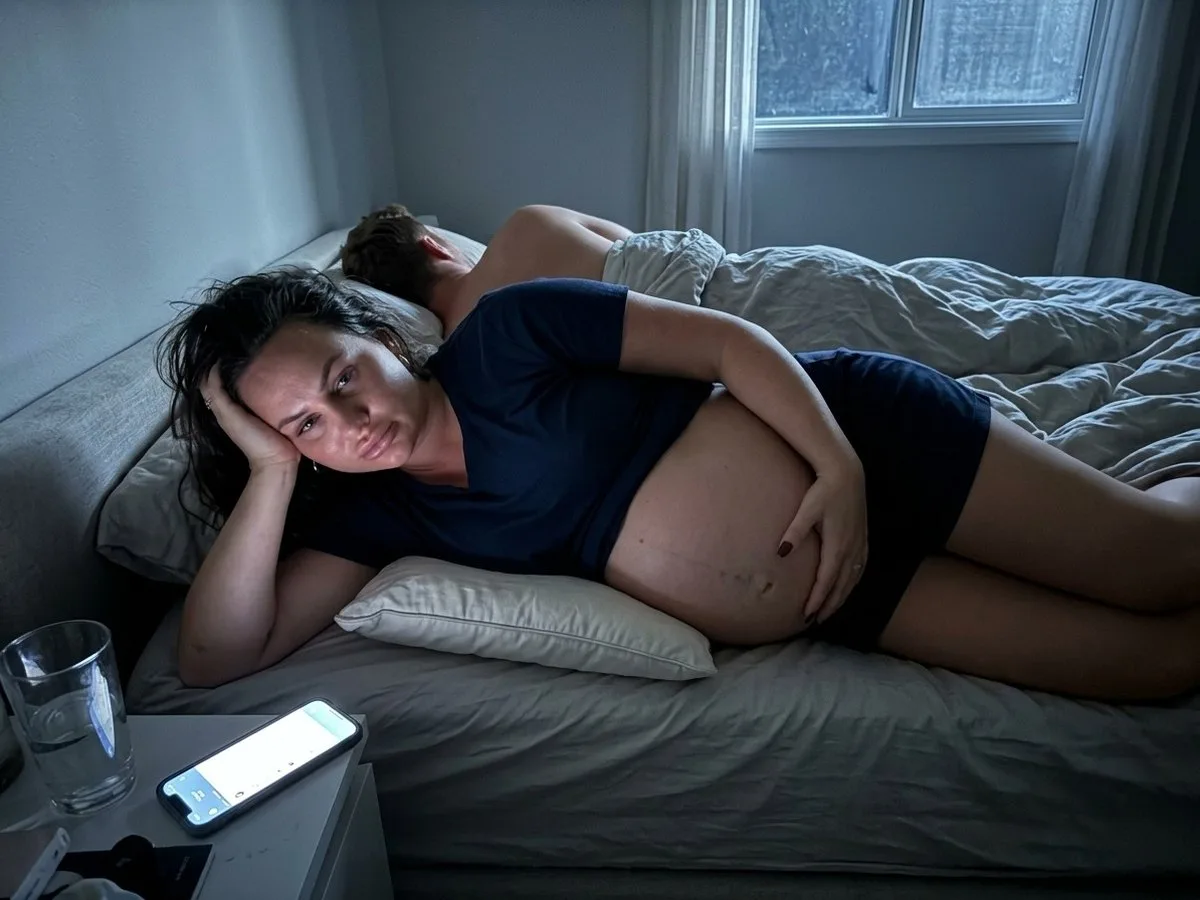
Nine days after my son was born, I was feeding him in the dark and scrolling with my free thumb. Ring cushion. Cooling pads. A heated belly wrap. A spray. The cart said $112 and I had not closed a single tab.
Somewhere around the heated wrap I realized the pain low on my left side was not better than day five. It was worse. I had been trying to buy my way past a question I had not asked anyone.
A product can make a normal recovery more comfortable. It cannot tell you whether your recovery is normal.
Which warning signs mean call now, not buy?
The CDC asks you to watch for urgent warning signs during pregnancy and for a year after birth, and to get medical care right away if you have one. Tell whoever you see that you were pregnant in the last year.
- Fever of 100.4°F or higher.
- Heavy bleeding or large clots, or discharge that smells bad.
- Severe belly pain that does not go away.
- Swelling, redness or pain in one leg or arm.
- Chest pain, a fast-beating heart or trouble breathing.
- A headache that will not go away or gets worse, or changes in your vision.
- Dizziness or fainting.
- Thoughts about harming yourself or your baby.
- After a C-section: a wound that is red, swollen, leaking pus or smells bad.
The ACOG Foundation publishes the same list of urgent maternal warning signs for patients. If something feels like an emergency, call 911. A cushion or a heating pad should never be the thing that makes you wait.
How do you keep a simple symptom log?
Write one line per sore spot, once a day: where it is, when it started, whether it is better, the same or worse than yesterday, and anything that came with it. Three days of lines tell your care team more than one bad night.
| Column | What to write | Example |
|---|---|---|
| Where | The exact spot. | Low left belly. Stitches. Lower back. Right calf. |
| Since when | Day after birth it started. | Day 3. |
| Trend | Better, same or worse than yesterday. | Worse. |
| Worse with | What sets it off. | Feeding, standing, peeing, coughing. |
| Tried | What you already used and what happened. | Pain medicine from discharge sheet. Ice pack. |
| Other signs | Anything from the warning list. | Temperature, bleeding, smell, swelling. |
If any line has "worse" two days running, or anything in the last column, call before you buy. The log also helps if you are too tired to remember details on the phone, which is most people in the first weeks.
What did your discharge instructions already say?
Find the papers you were sent home with before you buy anything. They often already say what to use for pain, what to put on stitches or a wound, and who to call, and a product should fit those instructions rather than replace them.
Look for these lines:
- Your pain medicine plan, and what to check with a pharmacist if you are breastfeeding.
- Whether to use ice or heat, where, and when.
- How to care for stitches or a C-section wound.
- Anything about sitting, lifting or getting in and out of bed.
- Your follow-up date and the phone number for questions.
A guideline from ACOG, the American College of Nurse-Midwives and the American Academy of Family Physicians says to encourage non-drug options first whenever possible, with examples like cold packs for engorged breasts. That is about using them the way your team suggests, not about buying everything that promises relief. If a product would do something your sheet does not mention, like putting heat on your belly or pressure near a wound, ask first.
Which product claims should you check?
Read the claim, then ask what it would take to prove it. Words like "relief", "recovery" and "medical grade" sound specific and usually are not.
| Claim you see | What to ask |
|---|---|
| "Relieves postpartum pain" | Which pain? Compared with what? Who tested it? |
| "Speeds up recovery" | Recovery of what, measured how? Usually there is no answer. |
| "Recommended by doctors" | Which doctor, for which use? A name and a source, or it means nothing. |
| "Safe for C-section" | At which stage, and where on the body? Check with your team. |
| Heated or cooling device | Settings, auto shut-off, model number, and whether it may touch stitches or a wound. |
| Sitting cushions | Which shape suits your recovery. See donut, ring or regular pillow. |
Also ask the seller one practical thing: whether opened items can be returned. Many recovery products are hygiene items, and you may want to know before you open three of them.
There is no single kit every new parent needs. What you need depends on how you gave birth, what hurts and what your team suggests.
What should you bring to your call or visit?
Bring the symptom log, your discharge sheet and a list of the products you are thinking about, with their claims. That turns "I'm sore, is that normal?" into a question someone can actually answer.
- Your log, even if it is only two or three days.
- The discharge sheet, or a photo of it.
- The product list, with what each one claims to do.
- Your questions: Is this pain expected at this point? Which of these products fits my instructions? Is there anything I should not use?
Trisha closed the cart and called the after-hours nurse line instead. She read her log out loud. The nurse asked about her temperature and the left side, and asked her to come in that afternoon. The cart waited. Two weeks later she bought one thing, the one her midwife had actually suggested.
If you are reusing a pregnancy pillow for rest or feeding after birth, our guide to using your pregnancy pillow after delivery covers that, adults only.
Frequently asked questions
What helps with postpartum pain at home?
Start with your discharge instructions: the pain medicine plan, and any ice, heat or wound care they describe. If you are breastfeeding, check medicines with a pharmacist, midwife or doctor. Add comfort products that fit those instructions.
When is postpartum pain not normal?
When it is severe, getting worse instead of better, or comes with fever, heavy bleeding, chest pain, trouble breathing, or pain and swelling in one leg. Call your care team or get help right away.
Do I need a postpartum recovery kit?
There is no single kit every new parent needs. What helps depends on how you gave birth, what hurts and what your care team suggests.
Can I use a heating pad after giving birth?
Ask your care team where and when, and check your discharge sheet. Keep heat away from stitches or a C-section wound unless you have been told otherwise, and do not fall asleep with it switched on.
Can a pregnancy pillow help after birth?
Many people reuse one for resting or propping up. It is for adults only and should stay out of the baby's sleep space.
If you are still pregnant and planning ahead for sleep, our pregnancy pillow buying checklist covers size, fit and return terms.
Trisha's story is a composite based on public posts from new parents about recovery shopping. Names and details are changed.