
Relvay makes a pregnancy pillow. We also tell you below when you should not buy one.
The short answer
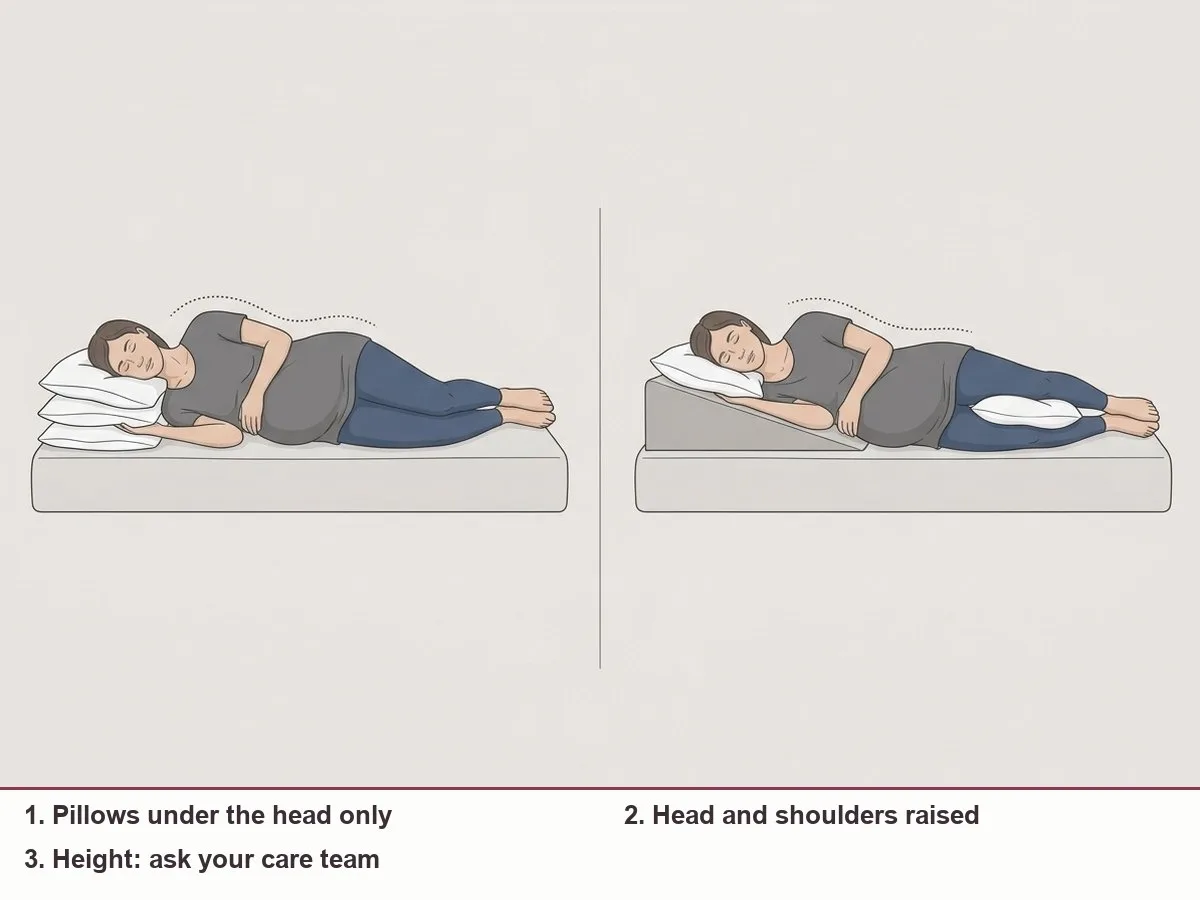
The NHS suggests small meals, nothing in the 3 hours before bed, and propping up your head and shoulders. Sleeping on your left side may also help. There is no one right height for everyone.
- Track a week: meal times, bedtime gap, how you were propped, when it burned.
- Ask first: before any medicine, and about how high to prop.
- Call the same day: heartburn antacids do not touch, with headache or rib pain.
Why does heartburn feel worse at night in pregnancy?
Heartburn is common in pregnancy, and night is often the hardest part because you lie down after the day's meals. The NHS tips focus on two things you can control: when you eat, and how your head and shoulders sit in bed.
1:05 a.m.
I was 27 weeks and I woke up with my throat on fire. Again. I padded out to the couch, because sitting up was the only thing that seemed to help, and I slept there until the light came in.
By the end of that week I had three pillows stacked under my head, a glass of milk on the nightstand, and a shopping cart with a foam wedge in it. I did not know which of those things was helping. I did not even know which nights were bad and why.
Guessing at 1 a.m. is how you end up with a cart full of fixes and no idea which one works.
What should you track for a week?
Track when you ate, when you lay down, how you were propped, and when the burning started. Seven nights is usually enough to show a pattern, or to show there is not one.
| Write down | Example | Why it helps |
|---|---|---|
| Dinner time and size | 8:15 p.m., big plate | The NHS suggests smaller meals more often. |
| Anything late | Hot chocolate at 9:30 | Late snacks and drinks count. |
| Time you lay down | 10:30 p.m. | Shows the gap between eating and bed. |
| How you were propped | Two pillows under head only | Head only and head and shoulders are not the same. |
| Which side | Started left, woke on right | The NHS says the left side may help. |
| When it burned | 1 a.m., about 40 minutes | Timing is the part your care team needs. |
| What you took | Antacid at 1:10 a.m. | Lets them check timing and how it worked. |
Keep it boring and short. A note on your phone is fine. The point is not to rate your discipline. It is to see which nights are different, and what they have in common.
Sadie's week showed something she had not noticed. The four bad nights were the four nights dinner ran past 8. The pillows had nothing to do with it on two of them.
How propped up should you be at night?
There is no single right height for everyone, and we will not give you one. The NHS says to prop up your head and shoulders. How high, and with what, is a fair question for your midwife or doctor.
Here are the common setups people try, and the question worth asking about each one before you buy anything.
| Setup | What it changes | Question to ask |
|---|---|---|
| Extra pillows under your head | Free, but they tend to lift the head more than the shoulders | Is this raising enough of me, or just bending my neck? |
| A wedge under head and shoulders | A firmer, steadier slope | How high is right for me, and can I still lie on my side on it? |
| Raising the head end of the bed | Tilts the whole mattress | Is this okay for me, and by how much? |
| Sleeping in a chair or recliner | Many try it on bad nights | Is it okay for whole nights at my stage of pregnancy? |
Later in pregnancy, going to sleep on your side is the usual advice, so ask how propping up fits with that for you.
We make a pregnancy pillow, and to be clear: it is built for side sleeping on a flat bed. It is not a wedge for raising your chest, and we do not say it helps heartburn.
What should you ask about heartburn medicines?
Ask before you take anything, and tell the pharmacist you are pregnant. The NHS notes that some antacids are not suitable in pregnancy.
The NHS describes two common kinds: antacids, which neutralise acid, and alginates, which help stop acid rising into the food pipe. Your GP or midwife may suggest when to take them. A few points worth checking at the counter:
- Is this one okay for me in pregnancy?
- When should I take it, at bedtime or before a meal?
- I take iron or folic acid. How far apart should they be? The NHS says to leave at least 2 hours.
- I take another prescribed medicine. Can it make heartburn worse? Never stop a prescribed medicine without advice.
Write every dose into your diary, with the time. That way the next conversation starts with facts.
When is it more than ordinary heartburn?
Contact your midwife, doctor or maternity unit right away if heartburn does not ease with antacids, especially alongside a very bad headache, vision changes, severe pain just below the ribs or sudden swelling of the face, hands or feet. The NHS lists these together as signs to act on.
The NHS also says to contact your midwife or GP if self-care is not helping, or if you have:
- Difficulty swallowing, or a hoarse voice.
- A cough that will not go away or keeps coming back.
- Weight loss, or pain or swelling in your stomach.
- Swollen glands on both sides of your neck.
If you are unsure whether something counts, call. That is what the line is for.
What should you bring to your appointment?
Bring the diary, a list of anything you have taken, and a photo or description of how you have been propping yourself up. Then ask questions that fit your nights.
- Here is my week. Do you see a pattern I am missing?
- How high should I prop my head and shoulders, and with what?
- Is it okay to sleep sitting up on bad nights?
- Which medicine, if any, and when should I take it?
- Which signs mean I should call before my next visit?
Sadie's midwife spent two minutes on the diary and asked if dinner could move earlier on work nights. They agreed on a small evening snack plan, a way to prop her head and shoulders that she could keep on her side, and one antacid to check with the pharmacist. The foam wedge stayed in the cart. Some weeks later Sadie said what changed most was not the burning. It was not lying awake trying to guess.
This article helps you prepare questions. It cannot tell you what is causing your symptoms or which treatment is right for you. Your midwife, doctor or pharmacist can.
Frequently asked questions
What is the best sleeping position for heartburn in pregnancy?
The NHS suggests propping up your head and shoulders, and says sleeping on your left side may help. How high to prop is personal, so ask your midwife or doctor.
Is it okay to sleep sitting up with pregnancy heartburn?
Many people do on bad nights. Ask your care team whether it is okay for whole nights for you, and how it fits with side sleeping later in pregnancy.
Will a wedge pillow fix reflux at night in pregnancy?
A wedge only changes how you lie. It can be one part of a plan, but it does not deal with what is causing the heartburn, and no single height suits everyone. Ask before you buy one.
How long before bed should I stop eating?
The NHS suggests not eating within 3 hours of going to bed, and eating smaller meals more often.
When should I call about heartburn in pregnancy?
Call your midwife, doctor or maternity unit right away if antacids do not ease it, especially with a very bad headache, vision changes, severe pain below the ribs or sudden swelling.
If your care team agrees on a setup and you still want side-sleeping support for your bump and back, our pregnancy pillow buying checklist covers what to check before you order.
Sadie's story is a composite based on public posts from pregnant people dealing with heartburn at night. Names and details are changed.