
Relvay makes a pregnancy pillow. We also tell you below when you should not buy one.
The short answer
A sliding pillow is usually a surface problem, not a pillow problem. Smooth cases and sheets, loose connectors or an edge layout are the usual causes.
- First: swap satin or sateen for cotton.
- Then: fasten connectors flat, as the instructions show.
- Never: tie pillows to your body to hold them.
Find the slip in six quick tests
A sliding pillow is almost always a slippery surface, a loose connection or a layout too close to an edge. Change one thing per night so you know which one fixed it.
- Note the direction. Toward your feet, off the side, away from your back, or pieces drifting apart. Each points to a different cause.
- Test the pillowcase. Satin, silk and shiny microfiber cases slide on almost everything. Swap to cotton for one night.
- Test the sheet. Put the pillow on a plain cotton fitted sheet. A sateen sheet or a slick waterproof protector on top is a common culprit.
- Test the pillow's own cover. Lay the pillow on the bare sheet and give it a gentle push. If it glides with no weight on it, the cover fabric is part of the problem.
- Check the connections. On multi-piece pillows, make sure straps, zips or clips are fastened the way the instructions show, flat and not twisted.
- Check the layout. A pillow set right at the mattress edge or jammed against a headboard tends to slide toward the gap.
1:15 a.m.
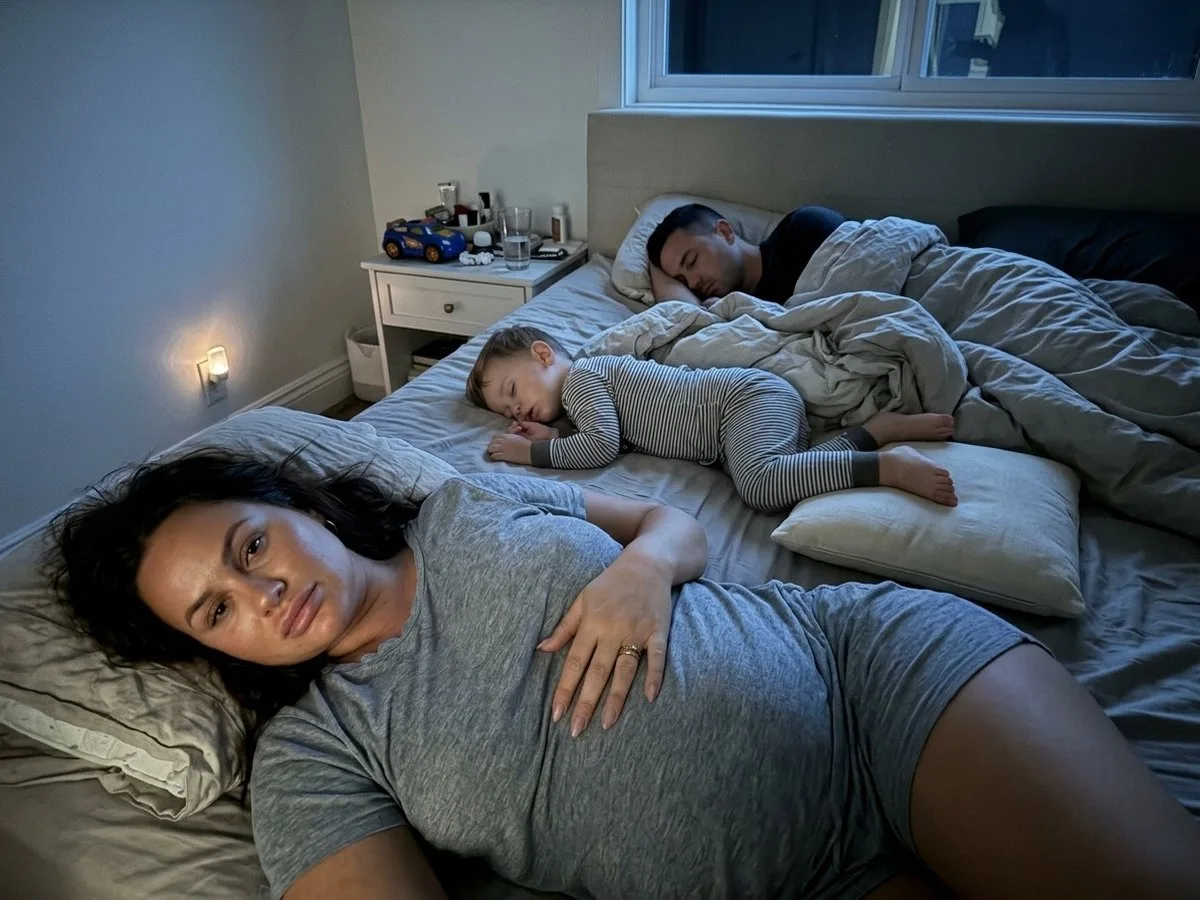
Evelyn was 29 weeks and had bought satin pillowcases in the first trimester, for her hair. By now she had four pillows around her every night, all in satin, on a sateen sheet. Every time she shifted, the one behind her back skated off toward the edge. Owen found it on the floor most mornings. The night she switched the cases to plain cotton, the pillows were still there at six.
"There were so many pillows with too silky a fabric making it slip around and loose support."Amazon review of a pregnancy pillow
"I really tried to get away with using regular pillows but they shift and I was sleeping terribly."Pregnancy pillow customer review
Which surface is making it slide?
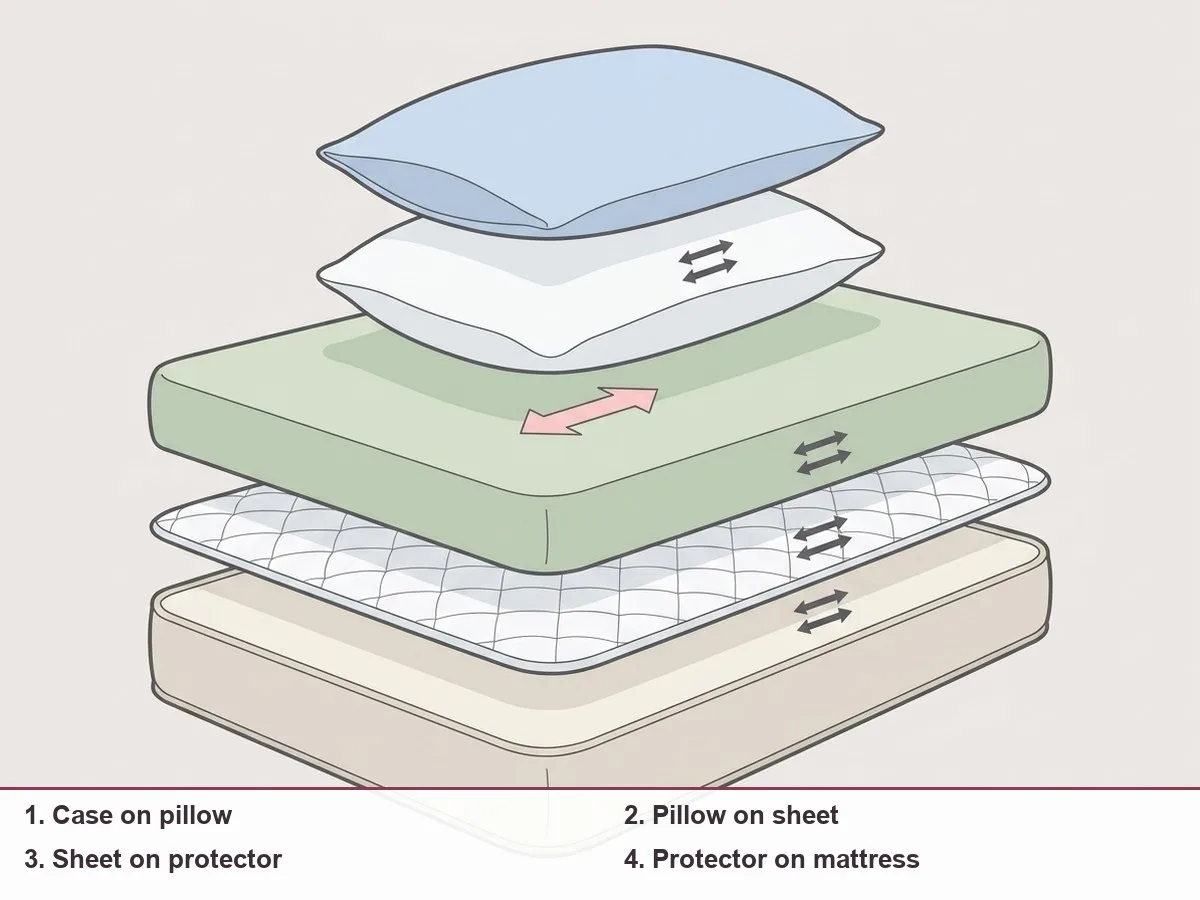
The slip happens wherever two smooth surfaces meet. Check each pair, from the pillow down to the mattress.
| Where it meets | Slippery if | Try |
|---|---|---|
| Pillowcase on pillow | Satin, silk or shiny microfiber case | Cotton or jersey case |
| Pillow cover on sheet | Smooth plush or velvety cover on sateen | A matte cotton sheet |
| Sheet on protector | Waterproof protector with a plastic-feel top | A protector with a cotton top, or the fitted sheet pulled tight |
| Protector on mattress | Loose, shifting under you | Deep-pocket fit that stays tucked |
| Pillow on pillow | Two smooth covers stacked | Fewer layers, or the grippier cover on the bottom |
If none of these fixes it, a thin non-slip rug pad placed under the pillow only, never under you, can add grip. Keep it flat and fully under the pillow.
What if the pieces drift apart?
If the pieces separate rather than the whole pillow moving, look at the connection points: where a strap meets a cushion, where a zip or clip joins two parts, and how wide the gap between them is set.
- The strap or connector is fastened at both ends, as the instructions show.
- It lies flat, not twisted or folded over.
- The gap between pieces matches your body, not set at its widest.
- Your own weight rests on the part designed to go under you.
Do not add your own ties, belts or straps to hold pillows to your body, and do not build a setup you cannot easily move out of. You need to be able to turn and get up freely.
Is it sliding, or going flat?
Sliding means the pillow moves away from where you put it. Going flat means it stays put but sinks and stops holding you. They have different fixes.
| Sliding | Going flat | |
|---|---|---|
| In the morning | Pillow is somewhere else | Pillow is where you left it, but thinner |
| Usual cause | Smooth surfaces, loose connections, edge layout | Filling compressing or shifting inside |
| First fix | The six tests above | Fluff or follow the care label |
Most sliding pillows are not the wrong pillow. They are the right pillow on the wrong fabric.
For washing and caring for the filling, see how to wash a pregnancy pillow.
Frequently asked questions
Why does my pregnancy pillow keep sliding?
Usually because of smooth fabrics touching: a satin case, a sateen sheet or a slick waterproof protector. Loose connections on multi-piece pillows and a layout too close to the mattress edge are the next things to check.
How do I stop my pregnancy pillow from moving at night?
Swap to cotton cases and a cotton sheet, make sure connectors are fastened flat, and move the pillow away from the edge. A thin non-slip pad under the pillow only can add grip.
Should I tie my pregnancy pillow to myself?
No. Do not add ties, belts or straps around your body. You should always be able to turn and get out of bed easily.
Is my pregnancy pillow sliding or just going flat?
If it is somewhere else in the morning, it is sliding. If it is in the same place but thinner, the filling is compressing, which needs fluffing or care, not grip.
If you are choosing a connected design
If loose pillows are the problem and you are thinking about a connected set, the Relvay 3-Piece joins two wedges with a flat strap that runs under you, so your own weight rests on the connection. It is still fabric on a sheet: on a slippery satin or sateen surface it can move too, so the tests above apply to it as well.

Two wedges for bump and back, joined by a flat strap, about as wide as your torso. Keep a regular pillow between your knees. $79.99, 90-day returns.
Evelyn's story is a composite based on real reviews and public posts from pregnant side sleepers. Names and details are changed.