
Relvay makes a pregnancy pillow. We also tell you below when you should not buy one.
The short answer
There is no single date that fits everyone. When stomach sleeping feels right depends on how you gave birth, how your stitches or wound are healing and how pressure on that area feels. Ask the person checking your recovery.
- Bring: your birth type, any stitches or wound, and where pressure hurts.
- Stop and call: if pain, bleeding or wound changes get worse.
- Ask: what you can try now, and what to wait on.
Why is there no single date for stomach sleeping after birth?
Because the answer depends on what your body went through and how it is healing. A vaginal birth with no stitches, a repaired tear and a caesarean each put pressure on different places.
That is why the timelines you find online disagree. They describe someone else's birth. The useful answer is the one given by a person who has seen your stitches or your wound and knows how your birth went.
1:15 a.m.
I have slept on my stomach since I was a kid. I gave it up somewhere in my second trimester and spent the rest of the pregnancy on my side, counting the nights until I could lie flat on my front again.
A few nights after we came home, I tried it. The baby was asleep in the bassinet, my partner was asleep, and I lowered myself onto my belly very slowly. Something pulled near my stitches and I froze halfway, propped on my elbows, not sure if I was hurting myself or just scared. I got up and searched it on my phone. Every page gave me a different number.
You do not need a number from the internet. You need the right questions for the person who checked you.
What changes the answer for you?
Four things matter most: how you gave birth, whether you have stitches or a wound, how pressure on that area feels, and anything your midwife or doctor has already told you to avoid.
| Your situation | Why it matters for lying on your front | Who to ask |
|---|---|---|
| Caesarean birth | Lying on your front puts your weight on the area around the wound. | Your midwife, OB-GYN or the team that did the surgery |
| Tear or episiotomy | Pressure and the way you lower yourself down can pull on stitches. | Your midwife, GP or OB-GYN |
| No stitches, no wound | Comfort is often the main limit, but your belly can still feel heavy or tender. | Whoever does your postnatal check |
| Back, neck or pelvic pain | Stomach sleeping changes how your neck and lower back rest. | Your doctor or a pelvic health physiotherapist |
| Tender chest while feeding | Lying on your front presses there too. | Your midwife or feeding supporter |
Some hospitals have suggested resting on your front after birth, with a pillow or two under the belly. Midwives quoted by ScienceNorway say no research has tested whether this helps, and that getting up and moving can do the same job if lying on your front is uncomfortable.
What should you ask your midwife or doctor?
Ask about your birth, your healing and your sleep in one go. Write the answers down, because tired brains forget.
Copy these into your phone notes before your next check or call.
- My birth: "I had [vaginal birth / tear / episiotomy / caesarean]. Is there any reason I should not lie on my front yet?"
- My healing: "How are my stitches or wound healing? What would tell me pressure is too much?"
- A trial: "Can I try lying on my front for a few minutes while I am awake first?"
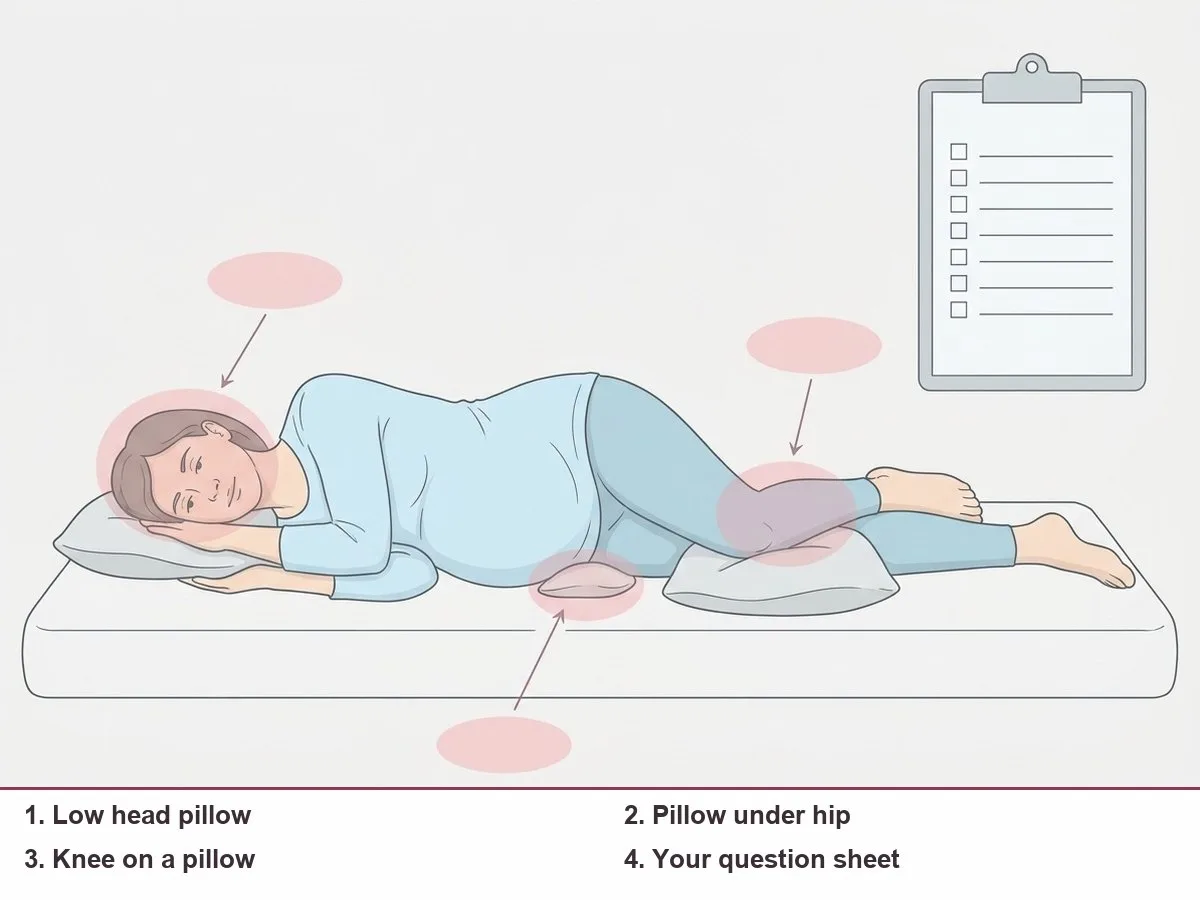
- Half way: "Is a half-front position, with a pillow under one hip, okay for now?"
- Pillows: "Should I keep a pillow under my belly or hips to take pressure off?"
- Warning signs: "Which changes mean I should call you, and which mean I should stop and wait?"
- Other pain: "My [back / neck / pelvis] hurts when I lie flat. Who should look at that?"
The NHS suggests making a list of questions to take to your postnatal check, and you can ask for a check yourself if something worries you. ACOG describes the full postpartum visit as covering sleep and fatigue as well as physical recovery, so sleep is a fair thing to bring up.
How do you know when pressure is too much?
Sharp pain, a pulling feeling at your stitches or wound, or pain that is worse afterwards are signs to stop. Do not push through it to get comfortable.
Some changes are a reason to call your midwife, GP or maternity unit, whatever position you sleep in. The NHS lists these for caesarean wounds and for stitches after a tear or episiotomy:
- The wound or stitches become more red, painful or swollen.
- Pus, or discharge that smells bad.
- Fresh or heavy bleeding.
- The wound starts to open.
- Pain that keeps getting worse instead of better.
A heavy feeling low in your belly when you lie on your front can be unsettling. A specialist quoted by ScienceNorway says it is more likely the stretched uterus shifting position than anything harmful. If it worries you, put it on your question sheet and ask.
What can make lying on your front easier once you get the okay?
Go slowly and use pillows to take the pressure off the sore area. Your first try can be a few minutes while you are awake, not a whole night.
- Try it awake first. Lie on your front for a few minutes in the daytime and notice how the sore area feels afterwards.
- Lower yourself in stages. Go from sitting to your side, then roll partly forward, instead of dropping straight down onto your belly.
- Ask about a pillow under your hips or belly. This was one of the questions on your sheet. Use the setup you were told suits your birth.
- Try a half-front position. Lying turned toward your front, with one knee bent up on a pillow, puts less weight on your belly.
- Keep your head pillow low. A tall pillow under your head turns your neck further when you are face down.
If you still have your pregnancy pillow, a wedge or a firm part of it can sit under one hip in the half-front position. Use only what feels stable, and keep the bed clear around you so you can get up easily for night feeds.
What happened when Valerie asked?
She got an answer about her own stitches, not a number. It came with a way to start.
Valerie wrote the questions in her phone and read them out at her check. The midwife looked at her stitches, asked how it felt to sit, and told her what to watch for. Her plan was simple: try the half-front position with a pillow under her hip, a few minutes awake first, and stop if anything pulled.
The first night she fell asleep turned halfway onto her front, one knee up on her old pregnancy pillow. It was not the flat, starfish sleep she had dreamed about for months. But it was hers again, and she was not lying there afraid of it.
Frequently asked questions
When can I sleep on my stomach after giving birth?
There is no single date that fits everyone. It depends on how you gave birth, how any stitches or wound are healing and how pressure feels. Ask your midwife or doctor, and start with a short awake trial when they say it is okay.
Can I sleep on my stomach after a C-section?
Ask the team checking your wound first, because lying on your front puts weight on that area. Stop if you feel sharp pain or pulling, and call if the wound becomes more red, painful, swollen or starts to open.
Is it okay to lie on my stomach with stitches from a tear?
Ask your midwife or GP how your stitches are healing and whether pressure there is okay yet. Lowering yourself in stages and using a pillow under your hips may feel easier, if they agree.
Why does my belly feel heavy when I lie on my front after birth?
A specialist quoted by ScienceNorway says this is more likely the stretched uterus shifting than anything harmful. If it worries you or comes with pain or bleeding, ask your midwife or doctor.
What should I bring to my postnatal check about sleep?
Your birth type, any stitches or wound, where pressure hurts, how you are sleeping and the positions you want to try. A written list helps you remember on very little sleep.
If you are planning ahead for a future pregnancy, or deciding whether your current pillow is worth keeping, our pregnancy pillow buying checklist covers fit, support and terms in five minutes.
Valerie's story is a composite based on public posts from new mothers about sleeping after birth. Names and details are changed.