
Relvay makes a pregnancy pillow. We also tell you below when you should not buy one.
The short answer
A pillow between your knees is a common comfort step, but no pillow fixes SPD. If turning in bed hurts, the NHS says to tell your midwife or doctor, who can refer you to a pelvic health physical therapist.
- Log it: which moves hurt, where, and how much.
- Ask the therapist: to watch you turn and get up.
- Then shop: only for support that fits their advice.
Why does turning over hurt so much with SPD?
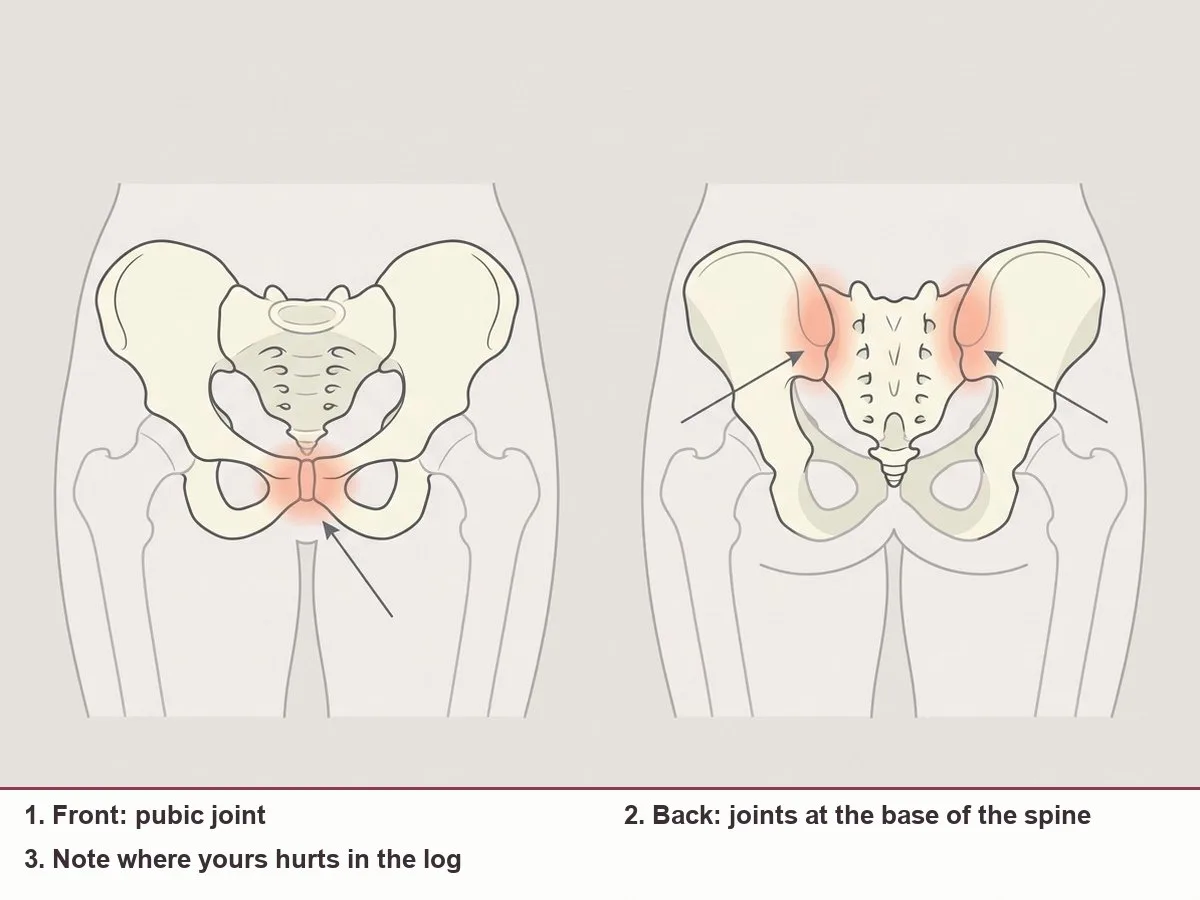
Pelvic girdle pain, also called SPD (symphysis pubis dysfunction), comes from pelvic joints that are stiff or move unevenly. The NHS lists pain when turning over in bed among its usual signs, along with pain on stairs and when moving your legs apart.
3:10 a.m.
I was 30 weeks and I needed to pee, which meant turning over, which meant a plan. Knees, then hips, then the pillow I had to drag along with me, then a pause to breathe because the front of my pelvis felt like it was being pulled apart.
It took me most of a minute to get to the edge of the bed. Then I had to do it all again on the way back. I remember lying there afterwards thinking: I am 30 years old and I am scared of rolling over.
"Lol I'm 27wks and rolling over definitely takes so much effort" YouTube comment on a pregnancy sleep video
"it's not so easy to turn sides what with having to adjust the pillows, lifting your body up to turn, too much work" YouTube comment on a pregnancy sleep video
The NHS notes that PGP is not harmful to your baby, but it can make getting around hard. That second part is worth taking seriously.
Turning over is the hardest small thing you do all night. It deserves a real answer, not a guess.
When should you ask for help with pelvic pain in pregnancy?
As soon as it hurts to turn over in bed, get out of a car or climb stairs. The NHS says to contact your midwife or GP in those cases, and notes that early diagnosis helps keep pain down.
The NHS also says you may be referred to a physical therapist (physio) who specialises in pelvic joint problems in pregnancy. Treatment can include exercises and equipment such as crutches or a pelvic support belt. Tell your care team, too, if the pain is getting you down. That counts as a symptom.
This is a different question from a general sore hip at night. If your pain sits on the outside of the hip rather than at the front of the pelvis or across the back, our guide to hip pain at night in pregnancy covers that.
What should you write down before the appointment?
A short movement log: the move, where it hurt, how bad on a 0 to 10 scale, and what you did just before. Therapists work with what you can and cannot do, so "turning left to right at 3 a.m." tells them more than "my pelvis hurts."
| Move | Where it hurt | 0 to 10 | Notes |
|---|---|---|---|
| Turning over in bed | Front, pubic bone | 7 | Worse dragging the pillow along |
| Getting out of bed to pee | Front and low back | 6 | Twice a night |
| Sitting up from lying | |||
| Getting in or out of a car | |||
| Stairs | |||
| Pulling on socks or pants | |||
| Standing on one leg |
Add any clicking or grinding you feel in the pelvis, which the NHS lists as a sign too, and note whether some days are worse after long walks or a lot of standing. Three or four days of notes is plenty.
What should you ask your physical therapist about turning in bed?
Ask them to watch you turn over and get out of bed, then show you the way that suits your body. Hospital physio leaflets describe several methods, and which one fits depends on where your pain is.
- Can you watch me turn over and get out of bed, and show me what to change?
- Should I keep a pillow between my knees? How thick, and how firm?
- Should my pillows come with me when I turn, or should I set up both sides?
- Would a pelvic support belt help me? Daytime only, or at night too?
- Which moves should I cut back on, and which are fine to keep doing?
- What should make me call you before the next session?
You will find turning instructions in plenty of leaflets online. Use them to know what to ask, not as your plan. Someone who has seen how you move can tell you which one is yours.
Where does a pregnancy pillow fit with SPD?
As comfort while you rest, not as treatment. The NHS suggests a pillow between your legs in bed. Beyond that, pick pillows around what your therapist tells you about turning.
If you are looking at listings sold as a "pregnancy pillow for SPD", a few checks help:
- The claim. Is "relieves SPD" backed by anything beyond reviews?
- The turn. Can you roll over without lifting or rebuilding the whole setup?
- The size. A very large pillow can make turning harder for some people.
- The knee part. Is it firm enough to keep your top leg level?
- The return window. Long enough to test it through a run of bad nights?
"I would just get swallowed up in, hard a hard time turning" Amazon review of a W-shaped pregnancy pillow
We make a pregnancy pillow, and we do not claim it fixes SPD or makes turning painless. It is one kind of comfort support, and it should come after the movement advice, not before.
Stella took her log to her first session. Her therapist watched her turn on the treatment table, changed one thing about how she started the move, and talked her through the belt question. The first night after, turning still hurt. But it was one move instead of four, and she stopped lying awake dreading the 3 a.m. trip to the bathroom.
This article helps you prepare for an appointment. It cannot assess your pain or teach you a treatment. A physical therapist or your care team can.
Frequently asked questions
What is the best pregnancy pillow for SPD?
No pillow has been shown to be best for SPD. Many people use a firm pillow between the knees for comfort. Ask your physical therapist what support suits how you turn, then choose a pillow that fits that and your bed.
Why is turning over in bed so painful with pelvic girdle pain?
PGP comes from pelvic joints that are stiff or move unevenly, and turning over is one of the moves the NHS lists as painful. A physical therapist can show you a way to move that suits you.
Should I wear a pelvic support belt in bed?
Advice differs, so ask the therapist who fitted or suggested it. One NHS physio team, for example, says its maternity belt is not for night use.
Is SPD harmful to my baby?
The NHS says pelvic girdle pain is not harmful to your baby, but it can make moving around hard. Getting help early is still worth it for you.
How do I get physical therapy for pelvic pain in pregnancy?
Ask your OB-GYN or midwife for a referral to a pelvic health physical therapist. Bring your movement log to the first visit.
Once your therapist has told you what support suits you, our pregnancy pillow buying checklist helps you check size, firmness and return terms before you order.
Stella's story is a composite based on real reviews and public posts from pregnant people with pelvic girdle pain. Names and details are changed.