
Relvay makes a pregnancy pillow. We also tell you below when you should not buy one.
The short answer
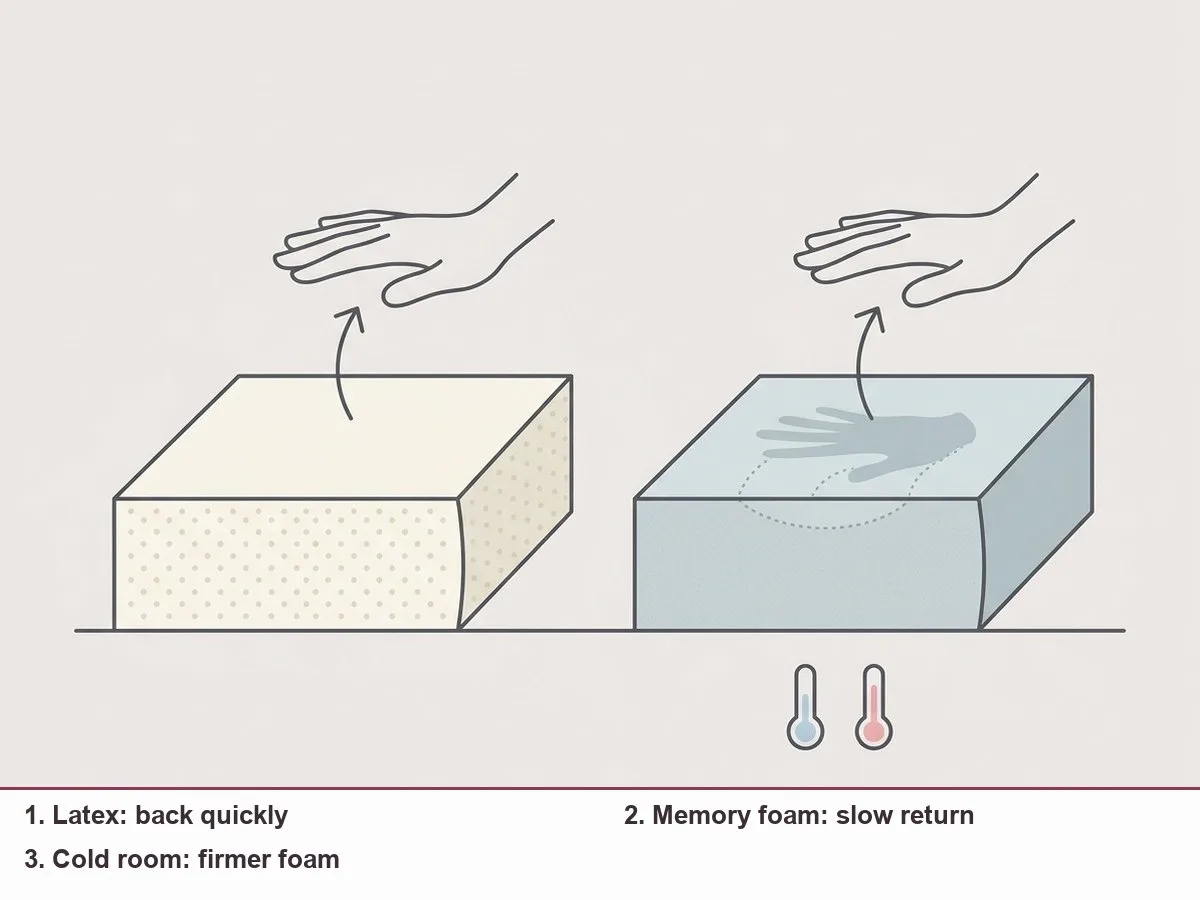
Latex usually springs back fast and feels about the same in a cool or warm room. Memory foam sinks in, comes back slowly and gets firmer when the room is cold. Neither is better for every pregnancy.
- Latex suits: people who turn often and want bounce.
- Memory foam suits: people who like a deep, cradling feel.
- Decide first: shredded or solid, before latex or foam.
Why does the foam type matter when you are pregnant?
Because you turn over more, and with more effort, than before. A material that takes a few seconds to recover can feel like a dent you have to climb out of each time.
1:10 a.m.
Blair was 27 weeks, and turning over had become a project: push up on an elbow, shuffle the hips, lie down again. She had already given away the fiber pillow that went flat in a week. The memory foam one she bought next held its shape, but in her cold apartment it felt stiff at bedtime, and when she turned, the spot she had just left still held her shape. Lying back against it felt like lying against a dent.
She did not need a softer pillow or a harder one. She needed to know why the same pillow felt different at 11 p.m. and at 3 a.m.
"Lol I'm 27wks and rolling over definitely takes so much effort"YouTube comment on a pregnancy sleep video
"the fabric is not breathable. It kept me too toasty while super pregnant in the summer."Amazon review of a different pregnancy pillow
How do latex and memory foam pregnancy pillows compare?
The biggest differences are rebound speed, how much the feel changes with room temperature, and weight. Price and smell vary by model, so check those per pillow.
| Latex | Memory foam | Two wedges, fiber fill | |
|---|---|---|---|
| Springs back after you move | Quickly, with some bounce | Slowly, with a delay | Depends on fill and cover |
| Cold room | Feel changes little | Firmer | Feel changes little |
| Warm room | Feel changes little | Softer, sinks more | Feel changes little |
| Feel when you lie on it | Pushes back, buoyant | Sinks in, cradles | Soft, lifts the bump |
| Weight in a long pillow | Often heavy | Often heavy | Small pieces |
| Allergy question | Natural latex can matter | Not a latex question | Ask about cover and fill |
These are tendencies of the materials, not promises about any one pillow. Blends, cover fabric and how the foam is cut all change the result.
Should you choose shredded or solid foam first?
Yes. Whether the foam is shredded or one solid block changes how a pillow behaves more than latex versus memory foam does. Settle that first.
ShreddedLoose pieces in a cover. You can push them around and sometimes add or remove some. Rebound is spread across many small pieces.
Solid blockOne fixed shape, common in wedges. It holds height but will not fold lower when you need it to.
Then the materialOnly now does latex versus memory foam matter: bounce versus slow sink.
A shredded memory foam pillow can feel livelier than a solid one, because the pieces shift. A solid latex wedge can feel firmer than expected because nothing moves out of the way. So compare like with like: shredded with shredded, solid with solid.
What are the pros and cons of a latex pregnancy pillow?
Latex is good if you turn often and want support that is there the moment you lie back. It is less good if you love sinking in, if weight is a problem, or if latex allergy is a question in your house.
- Pro: quick rebound, so the pillow is ready when you turn back.
- Pro: the feel tends to stay similar through the night as the room cools.
- Con: can feel bouncy rather than cradling.
- Con: a long latex pillow can be heavy to lift and drag.
- Check: natural, synthetic or a blend? "Natural" on a label does not tell you it is right for someone with a latex allergy.
If you or anyone sharing your bed has a latex allergy, ask your doctor or allergist before buying natural latex bedding, and ask the maker exactly what the pillow contains.
What are the pros and cons of a memory foam pregnancy pillow?
Memory foam is good if you love a deep, molded feel and mostly stay put once you settle. It is less good if you turn a lot, sleep in a cold room, or run hot.
- Pro: molds closely to your bump and back.
- Pro: holds height better than loose fiber.
- Con: comes back slowly after pressure, so the dent you left can still be there when you turn back.
- Con: firmer in a cold room, softer in a warm one, so the feel can change between bedtime and early morning.
- Check: "gel" or "cooling" foam is a maker's description. It does not prove the pillow will feel cool on you.
Firm or soft is the wrong question. The useful question is how fast it comes back, and at what room temperature you will be using it.
How can you test rebound and room temperature at home?
Do a press, release and switch-sides test at your normal bedtime room temperature, and write down what you notice. It takes five minutes and tells you more than a product page.
- Note the room. Write down the thermostat setting, or simply cool, normal or warm, before you start.
- Press and release. Push your forearm into the pillow for about ten seconds, then lift it. Count how long until the dent is gone.
- Switch sides. Lie on your side on it for a minute, turn to the other side, then turn back. Does it feel ready, or are you lying back into your own shape?
- Repeat once more on a cooler or warmer evening if your room changes a lot at night.
- Keep the note with your order email. It makes a return or exchange conversation much easier.
If you are still choosing, ask the seller to describe the same test. If they cannot tell you how fast it recovers, that is an answer too.
What should you ask the maker about the foam?
Ask what the fill is, in what form, and how it is cared for. Product titles rarely say enough.
| Question | Why it matters |
|---|---|
| Latex: natural, synthetic or a blend? | Allergy questions and how it feels |
| Shredded or solid? | Whether you can reshape it |
| Can I add or remove fill? | Height as your bump grows |
| How much does it weigh? | Lifting and turning it at night |
| Can the core be washed, or only the cover? | Many foam cores cannot go in water |
| What is the return window after use? | You need real nights to judge rebound |
For the wider picture of fiber, foam and bead fillings, see our pregnancy pillow fillings comparison. For everything else to check before ordering, use the buying checklist.
What changed when the pillow matched how she turned?
Once the pillow recovered as fast as she turned, the turn stopped being two moves.
Blair did the forearm test on her old pillow at 64°F and counted. Then she stopped looking for a softer foam and looked for pieces that were small enough to move with one hand. The next Sunday she slept in. When she opened her eyes, her husband Nate had brought coffee for him and peppermint tea for her, and the bed did not look like a fort.

Frequently asked questions
Is latex or memory foam better for a pregnancy pillow?
Neither wins for everyone. Latex tends to spring back fast, which suits people who turn often. Memory foam sinks in and recovers slowly, which suits people who like a cradled feel and mostly stay put.
Is memory foam too hot for pregnancy?
It can feel warm for some people, and it softens as it warms. Gel or cooling foam is the maker's description, not proof it will feel cool. Check the cover fabric too, since it touches your skin.
Why does my memory foam pregnancy pillow feel hard at night?
Memory foam responds to temperature. TEMPUR, for example, says its material feels firmer in cooler rooms and softer in warmer ones. A cold bedroom can make the same pillow feel stiffer.
Can I use a latex pillow if I have a latex allergy?
Ask your doctor or allergist first, and ask the maker whether the latex is natural, synthetic or a blend. A "natural" label does not tell you whether it suits someone with a latex allergy.
Can you wash a foam pregnancy pillow?
Usually only the cover. Many foam cores cannot be washed in water. Check the care label for the core and the cover separately before buying.
If you want small pieces instead of a big foam pillow
Relvay does not make a latex or memory foam pregnancy pillow, so if you have settled on one of those, this is not it. The Relvay 3-Piece is a different route for people whose real problem is turning over: two small wedges joined by a flat strap, one under the bump and one behind the back, so there is less to move each time you turn. We have not yet published the full fill details on the product page, so email us before you order if the material decides it for you.
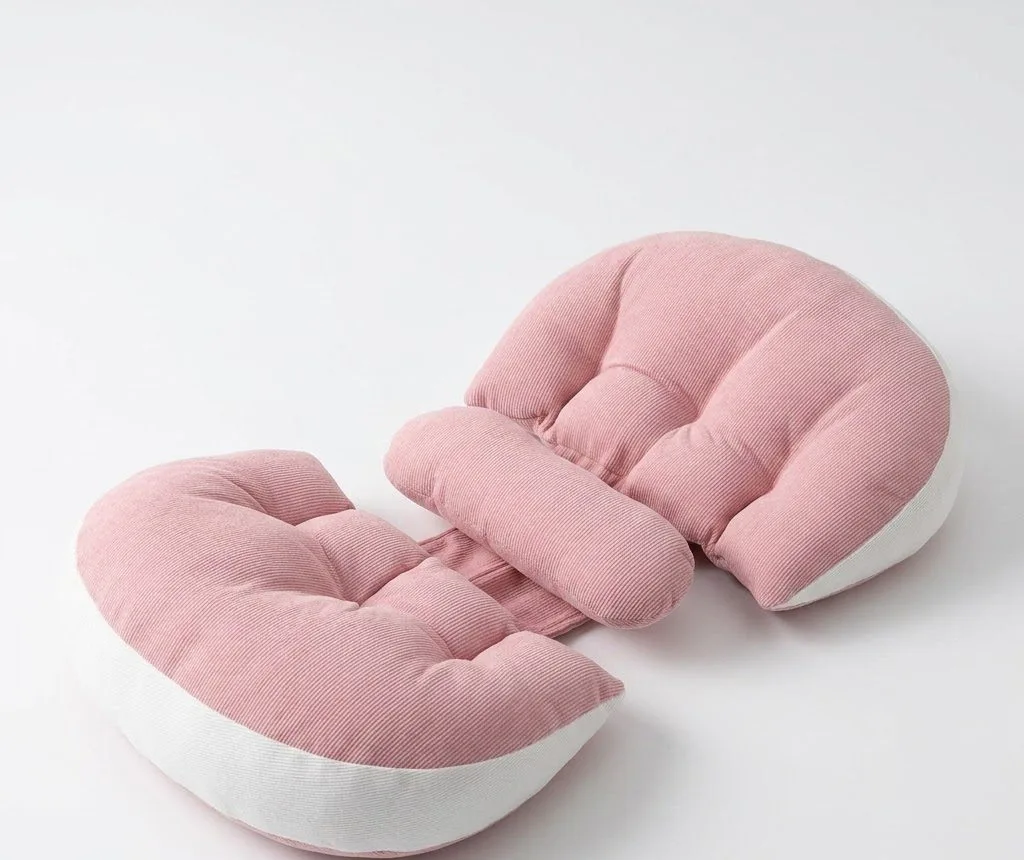
Two wedges for bump and back, joined by a flat strap, about as wide as your torso. Keep a regular pillow between your knees. $79.99, 90-day returns.
Not the right pick if
- You want the slow, molded feel of memory foam.
- You want latex bounce in a long pillow.
- You need full fill details before ordering.
Worth a look if
- Turning over with a big pillow wears you out.
- You want bump and back support in two small pieces.
- You want 90 nights to decide.
Blair's story is a composite based on real reviews and public posts from pregnant side sleepers. Names and details are changed.