Relvay makes a pregnancy pillow. We also tell you below when you should not buy one.
The short answer
Do not open the seam or pull the filling out. First check which part you washed, what its care label allows and whether it is fully dry. Then map where the lumps sit. That tells you whether to fluff, dry again or contact the maker.
- Damp: dry it as the label says first.
- Label said no wash: contact the maker.
- Hard lumps that stay: photos, then ask.
Saturday, and the pillow came out wrong
Lumps after washing usually come from filling that got soaked and pressed together, soap left in it, or a pillow that is still damp inside. Most of those are not a reason to open it.
4:20 p.m.
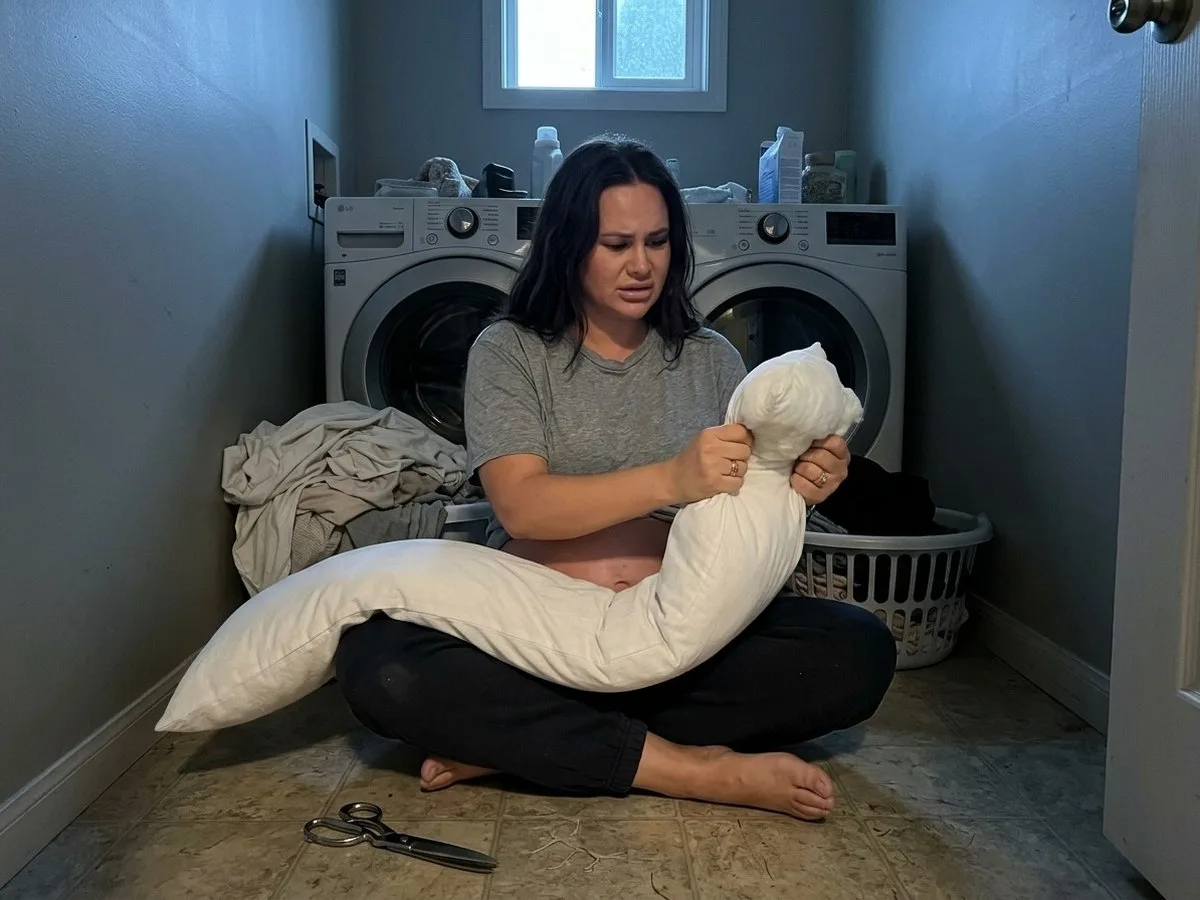
I was 31 weeks and on a nesting spree. I stripped the bed, then looked at my long body pillow and thought, why not. The whole thing went in the machine. Two dryer cycles later it came out with a hard lump the size of a grapefruit at one end and almost nothing in the middle.
I sat on the laundry room floor with it across my lap, kneading it like bread dough. A video on my phone said to unpick the seam and pull the stuffing apart by hand. I actually went and got the scissors. Then I saw the label I had never read.
The scissors are the step you cannot take back. Everything before them, you can.
Why does pillow filling bunch after washing?
Filling bunches when it gets saturated and pressed together in the drum, when detergent is not fully rinsed out, or when it is still damp inside. Some inserts are simply not made to go in a machine.
Sleepybelly, a pregnancy pillow maker, puts it plainly: wash the cover, not the cushion, and check the care label on your own pillow. Another maker's instructions for a long pregnancy pillow say not to machine wash the pillow at all, only spot clean it, and to fluff it if it clumps or goes flat. The label on your pillow is the rule that counts, not a general guide.
What did you actually wash, and what does the label say?
Work through four questions in order. Each answer points you to a different next step.
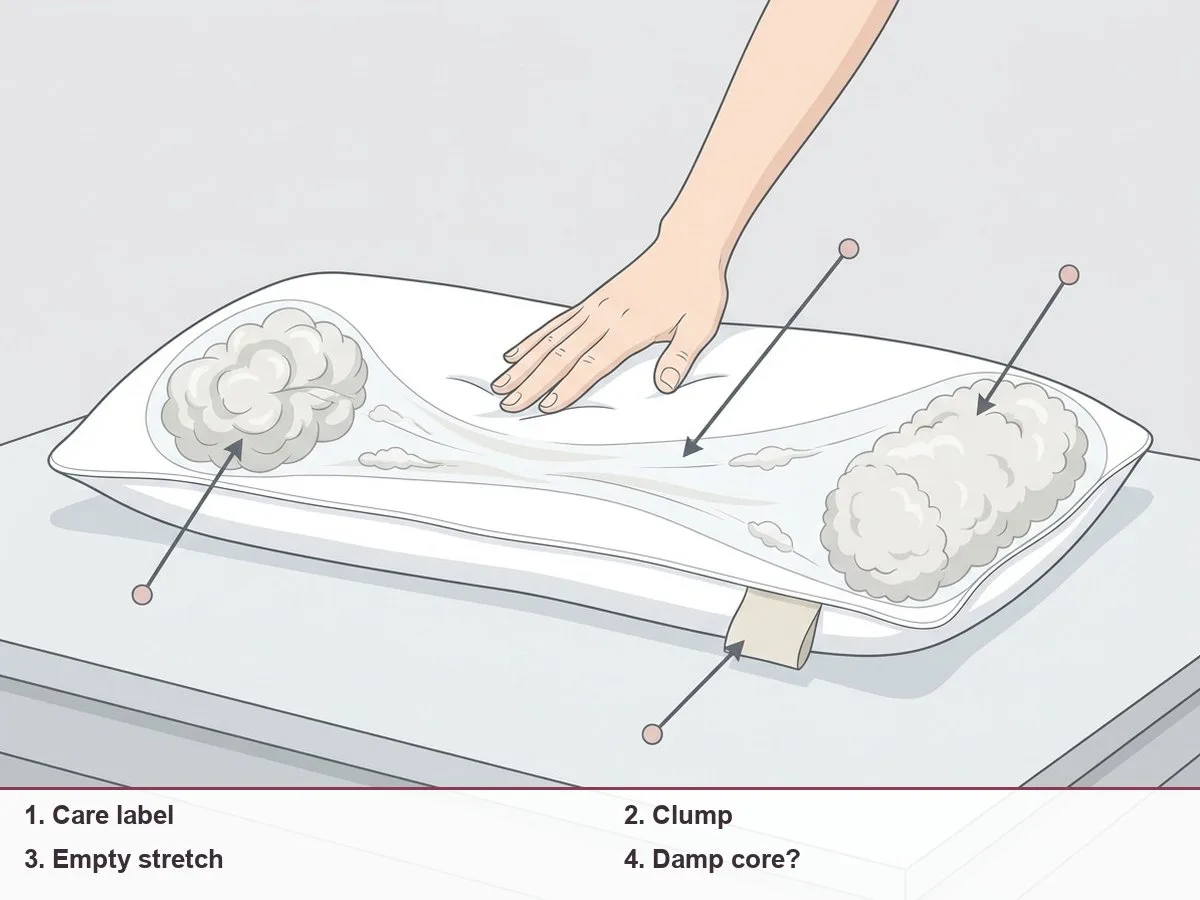
- Which part went in? Cover only, insert only, or both together. If only the cover was washed, the lumps are not from this wash. Our guide to a pillow going flat covers that.
- What does the insert label say? Photograph it. Look for machine wash, hand wash, spot clean only, or do not wash, and any drying symbol.
- Is it completely dry? Squeeze the thickest part and hold it to your cheek. Cool or heavy means damp inside. Do not judge a damp pillow.
- Where are the lumps? Lay it flat and press along its length. Note soft clumps, hard lumps, empty stretches and which end the filling has moved to.
| What you find | What it suggests | Next step |
|---|---|---|
| Still damp inside | Wet filling packs together | Dry fully as the label allows, then check again |
| Soft clumps, label allowed washing | Filling shifted in the drum | Fluff and knead by hand, check again |
| Label said do not machine wash | Washed outside its instructions | Stop, photograph, ask the maker |
| Hard lumps that stay after drying and fluffing | Filling may have matted | Photograph and contact the maker |
| Filling or beads escaping, seam open | A different problem | See the leaking guide below |
What can you try without opening it?
Dry it fully the way the label allows, then work the clumps apart from the outside with your hands. That is as far as you go before talking to the maker.
- Let it dry completely before you judge the shape. Lay it flat in a ventilated room, as the label allows.
- Use a dryer only if the label shows a dryer symbol, on the setting it shows.
- Knead each clump through the cover, working filling back toward the empty stretches.
- Shake it end to end a few times, then let it rest flat.
- Do not cut the seam, open an inner case that is not meant to open, or add your own filling.
If you see filling or beads coming out, or you are thinking about refilling it, that is a separate job. Read our guides on pillows leaking beads and refills by model first.
What should you send the maker?
Send the label photo, how you washed and dried it, and a photo map of the lumps, in one message. Be honest about the wash. A clear account gets a clearer answer.
- Photo of the care label and product label.
- The cycle, water temperature and detergent you used.
- How you dried it, and for how long.
- The whole pillow laid flat, plus a close-up of each lump with your hand beside it for scale.
- Your order number and the date you bought it.
A message you can copy: "I washed my [pillow name] on [cycle, temperature] and dried it [how]. The label says [label wording]. The filling has bunched at [where]. Photos attached. Is it still usable as it is, and what do you suggest?"
Willa put the scissors back in the drawer and sent the maker her label photo. The label said spot clean only. She said so. The reply was kind and clear: dry it flat until it was dry right through, knead it, and send new photos if the lump stayed. Most of it worked loose. One small hard patch stayed, so that end went between her knees, and she stopped asking it to hold her bump.
Frequently asked questions
How do I fix a lumpy pregnancy pillow after washing?
Make sure it is completely dry first, as the label allows. Then knead the clumps apart through the cover and shake it end to end. If hard lumps stay, photograph them and contact the maker instead of opening it.
Should I open the seam to fix the filling?
No. Opening the insert or adding your own filling can end any help from the maker and can leave loose filling around the bed. Ask the maker first.
Can I put a pregnancy pillow in the dryer?
Only if the care label shows a dryer symbol, on that setting. Some inserts are spot clean only, and heat or tumbling can change the filling.
Why is my pillow still lumpy after drying?
It may still be damp in the thickest part, or the filling may have matted in the wash. Check it is fully dry, knead it, and if lumps stay, contact the maker with photos.
Is it still okay to use a lumpy pregnancy pillow?
If it still supports you comfortably, many people keep using it for knees or back. If the lumps press into you or twist your posture, put it aside and use regular pillows while you ask.
If you are replacing a long body pillow
Relvay does not make a long body pillow. We sell the 3-Piece, which is a different kind of setup: two wedges for bump and back and a flat strap. Its cover is listed as removable and washable, so the part that touches you can go in the wash. For the wedges themselves, follow the care label on your set. If a full-length pillow you can hug is what you want, this set is not that.
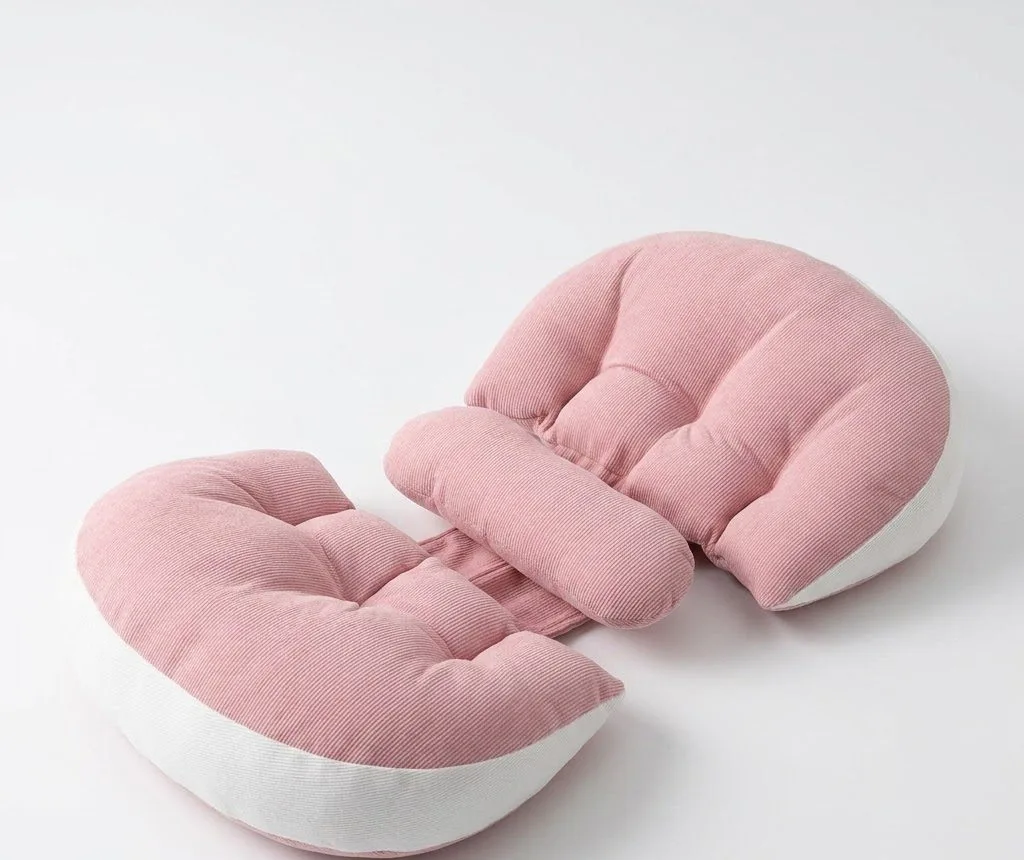
Two wedges for bump and back, joined by a flat strap, about as wide as your torso. Keep a regular pillow between your knees. $79.99, 90-day returns.
Willa's story is a composite based on public posts from pregnant sleepers about washing pillows. Names and details are changed.