Relvay makes a pregnancy pillow. We also tell you below when you should not buy one.
The short answer
A sleep score is an estimate, not a diagnosis. The American Academy of Sleep Medicine says consumer sleep devices cannot be used to diagnose sleep problems. How you feel and what you notice count as much as the number.
- Feel fine, low score: note it, do not chase it.
- Feel exhausted: tell your care team, whatever the score.
- Score causing worry: hide it or check weekly.
Why can a sleep score disagree with how you feel?
Because the device does not measure sleep directly. It estimates it from signals such as movement and heart rate, then turns that into a score with its own formula. The AASM notes there is little data validating how accurately these devices do that.
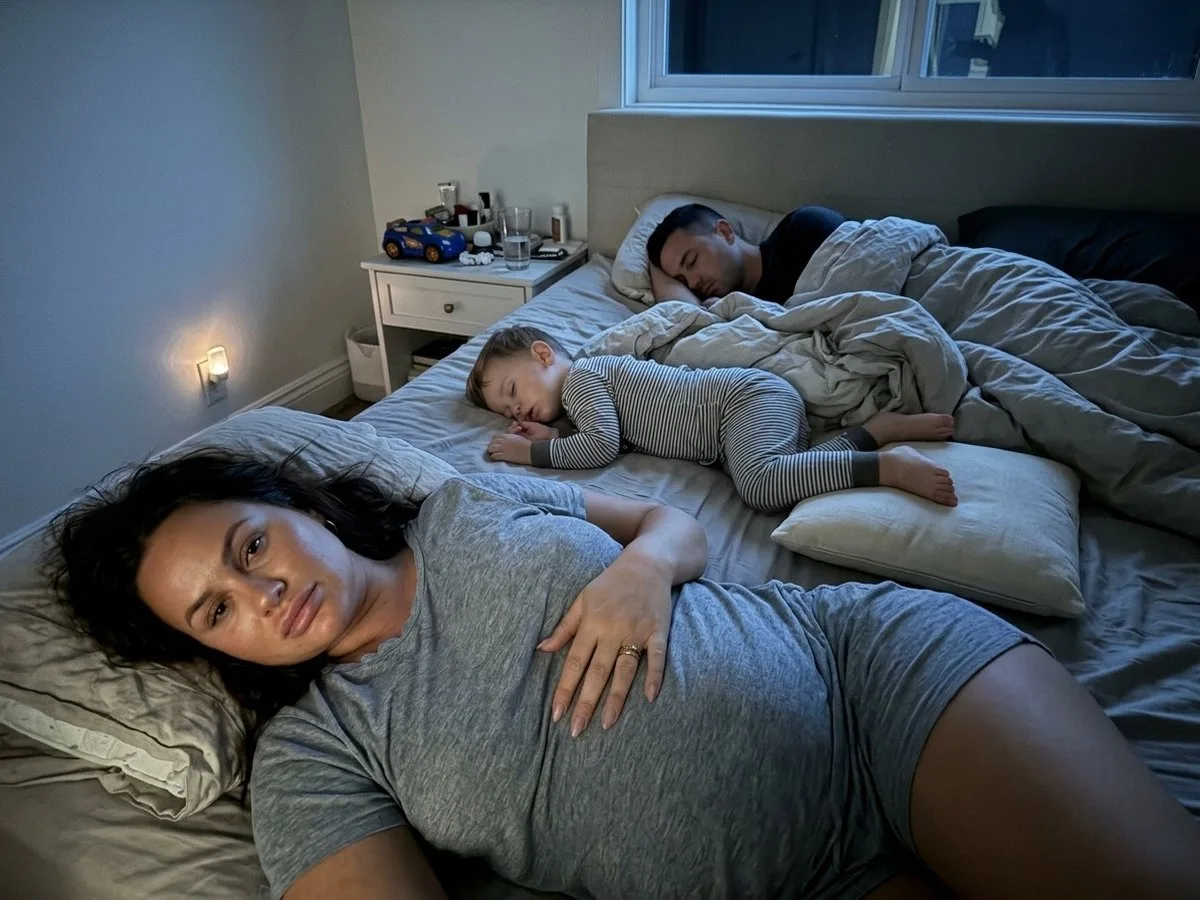
Pregnancy adds its own noise. You get up to pee, you shift position more, and you lie still awake more often. A device can read some of that as sleep and some of it as restless sleep, and you will never know which.
6:45 a.m.
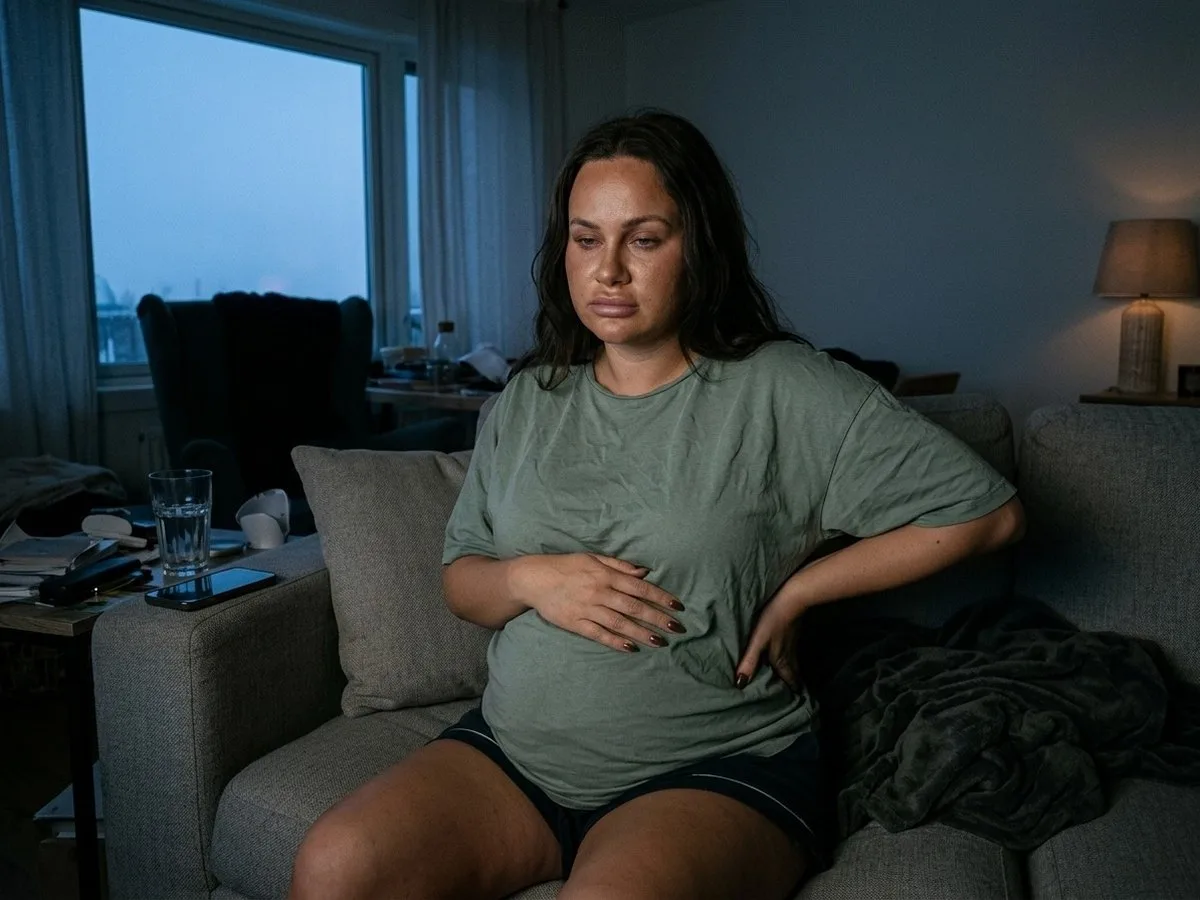
I was 24 weeks. I woke up and honestly felt fine. Not amazing, but fine. Then I opened the app on my watch and it said 58, poor, with a little red bar for deep sleep.
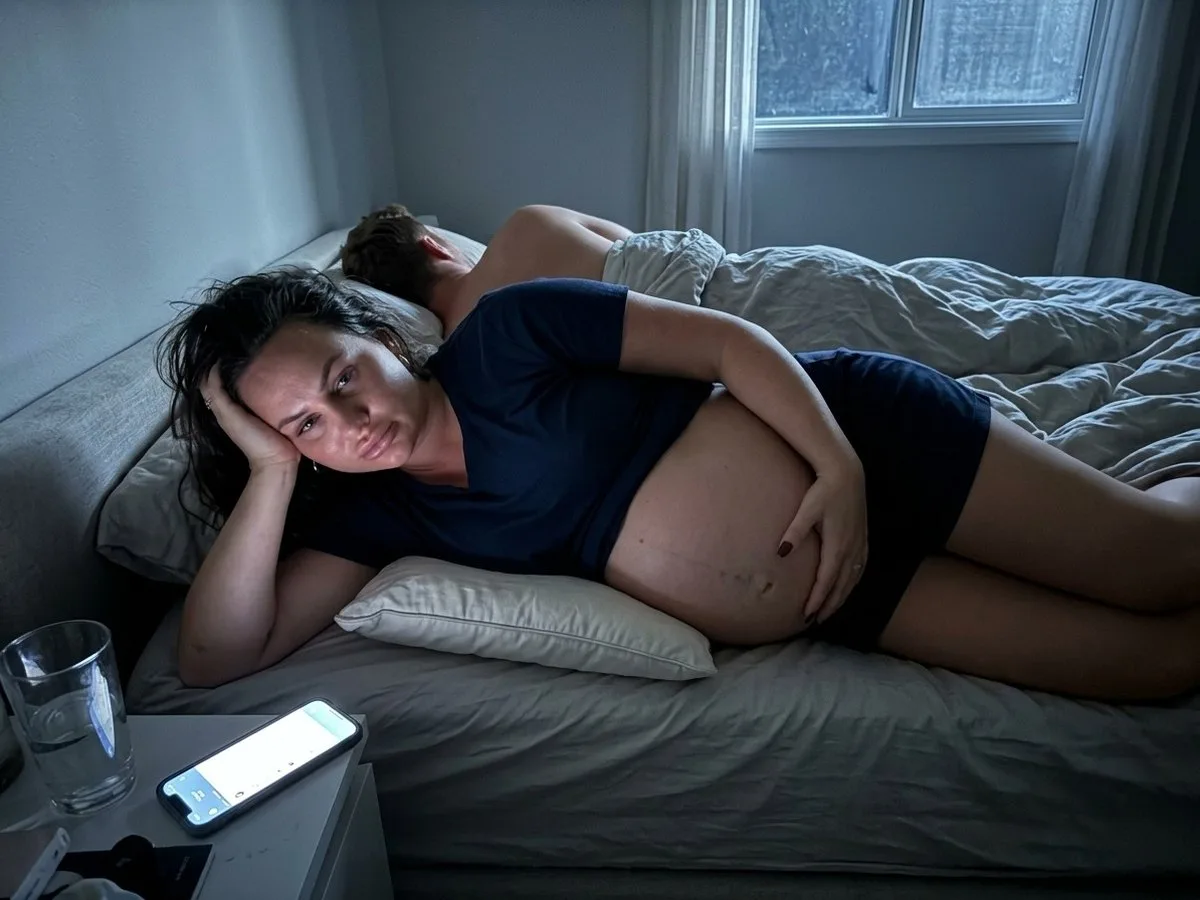
By lunch I felt worse. Not because I was tired, but because I kept thinking about the number. That night I lay in bed trying to sleep "better", checked my wrist twice at 2 a.m., and woke up with a 61. Owen asked how I slept. I said "sixty-one". He looked at me like I had answered in another language.
"Toss and turn all night until I just finally fall asleep"YouTube comment on a pregnancy sleep video
A score can describe a night. It cannot tell you how you feel. Only you can.
What do you know, and what is the device only guessing?
You know when you went to bed, roughly how often you woke, why you woke, and how you felt in the morning. The device estimates sleep stages, total sleep and a score. Keep the two apart.
| Type | Examples | How much to rely on it |
|---|---|---|
| What you recorded | Bedtime, wake-up time, wakings you remember and why, naps | Your best first-hand record |
| How you feel | Energy mid-morning, mood, dozing off when you did not mean to | What your care team will ask about |
| Device estimate | Total sleep, time awake, heart rate trend | Useful as a rough trend over weeks |
| Device score | Sleep score, deep and REM stages, readiness | The most processed number, least useful on its own |
One bad score does not mean one bad night. A pattern you feel, such as being wiped out every afternoon for two weeks, is worth more than any single number.
How do you fill in a three-column sleep sheet?
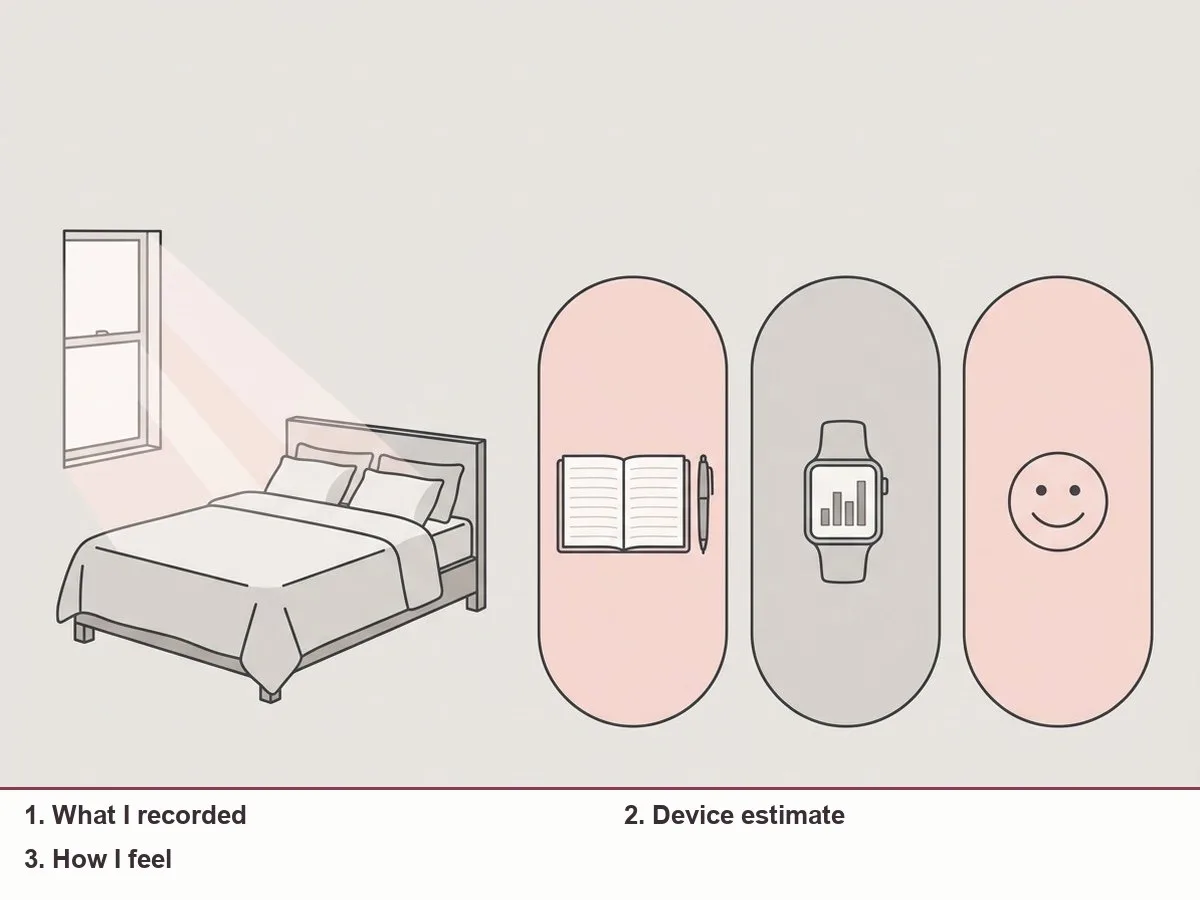
Each morning, fill in three columns: what you recorded, what the device estimated, and how you feel. After one to two weeks, look for where they agree and where they do not.
| Day | I recorded | Device estimated | I feel (1 to 5) | Note |
|---|---|---|---|---|
| Mon | Bed 10:45, woke 3 times (pee x2, heartburn) | 6 h 40 min, score 58 | 3 | Felt fine till I saw the score |
| Tue | Bed 11:00, woke twice (pee) | 7 h 05 min, score 71 | 3 | Same as Monday really |
| Wed | Bed 10:30, awake 1 hour at 2 a.m., hips sore | 6 h 10 min, score 63 | 2 | Dozed at my desk |
- Fill in "I feel" first, before you open the app.
- Write reasons for waking in plain words. The device cannot know them.
- Copy only two device numbers: total sleep and the score. Skip the rest.
- Look across the week, not at single days.
What is useful to bring to your care team?
Bring how you feel during the day and your own notes on why you wake. Device numbers can be added as background. The AASM says device data may help the conversation with a clinician, but should not replace a proper evaluation.
- "Most nights I wake two to four times, mainly to pee or because my hips are sore."
- "I feel tired most afternoons and have dozed off without meaning to."
- "My device says about six and a half hours, if that helps."
- "Is there anything here you would want to look into?"
- "The score is making me anxious. Is it okay to stop checking it?"
You do not need to buy or wear a tracker to have this conversation. A notebook by the bed works just as well.
What if the score itself is keeping you awake?
Then the score is costing you more than it gives. Hide it, check weekly averages instead of daily, or take the device off at night. Some clinicians suggest focusing on longer trends and on how you feel rather than the daily number.
- Turn off the morning score notification if your app allows it.
- Check once a week, on the same day, and only the weekly average.
- Never check at night. Looking at your wrist at 2 a.m. wakes you further.
- Try a week without it and compare how you feel.
Sabrina switched her app to weekly summaries and kept a notebook for the mornings. Her notes said what the score never could: she woke for the bathroom, she felt okay most days, and the afternoons after sore-hip nights were the hard ones. That was what she took to her next appointment.
When should poor sleep go to your care team, whatever the score says?
When you feel exhausted, sleep badly most nights, or feel low or anxious, tell your midwife or doctor, even if your device says your sleep looks fine. The AASM makes the same point for anyone with an ongoing sleep problem.
- You are very tired during the day, or dozing off when you do not mean to.
- You lie awake for long stretches most nights.
- Your partner notices new loud snoring or pauses in your breathing.
- You feel hopeless, or have lost interest in things you used to enjoy.
- Worry, about sleep or anything else, is with you most of the day.
For a night-by-night log of why you wake, see waking repeatedly at night while pregnant. For snoring or breathing changes, see new snoring or breathing changes during pregnancy sleep.
A sleep score cannot tell you what is wrong, or that nothing is. Only your midwife or doctor can do that.
Frequently asked questions
Are sleep trackers accurate during pregnancy?
They estimate sleep from signals like movement and heart rate, and the AASM says there is little data on how accurately they do it. Treat the numbers as a rough trend, not a measurement.
Should I worry about a low sleep score while pregnant?
Not on its own. How you feel during the day matters more. If you feel exhausted or low most days, tell your midwife or doctor whatever the score says.
Can a sleep tracker diagnose sleep problems in pregnancy?
No. The AASM says consumer sleep devices cannot be used to diagnose sleep disorders. Device data can be background for a conversation with your care team.
Is it okay to stop using my sleep tracker?
Yes. If the score makes you anxious, hiding it, checking weekly, or taking the device off at night are all reasonable choices.
Do I need a sleep tracker in pregnancy?
No. A notebook by the bed with your bedtime, wakings and how you feel gives your care team what they need.
If your notes keep saying "hips sore" or "could not get comfortable", our pregnancy pillow buying checklist covers comfort support. It will not change a score on its own, and it is fine to skip it.
Sabrina's story is a composite based on real reviews and public posts from pregnant sleepers. Names and details are changed.