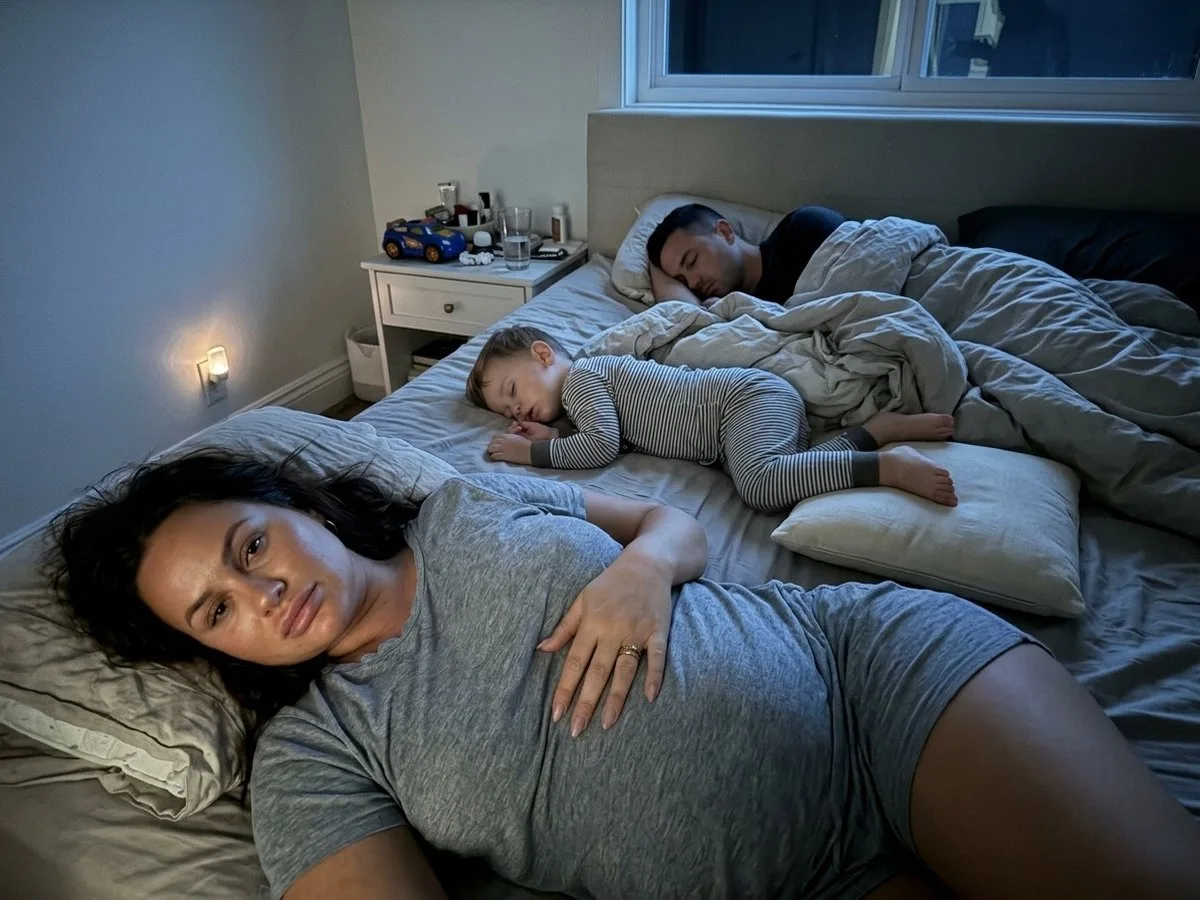
Relvay makes a pregnancy pillow. We also tell you below when you should not buy one.
The short answer
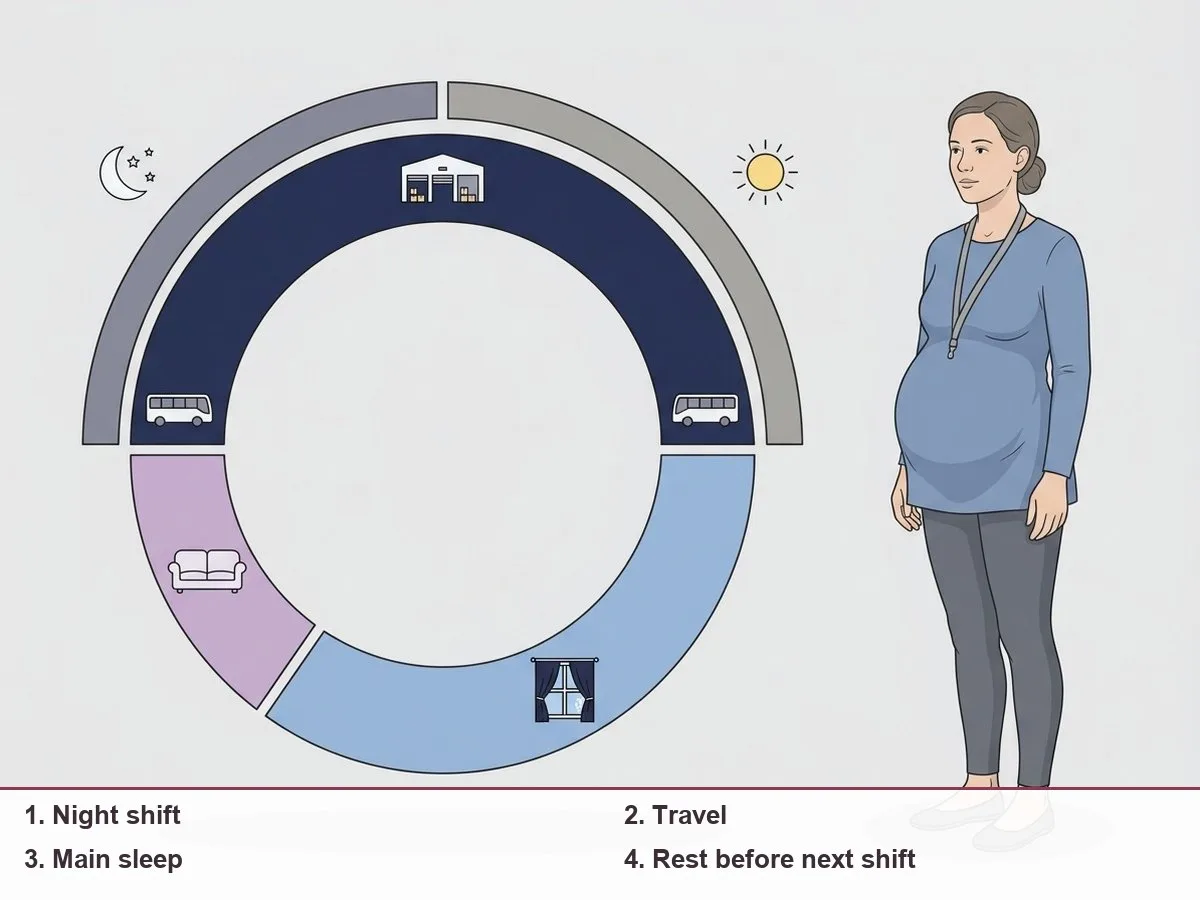
Shift work makes pregnancy sleep harder, but a written plan makes it more predictable. Map one week of shifts, travel and sleep on a single page, protect one main sleep block, and take the map to your midwife or doctor.
- Protect: a dark, quiet main sleep after nights.
- Watch: switch days and the drive home.
- Ask: your care team and employer, with the map in hand.
Can you plan decent sleep around shift work when you're pregnant?
You can make it more predictable, even when you cannot make it normal. The CDC's workplace health institute, NIOSH, notes that shift work and long hours may affect reproductive health, suggests avoiding work during your normal sleep time when possible, and says to talk to your doctor if your schedule worries you.
"Avoid nights" is not an option for everyone. So this page is about what you can plan: your sleep, your travel, your questions. Whether a schedule is right for you is a conversation for you and your care team, not for an article.
8:20 a.m.
I was 20 weeks, driving home after my third night in a row at the warehouse, and I caught myself drifting at a green light. Just for a second. It scared me more than anything had so far.
At home the sun was coming through the blinds, my neighbor was mowing, and I lay there wired and exhausted at the same time. Then on Friday I flipped back to days for two shifts. By Sunday I honestly did not know what time my body thought it was.
You cannot control the rota. You can control what happens in the hours around it.
What goes on a shift and sleep map?
One row per day for a week: shift times, travel, your main sleep block, any extra rest, and how you felt. Fill in the plan before the week starts, then note what really happened.
| Day | Shift | Travel | Main sleep (plan / real) | Extra rest | How I felt |
|---|---|---|---|---|---|
| Mon | 7 p.m. to 7 a.m. | 40 min each way | Plan 1 p.m. to 5:30 p.m. | Feet up at 2 a.m. break | |
| Tue | 7 p.m. to 7 a.m. | 40 min | Plan 8:30 a.m. to 3 p.m. / real 9 to 1:30 | Lay down 5 to 5:30 p.m. | Foggy |
| Wed | 7 p.m. to 7 a.m. | 40 min | Plan 8:30 a.m. to 3 p.m. | Drowsy driving home | |
| Thu | Off, switch day | Short sleep after shift, early night | |||
| Fri | 7 a.m. to 3 p.m. | 40 min | 10 p.m. to 6 a.m. |
- Mark your main sleep first. Everything else fits around it.
- Write travel as its own column. A long drive after a night shift is part of the day, not a gap.
- Flag switch days. The day you move from nights to days, or back, usually needs its own plan.
- Keep the plan and the real side by side. The gap between them is what to talk about.
How do you protect your main sleep after a night shift?
Make the room dark, cool and quiet, keep light low on the way home, and get into bed soon after you arrive. These are standard shift-work sleep tips from the Cleveland Clinic, and they apply in pregnancy too.
- Blackout curtains or a sleep mask. Daylight is the biggest thief of day sleep.
- Sunglasses on the way home, even on a cloudy morning.
- Go to bed soon after you get in. A long stretch of chores first pushes sleep later.
- Phone on Do Not Disturb, and ask whoever you live with to save the vacuum and loud TV for later.
- White noise or earplugs for mowers, deliveries and school runs.
- Set up for side sleeping before you lie down, with pillows under your bump and between your knees as the NHS suggests, so you are not rebuilding them half asleep at noon.
If day sleep stays short no matter what, add a planned rest before your next shift rather than running on empty. Our guide to planning naps around your real day shows how to test a rest window.
Where are the pinch points in a shift week?
Most trouble shows up in four places: the drive home after nights, switch days, back-to-back long shifts, and overtime added at short notice. Mark each one on your map and decide ahead of time what you will do.
The drive homeIf you feel drowsy, do not push through. Plan a ride, public transport, or a rest before driving on the nights you know are hardest.
Switch daysPlan a short sleep after your last night shift and an earlier bedtime, instead of staying up all day to reset.
Long runs and overtimeWrite down how you feel on night three compared with night one. That is concrete information for your care team and your manager.
Feeling drowsy behind the wheel is not something to log and move on from. If it keeps happening, tell your midwife or doctor and change how you get home.
What should you ask your midwife or doctor?
Show them your map and ask what they would want you to watch, change or report given your schedule. They can look at your pregnancy as a whole, which no checklist can.
- Here is my usual week. Is there anything about it you would want me to change or watch?
- Which symptoms should make me stop a shift and call you?
- I get drowsy driving home after nights. What do you suggest?
- Would a letter about my hours or breaks be something you can provide if I ask work for changes?
- My sleep is shorter on these days. Is that something to worry about, or to manage?
- Should my plan change as I get further along?
If sleepiness is spilling into everything, our guide to feeling very sleepy during pregnancy has a diary that fits alongside this map.
Can you ask your employer for schedule changes?
You can ask, and having your map and any note from your care team makes the request specific. We cannot advise on your legal rights. In the US, the EEOC explains the Pregnant Workers Fairness Act, which covers reasonable accommodations for pregnancy at many employers.
Requests people bring to their manager or HR often look like this. Whether any of them fit your job is between you, your employer and your care team.
- Fewer night shifts in a row.
- Fixed shifts instead of rotating ones.
- No short-notice overtime.
- A seat, or more frequent short breaks.
- Time for prenatal appointments built into the rota.
Renee took her two-week map to her midwife, who wrote a short note about her hours. She brought both to her supervisor and asked for no more than two nights in a row. It took a couple of weeks to sort out. On the long drives she started taking the bus home after the last night shift, and she kept the blackout curtains up even on her days off.
Her week still was not normal. But it stopped feeling like it was happening to her.
This checklist helps you plan and ask clear questions. It is not medical or legal advice, and it does not say whether any shift pattern is right for your pregnancy.
Frequently asked questions
Can I keep working night shifts while pregnant?
That depends on your pregnancy, your job and your health, and it is a decision for you and your care team. The CDC's NIOSH suggests avoiding work during normal sleep time when possible and talking to your doctor if your schedule worries you.
How can I sleep during the day after a night shift?
Keep the room dark, cool and quiet, wear sunglasses on the way home, go to bed soon after you get in, and silence your phone. Set up your side-sleeping pillows before you lie down.
Is it safe to drive home after a night shift when pregnant?
If you feel drowsy, do not drive. Plan another way home on your hardest nights and tell your midwife or doctor if drowsy driving keeps happening.
Can my employer change my shifts because I am pregnant?
You can ask. We cannot give legal advice. In the US, the EEOC explains the Pregnant Workers Fairness Act, and a note from your care team can make your request clearer.
What should I bring to my appointment if I work shifts?
Bring one or two weeks of your shift map: shifts, travel, sleep, rest and how you felt. Add any symptoms you noticed and when.
If day sleep is broken by getting comfortable rather than by noise or light, our pregnancy pillow buying checklist helps you compare support that fits your bed.
Renee's story is a composite based on real reviews and public posts from pregnant shift workers. Names and details are changed.