Relvay makes a pregnancy pillow. We also tell you below when you should not buy one.
The short answer
A Prop 65 warning means the seller says the pillow can expose you to a chemical on California's list. It is a right-to-know notice, not a finding that the pillow is unsafe, and it rarely says how much or where.
- No warning is not proof of no listed chemical.
- A warning is not proof of harm.
- What helps: ask which chemical, which part, and for test papers.
What does a Prop 65 warning on a pregnancy pillow mean?
It means the business believes the product can expose you to at least one chemical that California lists as linked to cancer, birth defects or other reproductive harm. The label itself does not have to say how much is there or how you would be exposed.
11:40 p.m.
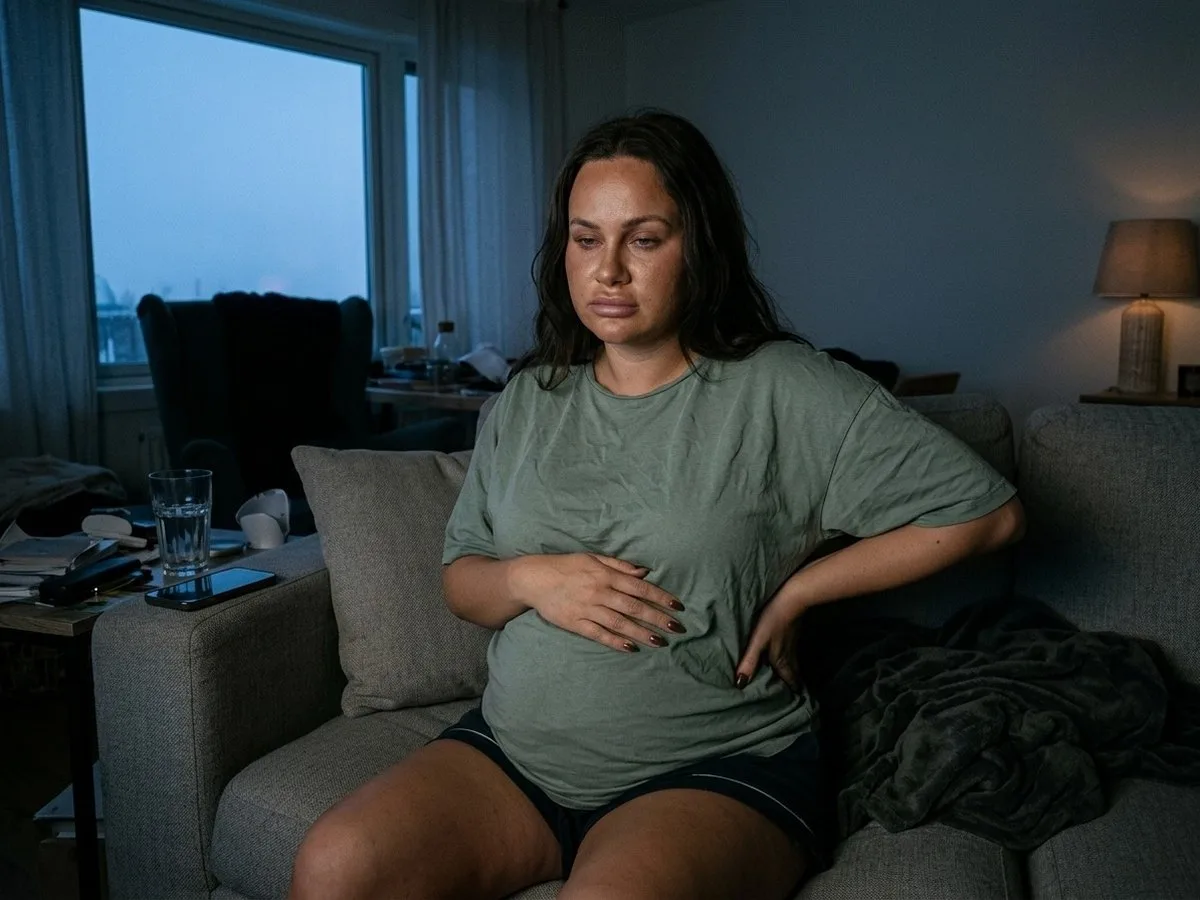
I was 23 weeks, lying on the couch with my laptop on my bump, and I had finally picked one. Long, soft, good reviews, fit our queen bed. Then I scrolled down to the details and saw it: a little triangle and the words cancer and reproductive harm.
I closed the tab. Then I opened it again. I read the sentence four times and it told me nothing. Which chemical? In the cover? The stuffing? Was every pillow like this and I had just never looked?
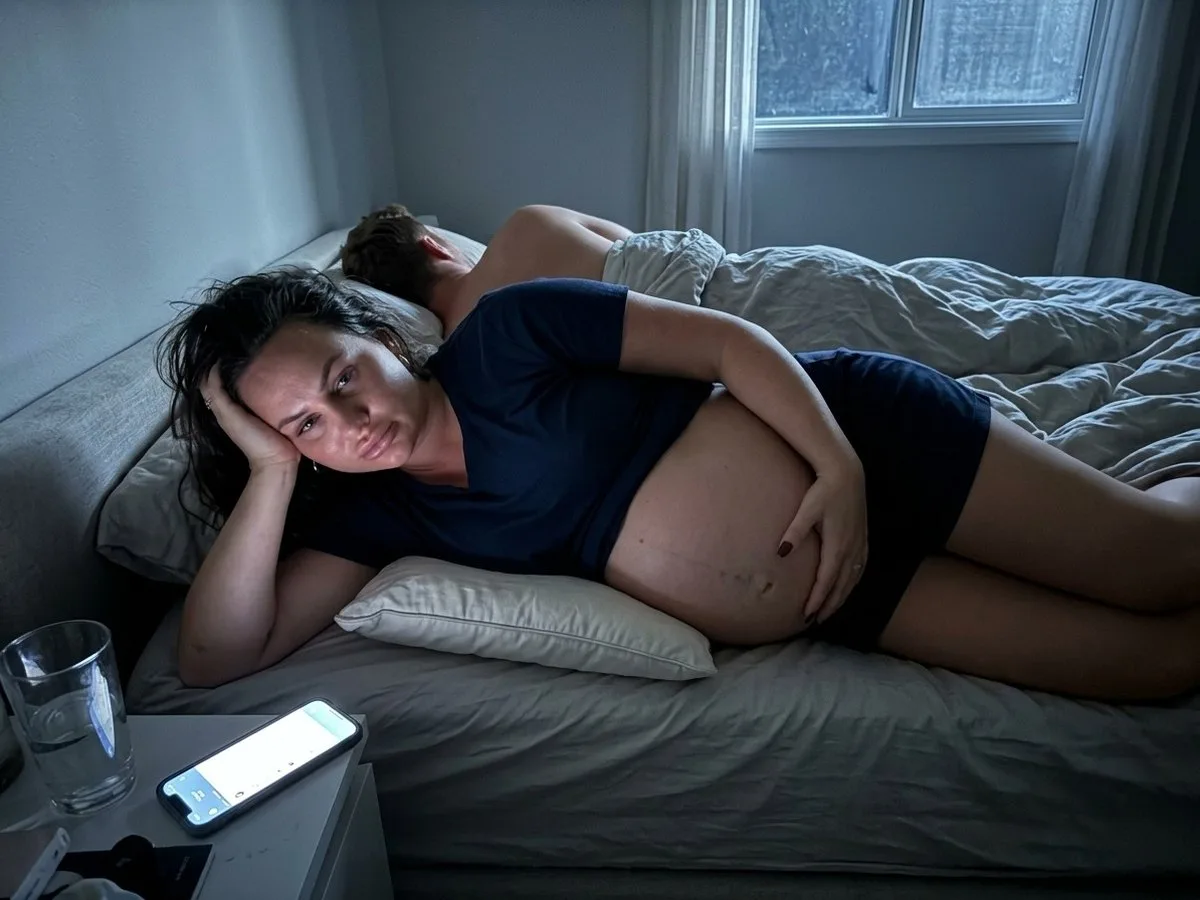
I went to bed without ordering anything, and lay awake thinking about the word reproductive while the baby kicked.
That feeling is common, and it is not silly. The warning is written to alert you, not to explain anything. So the useful move is to turn it into questions.
A Prop 65 label starts a conversation. It does not end one.
Why do so many products carry a Prop 65 warning?
Because the law covers a very long list of substances and most businesses that sell into California. The American Cancer Society describes it as a right-to-know law, and notes the list now holds more than 1,000 chemicals or substances.
Who must warnCalifornia's warning site says businesses with 10 or more employees that expose people to listed chemicals generally must give a warning.
What triggers itA listed chemical in the product, unless the business can show the exposure is low enough to fall under the law's thresholds.
What it leaves outThe amount, the part of the product and how you would be exposed, which are the things that decide risk.
The American Cancer Society puts it plainly: a label does not always mean a product is dangerous when used as recommended. It also does not tell you there is nothing to ask. It means you do not have enough information yet.
Is a pregnancy pillow without a Prop 65 warning safer?
Not automatically. A missing warning on a listing can mean no listed chemical, an exposure under the threshold, a small seller outside the rule, or a warning that only appears on the box.
- The listing page may not repeat what is printed on the packaging.
- A seller with fewer than 10 employees may not be required to warn.
- A seller who does not ship to California may not show a warning at all.
- Another seller may warn as a broad precaution across a whole range.
So searching for a pillow without the label filters by what the seller chose to print, not by what is inside. The questions below work for both kinds of listing.
Voluntary certifications are a separate thing. If you want to know what labels like OEKO-TEX or CertiPUR-US actually check, our guide to pregnancy pillow labels and certificates covers that side.
What should you ask the seller about a Prop 65 warning?
Ask four things: which chemical, which part of the pillow, whether the warning is for cancer or reproductive harm, and whether they have test results for this exact model. A seller who knows their product can answer in one email.
- Which listed chemical is the warning for? Since August 2018, warning labels usually name at least one chemical. If the listing does not, ask.
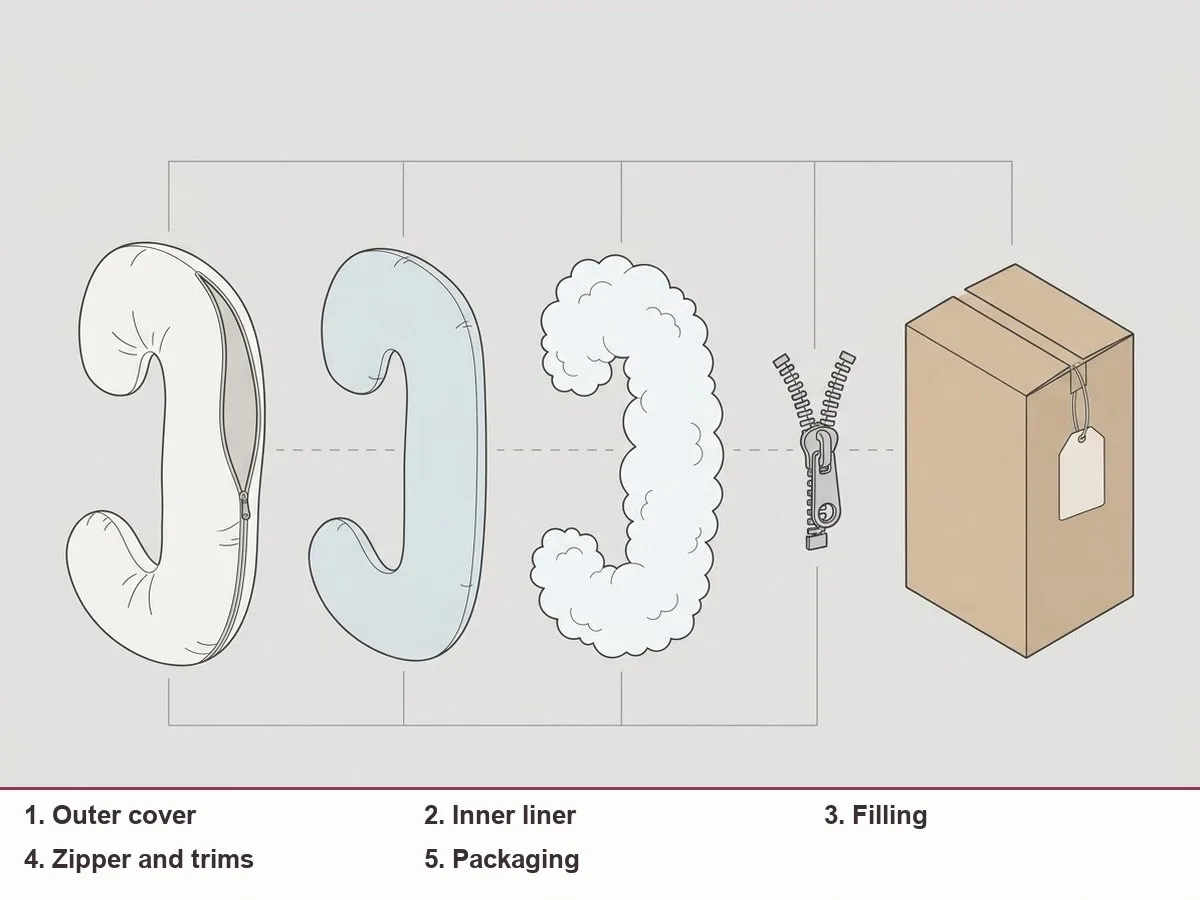
- Which part is it in? The outer cover, the inner liner, the filling, the zipper and trims, or the packaging.
- Is it a cancer warning, a reproductive warning, or both? The wording matters to you right now.
- Is it based on testing or a precaution? Ask if a lab tested this model, and when.
- Does it apply to every color and size? Different fabrics can mean different answers.
- Can you share the test report or a written statement? A summary on company letterhead is a fair ask.
Here is a version you can copy and send:
Hi, I am pregnant and interested in your [pillow name], [color/size]. The listing shows a Prop 65 warning. Could you tell me which chemical the warning is for, which part of the pillow it relates to (cover, filling, zipper, packaging), whether it is based on lab testing of this model, and whether you can share a test report or written statement? Thank you.Template, edit the brackets
How do you read the seller's answer?
Look for specifics. A named chemical, a named part and a dated test are useful answers; a pasted copy of the warning is not.
| What they say | What it tells you | Your next step |
|---|---|---|
| Names the chemical and the part, shares a recent test | You have real information to weigh | Decide with the facts, or show your midwife if it still worries you |
| Names the part only, like the zipper or packaging | The warning may not relate to the parts you lie on | Ask whether the cover and filling were tested too |
| Says the warning is a precaution | They may not have measured this model | Ask if any test exists; if not, treat it as unknown |
| Repeats the warning text or does not reply | Nothing new | Choose a seller who answers questions |
| Says there is no warning because it was tested | A claim worth having in writing | Ask for the report or the lab name |
Some bedding companies publish their answer openly. Tuft & Needle, for example, has a help page explaining that its foam pillow does not require a Prop 65 warning after third-party lab testing. That is the kind of answer you are looking for, from whoever you buy from.
When should you talk to your midwife or doctor about it?
Any time the worry is staying with you. A pillow label is a fair thing to bring to an appointment, and so is anything you are already using at home.
Bring the listing, the photo of the label, and the seller's reply if you have one. Your midwife or doctor can help you put one product in context with everything else in your day. That is a better use of the worry than another night of scrolling.
Bonnie sent the email the next morning. The reply came two days later: the warning was for a chemical in the zipper pull, not the cover or the filling, with a short lab summary attached. She still asked her midwife at her 24-week visit, mostly to hear someone say it out loud. Then she made her choice with an answer instead of a triangle.
Frequently asked questions
Does a Prop 65 warning mean a pregnancy pillow is unsafe?
No. It means the business says the product can expose you to a chemical on California's list. The American Cancer Society notes a label does not always mean a product is dangerous when used as recommended. It also does not tell you the amount, so ask the seller for details.
Why does my pillow only show the warning in California?
Prop 65 is a California law, so warnings are aimed at buyers there. The same pillow may be sold elsewhere without the label. The product is the same, so the questions to ask are the same wherever you live.
Can I find a pregnancy pillow without a Prop 65 warning?
Yes, many listings show no warning. But a missing warning is not proof that no listed chemical is present. Ask the seller whether the model was tested and whether they can share the result in writing.
Is the warning about the cover or the filling?
The label usually does not say. It could be the cover, the filling, a zipper or the packaging. Ask the seller which part the warning relates to.
Should I return a pillow because of a Prop 65 warning?
That is your call. Get the seller's answer first, then talk to your midwife or doctor if you are still worried. Check the return window before the deadline passes.
If you are still choosing a pillow and want the whole list in one place, our pregnancy pillow buying checklist covers size, care, labels and return terms.
Bonnie's story is a composite based on common questions from pregnant shoppers. Names and details are changed.