Relvay makes a pregnancy pillow. We also tell you below when you should not buy one.
The short answer
It depends on why you have them. Stockings given to lower clot risk may be meant for day and night, while hosiery for swelling is often taken off at bedtime. Follow whoever gave them to you.
- Bought them yourself: read the instructions and ask your midwife.
- Support belt: ask your physio; one NHS team says not at night.
- Take off and call: numbness, pain, skin changes or one swollen leg.
Can you sleep in compression socks while pregnant?
Sometimes yes, sometimes no. What decides it is the reason you have them, and the instructions that came with them. Two NHS leaflets show why there is no single rule.
A York and Scarborough hospitals leaflet on anti-embolism stockings, the kind given to lower the risk of blood clots, says to wear them as much of the time as possible, day and night, until you are back to your usual activity. A Leeds community leaflet on stockings worn after leg swelling or a leg ulcer says they are usually taken off at bedtime. Neither leaflet is about pregnancy. Together they show the answer depends on the job the stocking is doing.
10:20 p.m.
I was 33 weeks and my ankles had been puffy since about 6. I had ordered a pair of compression socks online that afternoon, and my sister had dropped off her old belly band "for the back." So there I was, sitting on the edge of the bed with one sock half off, googling whether I was supposed to sleep in it.
The first page said yes. The second said never. The third was selling something. I left the sock on, then took it off at 2 a.m. because my toes felt strange, then lay there wondering if I had done something wrong.
The right answer lives in your instructions and with your care team, not in a search result.
Which kind of sock, stocking or band do you have?
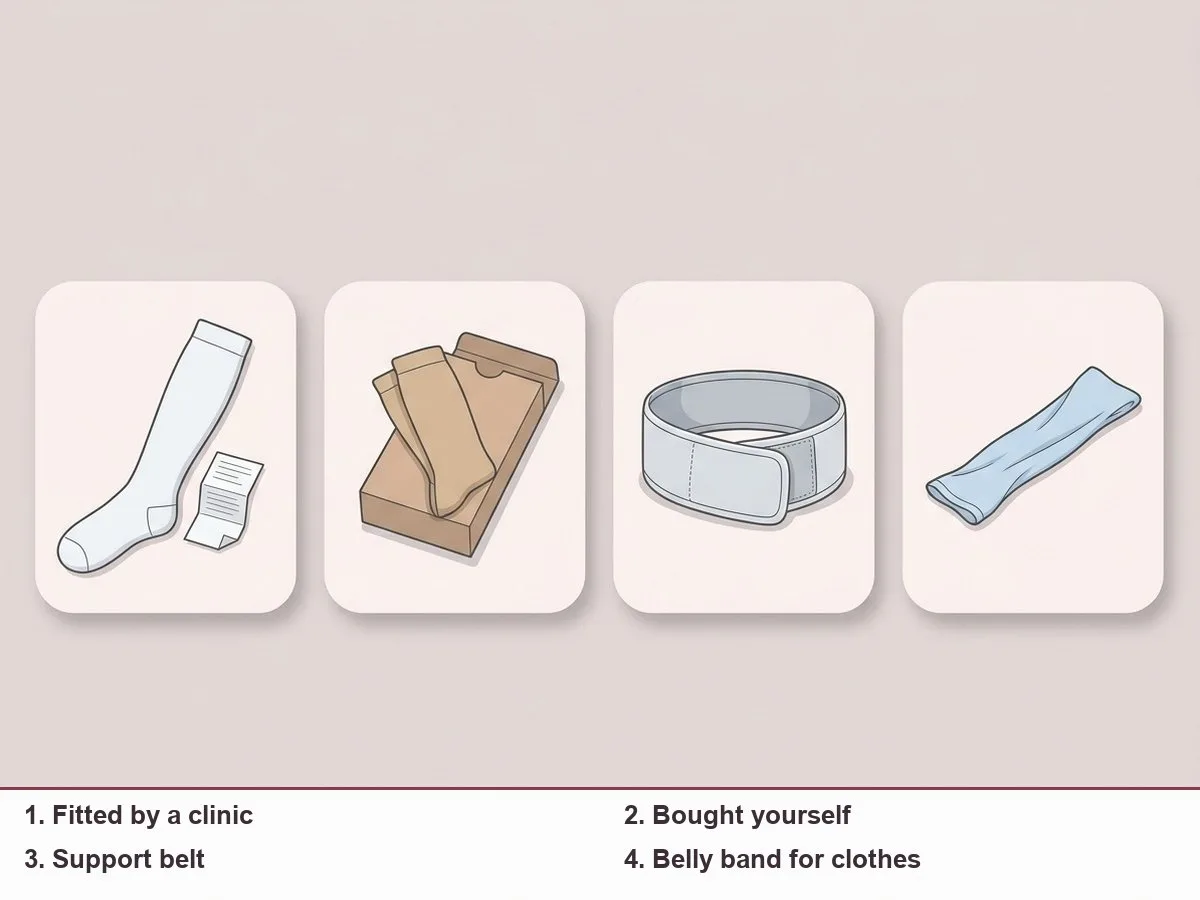
Sort it first. Something fitted or given by a clinic, something you bought yourself, a support belt a physio suggested, and a stretchy band for clothes all come with different instructions, from different people.
| What you have | Who should answer the night question | Worth knowing |
|---|---|---|
| Stockings fitted or given by a hospital or clinic | The team that gave them, through their leaflet | Usually measured for you. Do not stop wearing them without asking. |
| Compression socks you bought yourself | The maker's instructions first, then your midwife or doctor | Ask whether you need them at all, and which kind. |
| Pelvic or maternity support belt | The physio or clinician who suggested it | Sources disagree about wearing one at night. |
| Stretchy belly band for clothes | The label, if anything | Made to hold up an open waistband, not to support your body. |
That last row matters. A fashion belly band and a support belt can look alike in a photo. They are different products, and only one of them is meant to do anything for your back or pelvis.
What should you check in the instructions?
Check why you have it, whether it says day only or day and night, how long to wear it, and what should make you take it off. If the box does not answer those, your midwife or doctor should.
- Why was this given to me, or why did I buy it?
- Does the leaflet or box say day only, or day and night?
- How many hours a day, and for how many weeks?
- Was I measured? Has my size changed since then?
- How should I check my skin, and how often?
- What should make me take it off?
- Who do I call if there is a problem?
Both NHS stocking leaflets ask people to check their legs daily. If your socks came with no leaflet, and the box only says "graduated compression", treat the night question as unanswered and ask. We are not going to tell you what level of compression to wear. That needs someone who knows your legs.
Should you wear a belly band or support belt to bed?
Ask the person who suggested it, because advice differs. One NHS pelvic health physio team's leaflet says its maternity belt is not for night use.
The same NHS Forth Valley leaflet says to wear the belt as needed through the day, to take it off if you get pain, swelling or skin irritation, and not to use it if you have had vaginal bleeding in the last 4 weeks or if bleeding starts in your pregnancy. Other sources allow night wear in some cases, which is exactly why it should be your therapist's call and not a guess.
If turning over in bed is the reason you are thinking about a belt at night, say that to your physio directly. Our guide to turning in bed with pelvic girdle pain has a list of questions to bring.
When should you take them off and get help?
Take the stocking or belt off and get advice if you feel numbness, pins and needles or pain, or see changes in your skin. The York leaflet says these can be signs the stockings are too tight.
- Numbness, pins and needles, pain or soreness in your foot or leg.
- Blisters, bruising, or skin that has changed colour.
- Itching, redness or broken skin. The Leeds leaflet says to get advice without delay.
- With a belt: pain, swelling or skin irritation.
Some signs are urgent whatever you are wearing. Pregnancy raises the chance of a blood clot in the leg, and the NHS lists throbbing pain in one leg, swelling in one leg, and red or darkened skin around the painful area as reasons to get an urgent appointment or call your maternity unit. If those come with shortness of breath or chest pain, call emergency services. Sudden swelling of the face, hands or feet is also a reason to contact your midwife or doctor right away.
What should you ask your midwife or doctor?
Ask whether you need compression at all, which kind, and whether it stays on at night. Bring the box or leaflet with you.
- Do I need compression for my swelling, or are other steps enough?
- If I do, which kind and size, and who measures me?
- Day only, or day and night?
- How do I check my legs, and what should make me call?
- My physio suggested a belt. Is it okay at night for me?
- Does anything in my history, like past clots, varicose veins or a skin condition, change the answer?
For everyday pregnancy swelling, the NHS page lists steps like avoiding long periods of standing, comfortable shoes and socks without tight straps, putting your feet up and regular walks. It does not list compression socks, which is one more reason to ask before you buy.
Sophie took the sock box to her next appointment. Her midwife looked at her ankles, asked about her day, and said the socks were fine for daytime and should come off before bed. The belt went back to her sister. That night she put her feet up after dinner, took the socks off at 9, and slept without wondering about her toes.
This article helps you check instructions and prepare questions. It cannot tell you whether you need compression or a support belt. Your midwife, doctor or physio can.
Frequently asked questions
Can I sleep in compression socks while pregnant?
It depends on why you have them. Follow the instructions from whoever fitted or gave them to you. If you bought them yourself, read the maker's instructions and ask your midwife or doctor about night wear.
Why do some hospitals say to wear stockings day and night?
Anti-embolism stockings given to lower the risk of blood clots are often meant to be worn as much as possible, day and night. That is a specific use, and it comes with its own leaflet and checks.
Can I sleep in a belly band while pregnant?
A stretchy band for clothes is not a support device. For a support belt, ask the physio who suggested it. One NHS physio team says its maternity belt is not for night use.
What are signs compression socks are too tight?
Numbness, pins and needles, pain or soreness in the foot or leg, and skin that changes colour or blisters. Take them off and get advice.
Do compression socks help pregnancy swelling?
Ask your midwife or doctor. The NHS page on pregnancy swelling lists steps like putting your feet up, avoiding long standing and regular walks, and does not list compression socks.
If your nights are about getting comfortable on your side rather than about socks or belts, our pregnancy pillow buying checklist covers what to check before you order.
Sophie's story is a composite based on public posts from pregnant people asking about compression socks and belly bands. Names and details are changed.