
Relvay makes a pregnancy pillow. We also tell you below when you should not buy one.
The short answer
Some people do, and health sites describe a recliner as an option when side sleeping is too uncomfortable. No source we found sets a safe angle or number of hours, so the reason you need to sit up is the thing to raise with your care team.
- Know your reason: heartburn, breathlessness or pain each need different questions.
- Watch: leg swelling and slumping flat.
- Call: breathlessness lying down, or one painful swollen leg.
Can you sleep in a recliner while pregnant?
Many pregnant people do. Healthline notes that most doctors recommend side sleeping, and that a recliner can be an alternative if side sleeping is uncomfortable. What no source gives is a safe angle or time limit, so treat it as a question for your midwife or OB-GYN, not a rule.
1:30 a.m.
At 34 weeks I stopped going to bed. Lying down meant heartburn climbing up my throat within ten minutes, so I would wait until my husband was asleep, then shuffle to the living room and tip back the recliner.
It worked, sort of. I slept in two-hour pieces. My ankles were puffy every morning, and I had no idea if that was the chair or just being 34 weeks. I never told my midwife, because it felt like admitting I could not sleep like a normal person.
Sleeping sitting up is not a failure. It is information your care team can use.
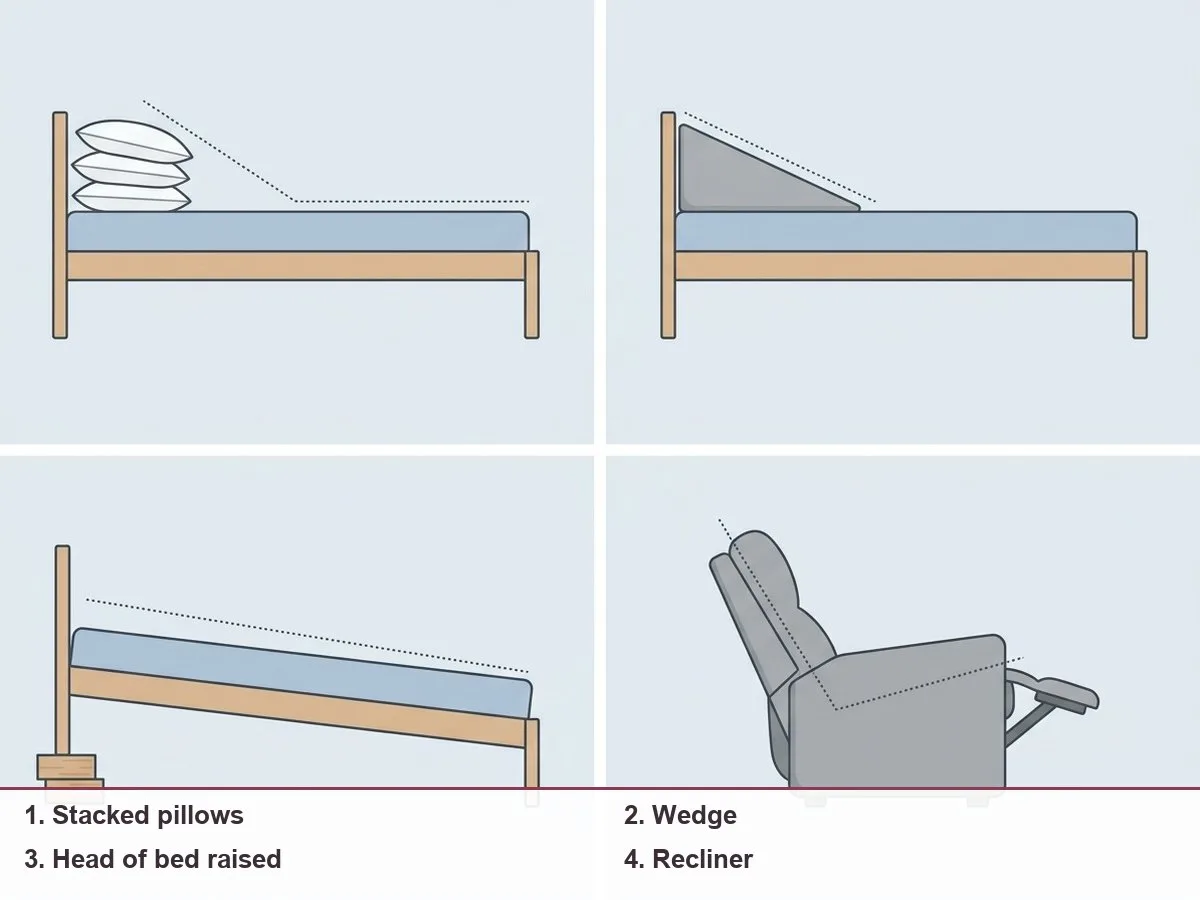
What is the difference between a recliner, a wedge and propping up on pillows?
They all raise your upper body, but they do it differently. Some keep you in your bed and let you stay partly on your side. A recliner keeps your hips and knees bent and makes turning over hard.
| Setup | Why people use it | What to watch | Ask your care team |
|---|---|---|---|
| Stacked pillows behind head and shoulders | Quick to try, no cost | Pillows slide, and bending at the waist can press on your bump | Is this enough for my symptom? |
| Wedge under your upper body | A steady slope from the hips up | Sliding down in the night; whether you can still lie partly on your side | Is a wedge sensible for me? |
| Head of the bed raised on blocks | Often suggested for heartburn; the whole mattress tilts, so you can still lie on your side | Sliding toward the foot of the bed; your partner's comfort | Would raising the bed help my reflux? |
| Recliner chair | Easy to get in and out, feels good with heartburn or breathlessness | Knees and hips bent for hours, swelling in feet and ankles, stiffness | Is a recliner okay for me, given my blood pressure, swelling and history? |
| Adjustable bed | Raises the head end and keeps the bed shared | Cost; the same questions as a wedge | Same as a wedge |
Why does your reason for sitting up matter?
Because heartburn, breathlessness and pain are different problems, and your care team will ask about them differently. Naming the reason gets you better help than describing the chair.
- Heartburn or reflux. Raising the head of the bed or using more pillows is a common suggestion. Our guide pregnancy heartburn at night covers the sleep setup questions. Medicines for heartburn are a pharmacist or doctor question.
- Breathlessness when lying down. Some breathlessness is common late in pregnancy. Breathlessness that is new, sudden or getting worse needs a call, not a chair.
- Back, hip or pelvic pain. Ask whether a women's health physical therapist could help you get comfortable lying down again.
- A blocked nose or snoring. Loud snoring, or a partner noticing pauses in your breathing, is worth mentioning at your next visit.
The chair is a workaround. The reason behind it is the thing worth solving.
What should you watch for if you sleep in a recliner?
Watch your legs and your posture. Hours with your knees bent and feet down can leave you stiff and swollen, and it is easy to slide down until you are nearly flat.
- Check your ankles in the morning. Some swelling is common in late pregnancy. Swelling in only one leg, with pain, warmth or redness, is a same-day call.
- Keep your legs supported. Healthline suggests supporting your legs in front of you rather than letting your feet hang down for hours.
- Notice if you slide. If you wake slumped low and nearly flat on your back, turn onto your side.
- Get up and move when you wake, even just to walk to the bathroom and back.
- Track how often. One rough night in the chair is different from every night for three weeks.
What should you tell your midwife or OB-GYN?
Tell them where you sleep, why, how many nights a week, and anything you have noticed in your legs or breathing. Those four facts let them answer for your pregnancy instead of in general.
- Where you sleep now: bed with pillows, wedge, raised bed or recliner.
- Why: heartburn, breathlessness, pain, or something else.
- How many nights a week, and since which week.
- Any swelling, especially in one leg, and any headaches or vision changes.
- Any history of blood clots, high blood pressure or breathing problems.
- What you have already tried, and what helped.
Priya finally said it at her 36 week visit: I sleep in the recliner most nights, because of heartburn. Her midwife asked about her ankles and her blood pressure, suggested raising the head of the bed so she could go back to lying on her side, and talked her through what she could take for heartburn. She was back in her own bed that week, on a slope.
When is it a call, not a question for your next visit?
Call right away for sudden or worsening breathlessness, chest pain, or one leg that is swollen, painful, warm or red. Do not wait for a routine appointment.
- Breathlessness that is sudden, getting worse, or there even when you rest.
- Chest pain or coughing up blood. Call 911 or your local emergency number.
- One leg swollen, painful, warm or red.
- Severe headache, vision changes or sudden swelling of your face or hands.
- Your baby's movements feel slower or different from usual.
"Im 28 weeks and so uncomfortable no matter if i use a support cushion or not. I just find it so hard to sleep."
YouTube comment on a pregnancy sleep videoFrequently asked questions
Is it okay to sleep in a recliner while pregnant?
Many people do, and health sites describe it as an option when side sleeping is too uncomfortable. No source sets a safe angle or number of hours, so ask your midwife or OB-GYN, especially if you have swelling, high blood pressure or a history of clots.
Is sleeping propped up the same as sleeping on your back?
Not exactly. A raised upper body is different from lying flat, but if you slide down you can end up nearly flat. If you notice that, turn onto your side.
Is a wedge pillow better than a recliner during pregnancy?
A wedge or a raised bed keeps you in bed and lets you lie partly on your side, which many people find easier. Which suits you depends on your reason for sitting up, so ask your care team.
What angle should I sleep at for heartburn while pregnant?
We did not find a pregnancy source that sets one. Raising the head of the bed or using more pillows is a common suggestion. Ask your midwife, OB-GYN or pharmacist about your reflux.
Why are my feet swollen after sleeping in a recliner?
Swelling in both feet is common late in pregnancy, and hours with your feet down can add to it. Swelling in one leg with pain or warmth, or sudden swelling of your face or hands, needs a call that day.
If you are trying to get back to lying on your side in bed, our pregnancy pillow buying checklist helps you work out whether regular pillows will do first.
Priya's story is a composite based on public posts and reviews from pregnant sleepers. Names and details are changed.