Relvay makes a pregnancy pillow. We also tell you below when you should not buy one.
The short answer
Turn onto your side and go back to sleep. UK guidance from 28 weeks is about the position you fall asleep in, and finding yourself on your back during the night is common.
- Do now: settle on either side, then sleep.
- Call now: if you feel faint or breathless that does not ease on your side, or your baby's movements feel different.
- Skip: alarms or checking all night.
Is it a problem if you find yourself on your back at night?
Usually, no. Tommy's, the UK pregnancy charity whose advice the NHS echoes, says the research is about the position you go to sleep in. If you find yourself on your back during the night, the advice is simply to settle back on your side.
A Cleveland Clinic OB-GYN puts it plainly: short stretches on your back, even an hour or two, probably do no harm. The goal is not to spend whole nights flat on your back later in pregnancy, which is a different thing from noticing it once at 4 a.m.
4:12 a.m.
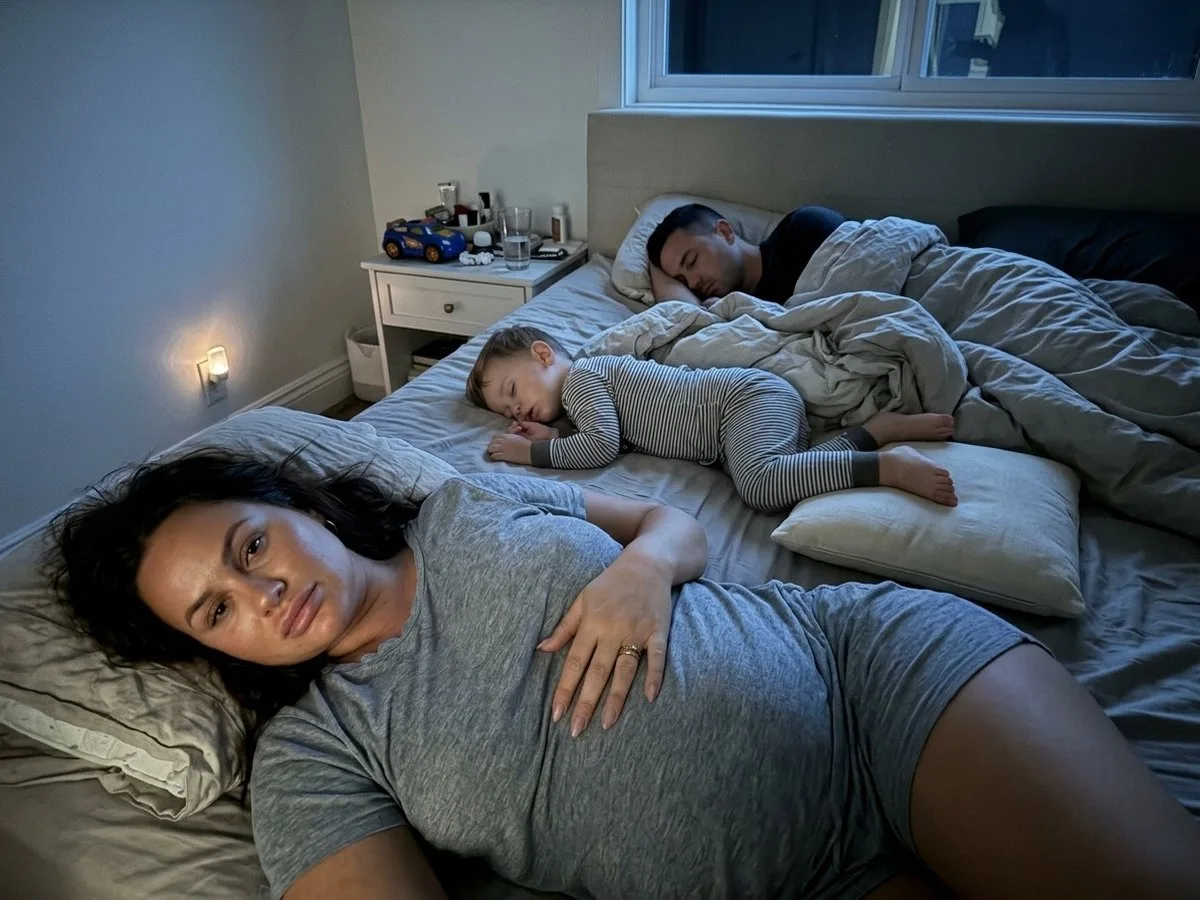
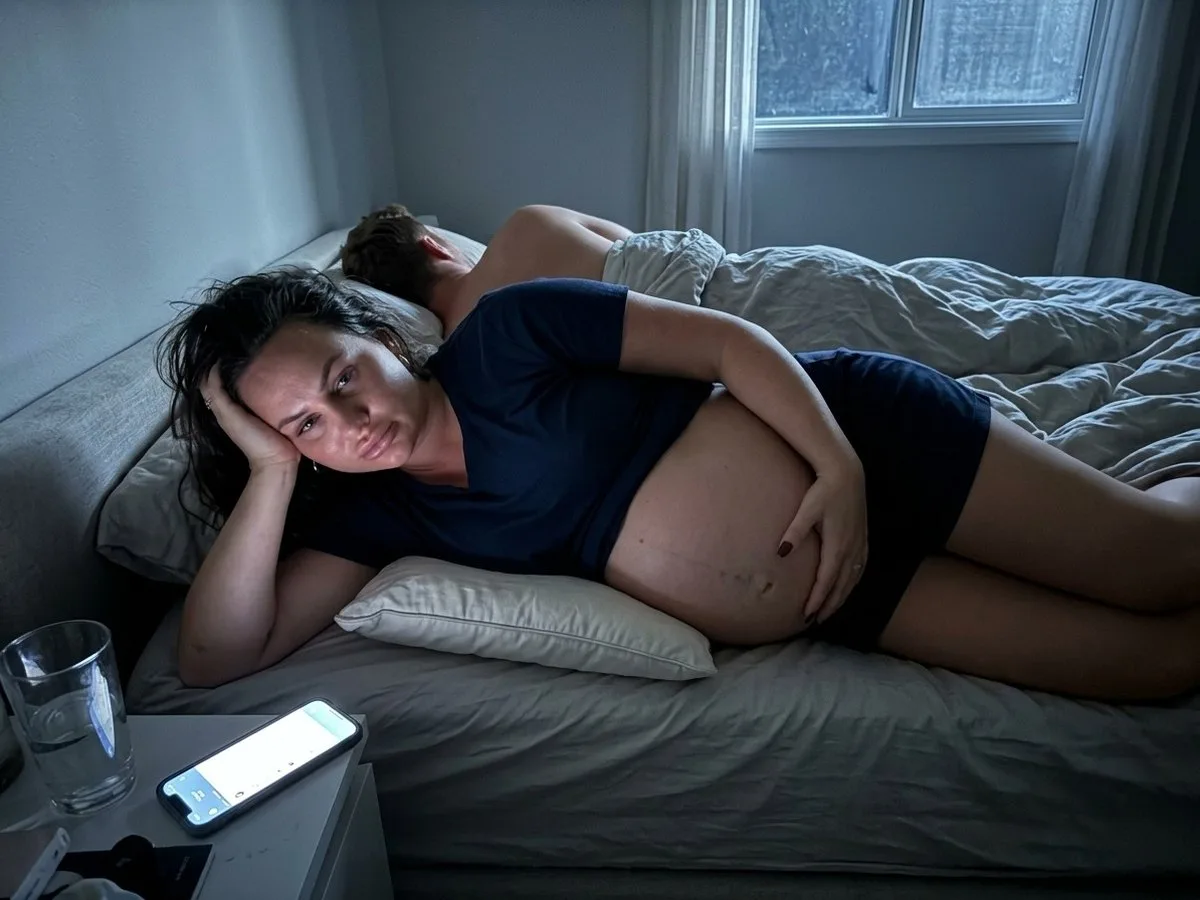
I was 31 weeks. I opened my eyes and the ceiling was right there, which meant I was flat on my back. I went from asleep to wide awake in one second. I had read the side sleeping advice so many times I could recite it.
I lay there doing math I did not understand. How long had I been like this? An hour? All night? I did not go back to sleep until almost six, and I spent the next day tired and guilty about a thing I did while unconscious.
You cannot control what your body does while you are asleep. You can control what you do in the next five minutes.
What should you do in the next five minutes?
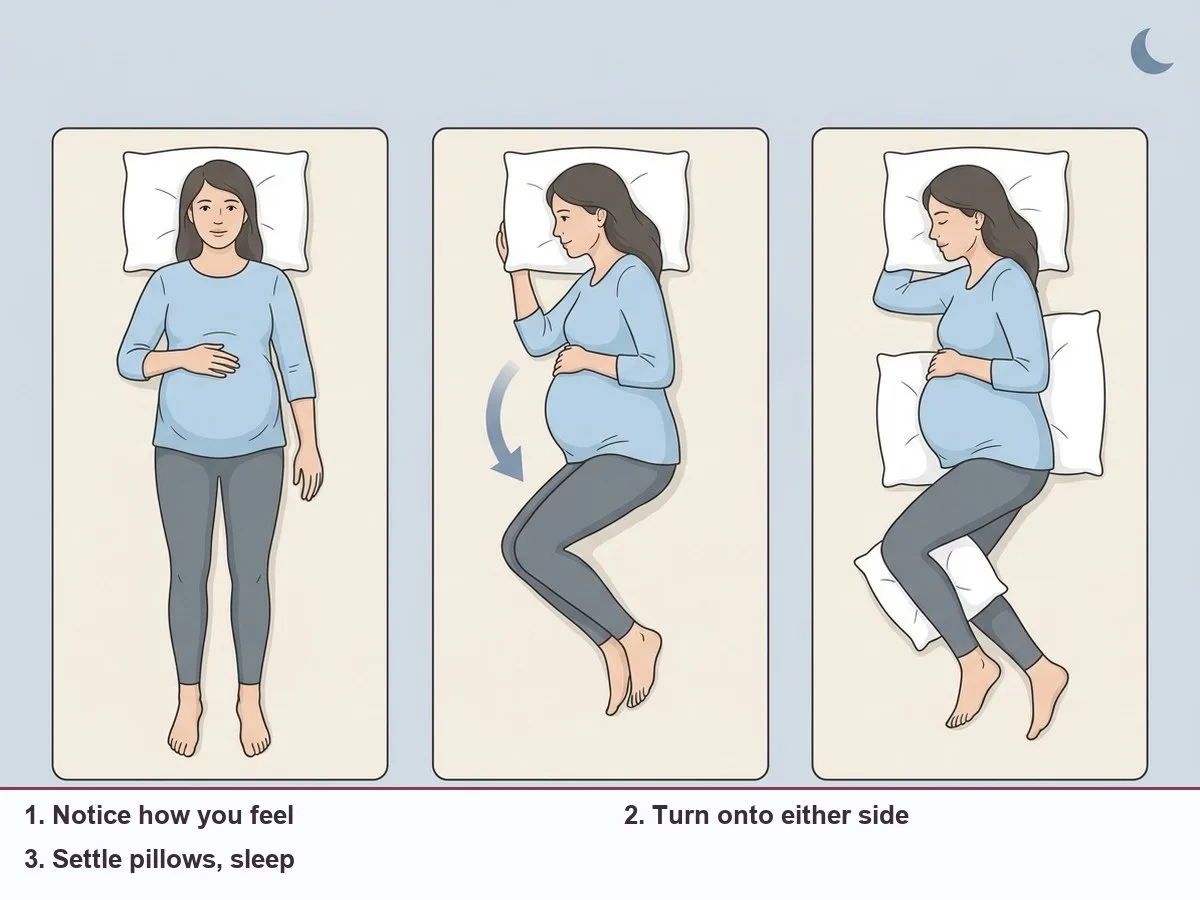
Check how you feel, turn onto your side, settle your pillows, and go back to sleep. Most nights that is the whole response.
- Notice how you feel. Dizzy, sick, short of breath, a racing heart? Most people feel nothing at all. Note it either way.
- Turn onto your side. Either side is fine. Tommy's says the claims that only the left side counts are not backed by good evidence. Bend your knees and roll as one piece, which is easier on your hips and pelvis.
- Settle your support. Put a pillow back under your bump and one between your knees, and tuck one behind your back if it slipped away.
- Check the call list below. If nothing on it applies, there is nothing more to do tonight.
- Go back to sleep. Going back to sleep on your side is the part the advice is about. You do not need to stay awake and watch yourself.
If anxiety keeps you awake, it helps to say one sentence to yourself that is true: I noticed, I turned, I am on my side now. Then put the phone down. Reading more at 4 a.m. rarely makes the rest of the night better.
When should you call your midwife or OB-GYN?
Call right away if you feel unwell in a way that does not settle once you are on your side, or if your baby's movements feel slower or different from usual. Do not wait for your next appointment for either.
- You feel faint, very dizzy or short of breath, and it does not ease after you turn onto your side.
- Your baby's movements feel slower, weaker or different from their usual pattern. Call your maternity unit or labor and delivery line that day, at any hour.
- You have pain, bleeding or leaking fluid.
- You have a bad headache, vision changes or sudden swelling of your face or hands.
- Something feels wrong and you cannot say why.
If you feel well and only the worry remains, that is still worth one sentence at your next visit. Saying it out loud to someone who knows your pregnancy often does more than another night of searching.
Why does the guidance focus on the position you fall asleep in?
Because the position you fall asleep in tends to be the one you hold longest. That is why the UK advice covers going to sleep at night, going back to sleep after waking, and daytime naps, from 28 weeks.
The reason behind it is pressure. Later in pregnancy, the weight of your womb can press on the large blood vessels that run along your spine when you lie flat on your back. Many people feel this as lightheadedness or an odd, heavy feeling, and shift without ever fully waking.
Tommy's also notes that a large bump usually makes lying on your back uncomfortable enough that you do not stay there long. Your body tends to move you. Finding yourself there once tells you that you moved in your sleep, which every sleeper does.
Before about 20 weeks, most sources do not treat back sleeping as a concern at all. If you want the bigger picture on positions, sides and comfort, our pregnancy sleep guide covers it, and left or right side in pregnancy goes through the side question in detail.
Can you make your back a less comfortable place to end up?
Partly. Tommy's suggests a pillow behind your back to make lying flat more uncomfortable, and says it will not keep you off your back for certain. Regular pillows and pregnancy pillows both work for this.
- Tuck a firm pillow lengthwise behind your back, pressed against the mattress so it does not roll away.
- Keep a pillow under your bump and between your knees so side sleeping feels comfortable enough to stay in.
- If you wake to pee, take ten seconds to rebuild the setup before you lie back down.
Be wary of anything that promises to stop you moving in your sleep. We look at that claim honestly in can a pregnancy pillow keep you off your back?
"I'm a back sleeper, which is a no-no when pregnant."
Amazon review of a pregnancy pillowIf that is you, you are not doing anything wrong. You are learning a new way to sleep in a body that changes every week.
What should you bring up at your next appointment?
Tell your midwife or OB-GYN how often it happens, whether you felt anything when you noticed, and how much the worry is costing you in sleep. They can tell you what matters for your pregnancy.
- Roughly how many times a week you notice it, and at what week of pregnancy it started.
- Any symptoms when you noticed: dizziness, breathlessness, a racing heart.
- Whether you snore loudly or your partner has noticed pauses in your breathing.
- Whether hip or pelvic pain makes side sleeping hard.
- How long it takes you to fall back asleep afterwards.
Paige brought that list to her 32 week visit. Her midwife told her what Tommy's says: turn, settle, sleep. Then she asked about Paige's hips, because sore hips were the real reason side sleeping kept failing. That conversation changed more than any article had.
Frequently asked questions
What happens if I accidentally sleep on my back while pregnant?
Most of the time, nothing you can feel. UK guidance focuses on the position you fall asleep in from 28 weeks. If you find yourself on your back, turn onto your side and go back to sleep. Call your care team if you feel unwell or your baby's movements change.
Should I set an alarm to check my position?
No source we found suggests it. Broken sleep has its own costs. Going to sleep on your side, including after you wake to pee, is the part the guidance asks for.
Does it matter which side I turn onto?
Either side is fine according to Tommy's and the NHS. Pick the one that is more comfortable for your hips and back.
Is back sleeping a concern in the first half of pregnancy?
Most sources do not treat it as a concern before about 20 weeks, and the UK side sleeping advice starts at 28 weeks. If you are unsure about your own pregnancy, ask your midwife or OB-GYN.
What if hip pain makes side sleeping impossible?
Tell your midwife or OB-GYN, and ask about a referral to a women's health physical therapist. Pillows under the bump and between the knees help many people stay comfortable on their side.
If you are setting up pillows for side sleeping, our pregnancy pillow buying checklist helps you decide whether regular pillows are enough first.
Paige's story is a composite based on public posts and reviews from pregnant sleepers. Names and details are changed.