
Relvay makes a pregnancy pillow. We also tell you below when you should not buy one.
The short answer
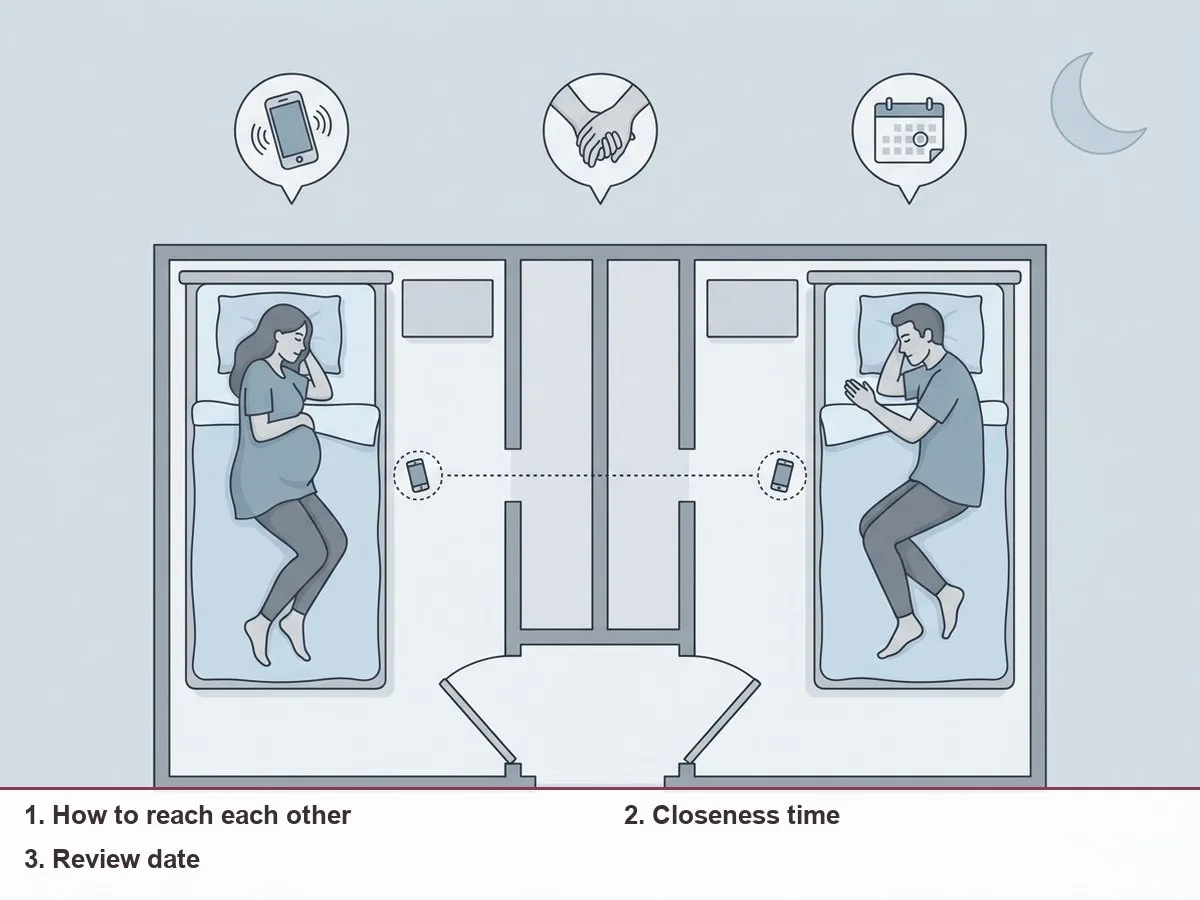
Sleeping in separate rooms for a while can help you both sleep, as long as you plan the support first. Agree how to reach each other at night, what counts as "come now", and when you will check in.
- Agree on night support before night one.
- Trial it for two weeks, not forever.
- Review together and keep what worked.
Is it okay to sleep in separate rooms while pregnant?
Yes. It is a practical sleep decision, not a verdict on your relationship. Plenty of couples sleep apart some of the time, and many go back to sharing later.
In a Sleep Foundation survey of US adults, just over half of people who started sleeping apart from a partner said their sleep improved, and about a quarter later went back to sharing a bed. Both outcomes are normal. The point is to choose on purpose, not by drifting to the couch.
3:05 a.m.
I was 30 weeks. I got up to pee for the third time and bumped the nightstand. Marcus woke up, again. He had a 6 a.m. start. When I got back to bed he was already snoring, and I lay there wide awake, listening to it.
Neither of us was doing anything wrong. We were just two tired people ruining each other's nights. But when he said "maybe I should sleep in the spare room for a bit", my first thought was: and what if I need you at four in the morning?
"getting out of bed over 10x at night has been a struggle"YouTube comment on a pregnancy sleep video
"My partner complains I take up too much of the bed rolling over."YouTube comment on a pregnancy pillow video
The fear is not about the room. It is about being alone when you need help. Plan for that first.
What should you agree on before the first night?
Agree on five things: who sleeps where, how you reach each other, what "come now" means, how you say goodnight, and when you will review it. Write it on one page and stick it on the fridge.
| Part | Decide together | Example |
|---|---|---|
| Who moves | Who sleeps where, and on which nights | Marcus in the spare room on work nights |
| Reaching each other | Phone on, ringer up, or doors open | His phone on loud, both doors open a crack |
| "Come now" | What a call or text means | A call means come now. A text can wait till morning. |
| Help you may need | Getting up, a drink, the bathroom trip, company | Help getting out of bed if hips are bad |
| Closeness | Time together before sleep | Twenty minutes in the same bed first |
| Review date | When you decide again | Sunday, two weeks from now |
If your care team has asked that someone is close by at night for a particular reason, that comes before any sleep plan. Ask them if you are unsure.
How do you run a two-week trial?
Try it for two weeks, and each morning both of you note one number and one line. Two weeks is long enough to settle in and short enough not to feel permanent.
- Each morning, both of you score your sleep from 1 to 5.
- Each of you adds one line: what woke you, and whether you felt alone or fine.
- Note every call or text at night, and whether the answer came fast enough.
- Keep your closeness time even on bad days. It is part of the trial.
- Do not decide mid-week unless something is clearly not working for one of you.
A trial is not a test of whose sleep matters more. If one person's scores go up and the other's go down, that is information, not a win.
How do you keep the support you need at night?
Make help easy to ask for and easy to give. Keep your phone within reach, set up your room so you can manage alone where possible, and keep the call-means-come rule simple.
- Phone charged and within arm's reach, not across the room.
- A small night light on the path to the bathroom.
- Water, snacks or any heartburn remedy your midwife suggested by your bed.
- Your pillows set up on your own bed so you are not rebuilding them half asleep.
- A clear plan for labor signs or anything urgent that does not depend on who is in which room.
If turning over or getting out of bed is painful, that is worth raising with your midwife or a women's health physiotherapist. The answer may change how much help you need at night.
How do you decide at the end of the trial?
Read the two weeks of notes together and pick one of three: keep going, share some nights, or move back. Choose what works for both of your notes, not for one of you.
Keep goingBoth scores are up, calls were answered, nobody felt shut out.
Share some nightsSleep is better apart, but you miss each other. Try weekends together.
Move backOne of you felt alone or unsafe, or nothing really improved.
If you move back, small changes can make a shared bed easier: separate blankets, earplugs or white noise, or a smaller pillow setup. Our two-person pillow trial covers that route. If the snoring is new and yours, mention it to your midwife; our guide on new snoring or breathing changes during pregnancy sleep explains why.
After two weeks, Tatum and Marcus kept the spare room for work nights and shared the bed on weekends. The rule stayed on the fridge: a call means come now. She called once, at 4 a.m. with a cramp, and he was there before she put the phone down.
Frequently asked questions
Is it normal to sleep in separate beds while pregnant?
Yes. Many couples sleep apart some of the time for practical reasons like snoring, bathroom trips or different schedules. It says nothing on its own about the relationship.
How do I make sure I can get help at night if we sleep apart?
Keep both phones on and within reach, agree that a call means come now, and leave doors open if that helps. Write the plan down so nobody has to remember it at 3 a.m.
How long should we try separate rooms?
Two weeks is a good first trial. Score your sleep each morning, then decide together whether to keep going, share some nights, or move back.
Will sleeping apart hurt our relationship?
It depends on how you do it. Planned time together before sleep and a regular check-in help it feel like a choice you made together.
What if I am the one who started snoring?
New or loud snoring in pregnancy is worth mentioning to your midwife or doctor, especially if your partner notices pauses in your breathing.
If you would rather stay in one bed
If bed space is part of why you are thinking of moving rooms, a smaller pillow setup is worth trying first. The Relvay 3-Piece is two small wedges joined by a strap that stays on your half of the bed. It will not stop snoring or bathroom trips, so it only helps if space and pillow mess are part of the problem.

Two wedges for bump and back, joined by a flat strap, about as wide as your torso. Keep a regular pillow between your knees. $79.99, 90-day returns.
Want to try sharing first? Our two-person pillow trial walks you through a week in one bed.
Tatum's story is a composite based on real reviews and public posts from pregnant sleepers and their partners. Names and details are changed.